By the time Apollo 17 launched at on Dec. 7, 1972, NASA was already looking ahead. It was planning a first-ever joint mission with the USSR, preparing to launch the Skylab space station, and soliciting proposals from contractors for a new, reusable launch system dubbed the space shuttle. But even as public interest waned, Apollo 17 was NASA’s last chance to demonstrate to scientists, politicians, and the taxpaying public that the entire $26-billion Apollo program had been worthwhile. To that end, NASA pulled out all the stops it could afford, especially when it came to science.
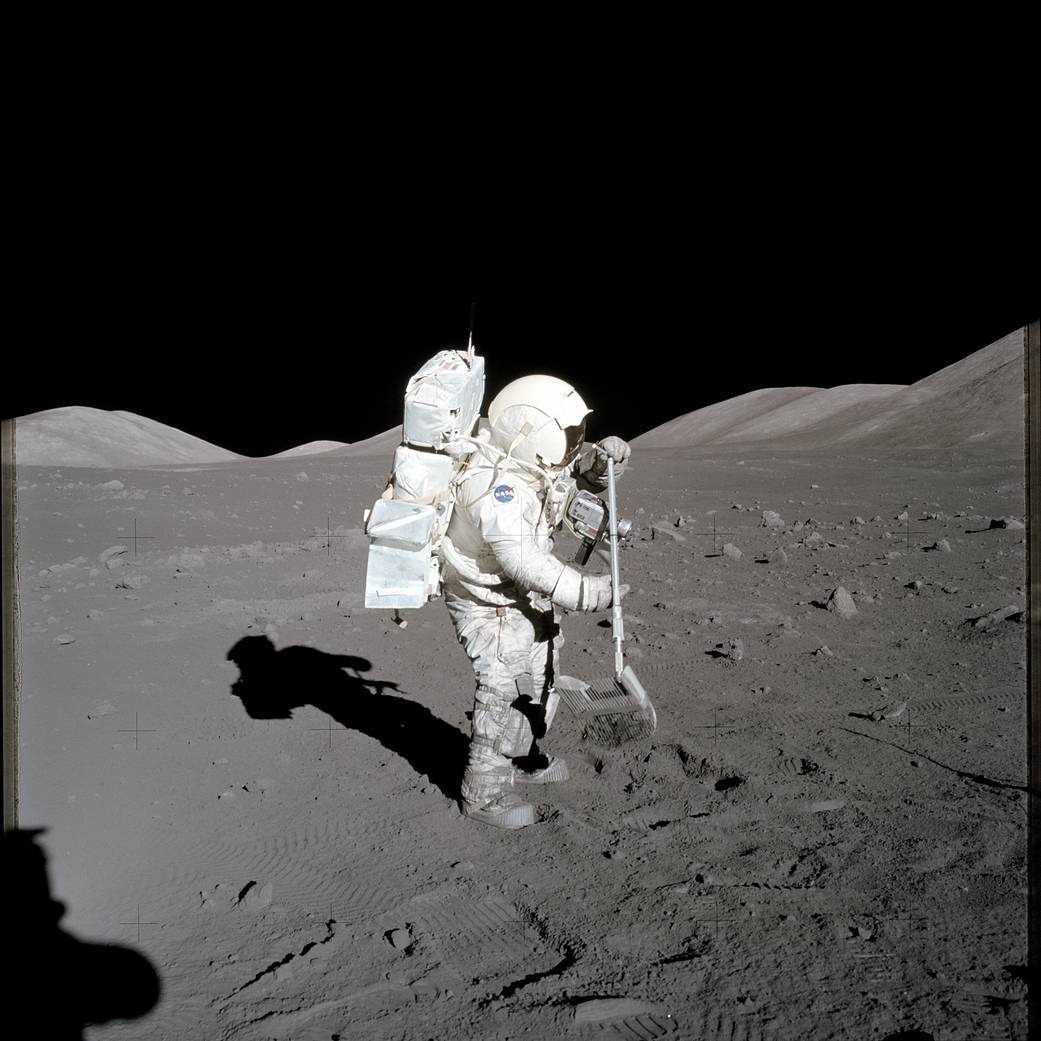
Commander Gene Cernan was making his third spaceflight and second trip to the Moon; he and Command Module Pilot Ronald Evans were former naval aviators. However, the crew’s most prominent member was not its commander, but rather Lunar Module Pilot (LMP) Harrison “Jack” Schmitt. A geologist by training, Schmitt was hailed as the first Apollo “scientist-astronaut” — a novelty in an era when the U.S. astronaut corps had been the exclusive domain of military and test pilots.
Schmitt would unleash his expertise in what he called a geologist’s paradise. The landing site was Taurus-Littrow, a valley on the southeastern rim of Mare Serenitatis (Sea of Serenity). It was hemmed in by mountains as high as 7,900 feet (2,400 m), which were heaved upward in the massive impact that formed the Serenitatis basin. Since then, volcanoes and impacts had further sculpted the area. Features included landslides, ejected boulders that had scraped tracks into the lunar soil, and a 260-foot-tall (80 m) scarp — the remains of a fault line — that cut across the 4.4 mile-wide (7 kilometers) valley. It promised much — and the crew delivered, sending off Apollo with a remarkable swan song.