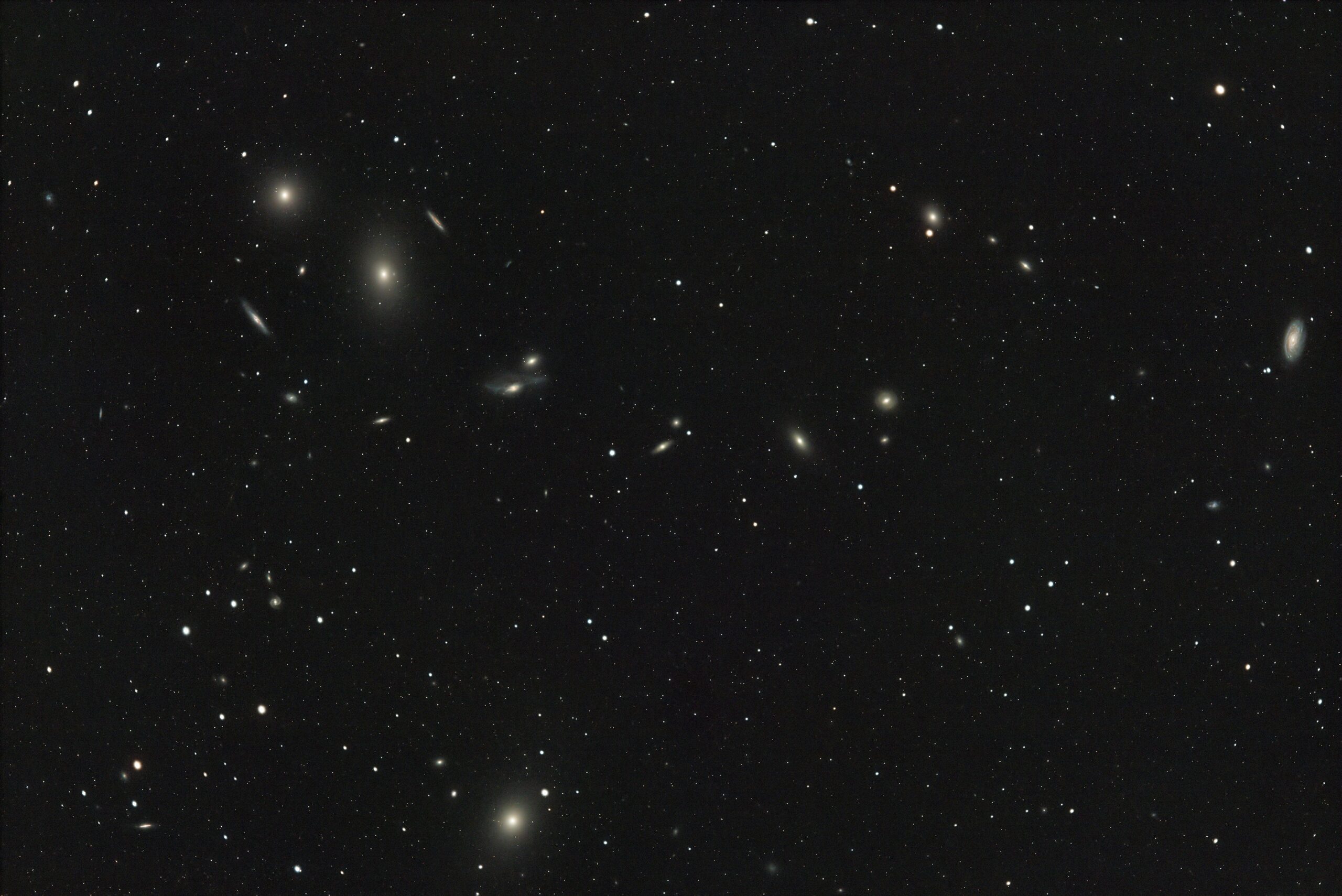
Galaxy season is upon us — the time of the year in the Northern Hemisphere when Earth’s nightside faces out of the plane of the Milky Way towards constellations like Leo, Virgo, Coma Berenices, and Ursa Major. This week, Astronomy magazine Editor Emeritus Dave Eicher invites you to explore the Virgo Cluster, the nearest major galaxy cluster to our own Local Group. With binoculars or a telescope, you can observe all kinds of galaxies — spiral, elliptical, and lenticular. Clear skies!
Video transcript:
Welcome to This Week in Astronomy, brought to you by Celestron, the world’s leading manufacturer of telescopes. I’m Dave Eicher, editor emeritus of Astronomy magazine.
This time, I want to talk about a favorite area of the sky that’s really well placed this time of year. Of course, as we look toward the Milky Way, we’re seeing objects within our own galaxy along the Milky Way’s disk, for the most part. But the spring evening sky turns the Milky Way a bit away from us, and we can see out into what Edwin Hubble famously called “the realm of the galaxies.” And the closest big galaxy cluster to us, the Virgo Cluster of galaxies, is a great playground for amateur observers with telescopes and binoculars.
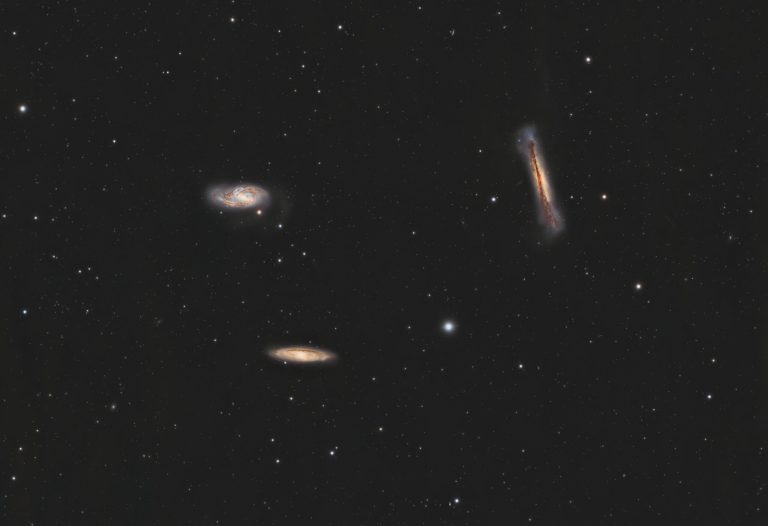
The Virgo Cluster lies, at its center, about 54 million light-years away. It contains about 1,500 galaxies, more or less, and it’s the largest cluster near us—of all types of galaxies in our little local part of the universe. So, you can see bright ellipticals like M87 and M89 in your telescope here. You can see spiral galaxies, which abound in the Virgo Cluster, like M88, M99, and NGC 4438. There are barred spirals like our own Milky Way that include M61, M90, and M100.
There are lenticular or lens-shaped galaxies that you can see as well. These include M85, NGC 4435, and NGC 4550. Lots of examples of peculiar and interacting galaxies that are colliding with each other and mostly in the process of merging also can be found in the Virgo Cluster.
So, check Astronomy magazine, get yourself a good map if you need it, consult with your telescope software, and go after these great Virgo galaxies. It’s the best time of the year in the evening sky these days to see the largest cluster of galaxies near us in the universe. I’ll see you next time.