July 2026 digital issue Now available!
Learn more
Skip to content
Astronomy Magazine logo
  • Login / Register
  • Logout
  • Shop
  • Subscribe

  • News
  • Science
    • Solar System
    • Exoplanets
    • Stars
    • Milky Way
    • Galaxies
    • Exotic Objects
    • Cosmology
  • Observing
    • In The Sky
    • Upcoming Events
    • The Sun
    • The Moon
    • Planets
    • Comets
    • Deep-Sky Objects
    • Observing Basics
    • Telescopes and Equipment
    • Astrophotography
    • Gear Guide
    • This Week in Astronomy
  • Space Exploration
    • What’s Launching This Week
    • Human Spaceflight
    • Robotic Spaceflight
  • The Magazine
  • Ask Astro
  • Star Products
  • News
  • Science
    • Solar System
    • Exoplanets
    • Stars
    • Milky Way
    • Galaxies
    • Exotic Objects
    • Cosmology
  • Observing
    • In The Sky
    • Upcoming Events
    • The Sun
    • The Moon
    • Planets
    • Comets
    • Deep-Sky Objects
    • Observing Basics
    • Telescopes and Equipment
    • Astrophotography
    • Gear Guide
    • This Week in Astronomy
  • Space Exploration
    • What’s Launching This Week
    • Human Spaceflight
    • Robotic Spaceflight
  • The Magazine
  • Ask Astro
  • Star Products
  • Login / Register
  • Logout
  • Shop
  • Subscribe

The Moon

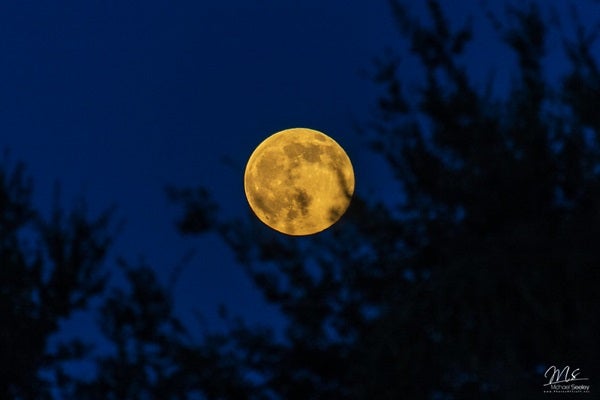
A golden Full Moon in a dark blue sky seen through the branches of a foreground tree.
Observing, The Moon

2026 Full Moon calendar: When to see the Full Moon and phases

A rocket climbs into a black night sky, leaving a bright golden-white trail that curves slightly as it rises. The glow reflects off calm water in the foreground, forming a bright vertical streak on the surface, with a dark, flat horizon line separating sky and water.
Solar System, Space Exploration

An abandoned SpaceX rocket is about to crash into the Moon

Buzz Aldrin on the Moon
The Moon

Tonight: See the Moon as it looked the day Apollo 11 landed

A size comparison illustration showing Earth and the Moon side by side against a black background. Earth appears on the left, showing the Americas, swirling cloud cover, and blue oceans, while the gray, crater-marked Moon is shown to the right at roughly one-quarter of Earth's diameter, accurately reflecting their relative sizes.
Solar System

How is the Moon 1% of Earth’s mass, but its gravity is 17% of Earth’s?

A black and white photograph of a total solar eclipse. The Moon appears as a dark circular disk at center, surrounded by the Sun's glowing white corona extending outward in streaks and rays — most prominently upward and to the lower left. The background is nearly black, emphasizing the dramatic contrast of the corona's light.
Science, Solar System

Why is the Moon exactly the same apparent size from Earth as the Sun?

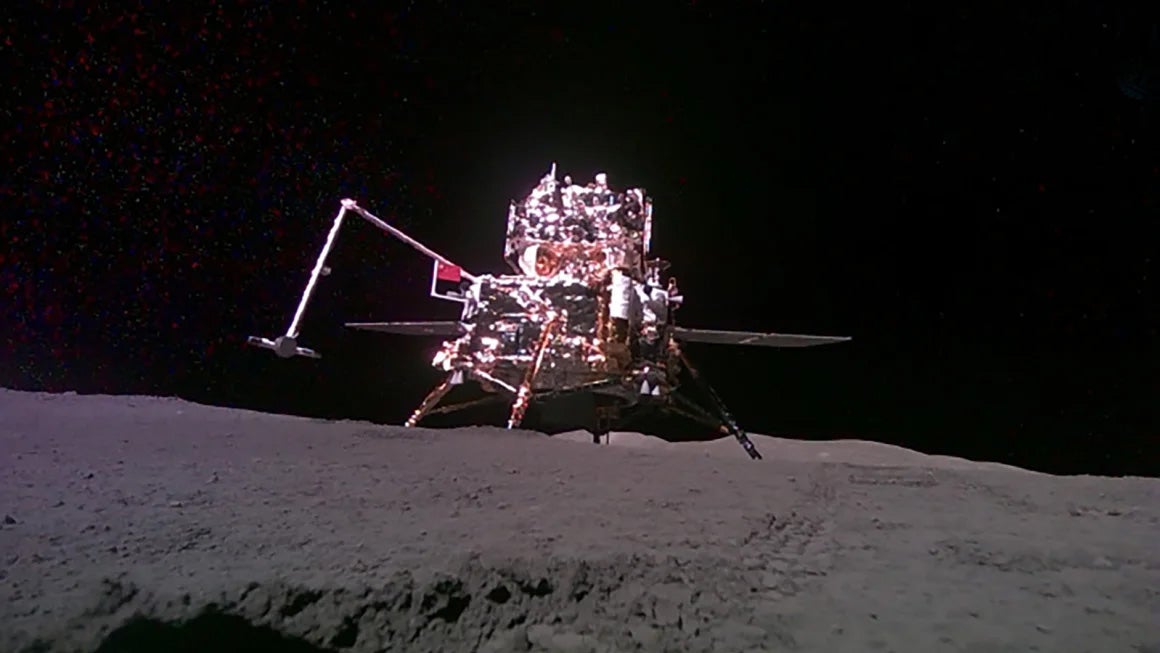
A color photograph shows the metallic, multi-tiered spacecraft resting on a grey, bumpy, and uneven ground that slopes upward from left to right. The gold- and silver-wrapped vehicle sits in the center of the frame under a stark black sky, with a long robotic arm extended outward to its left. The scene features high contrast between the brightly lit spacecraft, the light grey ground, and the pitch-black background.
Robotic Spaceflight, Today in the History of Astronomy

June 25, 2024: Chang’e 6 success

Side-by-side grayscale comparison of the Moon's two hemispheres. The left image shows the familiar near side of the Moon, featuring large dark volcanic plains called maria that give it a distinctive mottled appearance. The right image shows the far side of the Moon, which lacks significant maria and instead appears more uniformly cratered and bright, with prominent crater ray systems radiating outward from impact sites.
Science, Solar System

Why does one side of the Moon have a lot of craters, while the other does not?

An artist's illustration of two astronauts in white spacesuits working on the gray lunar surface beside a large cylindrical mobile habitat on wheels, with a smaller open surface vehicle to the right and equipment cases scattered between them, set against a black sky.
Human Spaceflight

How NASA plans to build a Moon Base

A high-contrast, black-and-white image shows the dark, sharp shadow of a mechanical structure cast against a pale, textured ground surface. The shadow features a prominent, angled central mast topped with a flat, rectangular shape resembling a small awning or panel. The background is a stark, light gray expanse marked with a grid pattern of small, faint dark dots.
Space Exploration, Today in the History of Astronomy

June 2, 1966: Surveyor 1 lands on the Moon

No matter how many Full Moons appear in any given timespan, its color will not actually change to blue. Credit: John Chumack.
Observing, The Moon

What is a Blue Moon? When’s the next one?

The Moon, This Week in Astronomy

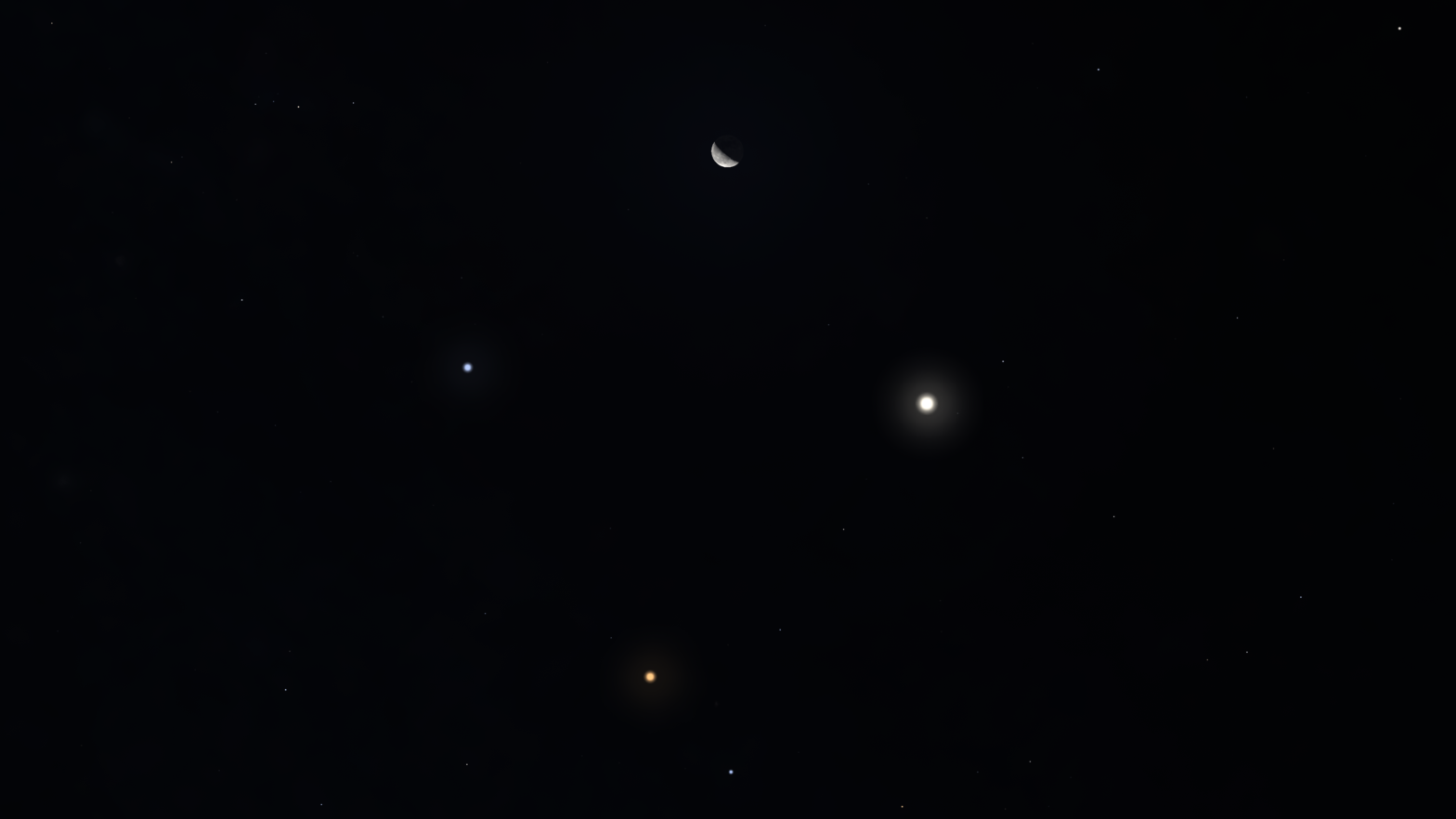
See the Moon meet Antares Sunday night

Astrophotography

A palace on the Moon

Posts pagination

1 2 3 … 32 Older posts

Astronomy Newsletter

Get newsletters, updates and special offers via email from Astronomy.com!

Please enter a valid email address.
Astronomy Magazine logo
  • Facebook
  • LinkedIn
  • YouTube
  • Instagram
  • Twitter
  • About Us
  • Contact Us
  • Subscribe
  • Customer Service
  • Advertising
  • Terms of Use
  • Privacy Policy
  • Do Not Sell

@ 2025 Firecrown Media. All Rights Reserved.

More Sites from Firecrown Media Publisher logo
Scroll to Top

Sign In

New User? Create an Account

Why Sign In? Subscribers can access their digital magazine issues, and registered users can participate in our Community forums and galleries.

Please enter your email.
Please enter your password.

Lost your password?

Manage My AccountCustomer Support