July 2026 digital issue Now available!
Learn more
Skip to content
Astronomy Magazine logo
  • Login / Register
  • Logout
  • Shop
  • Subscribe

  • News
  • Science
    • Solar System
    • Exoplanets
    • Stars
    • Milky Way
    • Galaxies
    • Exotic Objects
    • Cosmology
  • Observing
    • In The Sky
    • Upcoming Events
    • The Sun
    • The Moon
    • Planets
    • Comets
    • Deep-Sky Objects
    • Observing Basics
    • Telescopes and Equipment
    • Astrophotography
    • Gear Guide
    • This Week in Astronomy
  • Space Exploration
    • What’s Launching This Week
    • Human Spaceflight
    • Robotic Spaceflight
  • The Magazine
  • Ask Astro
  • Star Products
  • News
  • Science
    • Solar System
    • Exoplanets
    • Stars
    • Milky Way
    • Galaxies
    • Exotic Objects
    • Cosmology
  • Observing
    • In The Sky
    • Upcoming Events
    • The Sun
    • The Moon
    • Planets
    • Comets
    • Deep-Sky Objects
    • Observing Basics
    • Telescopes and Equipment
    • Astrophotography
    • Gear Guide
    • This Week in Astronomy
  • Space Exploration
    • What’s Launching This Week
    • Human Spaceflight
    • Robotic Spaceflight
  • The Magazine
  • Ask Astro
  • Star Products
  • Login / Register
  • Logout
  • Shop
  • Subscribe

Magazine

Observing, Science

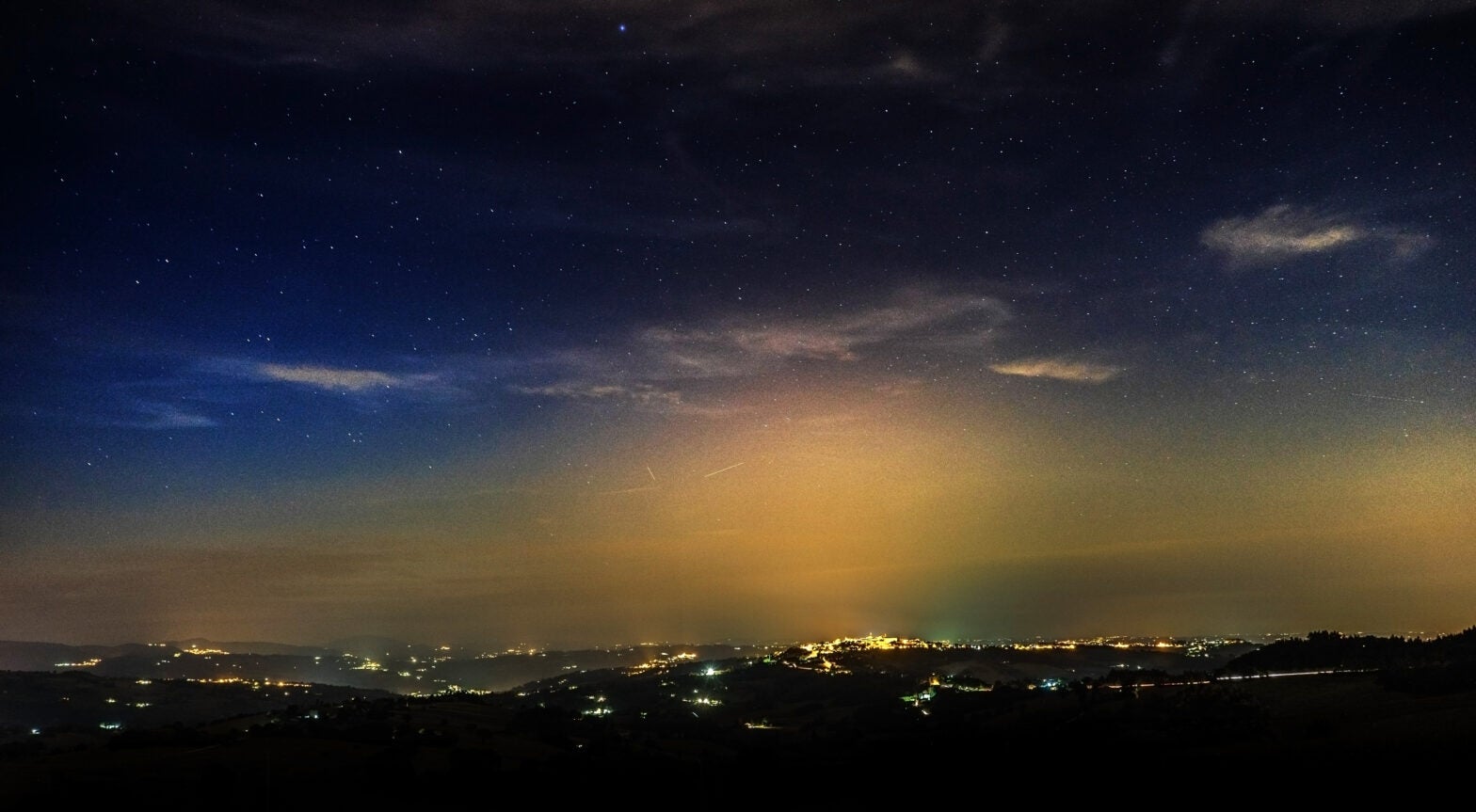
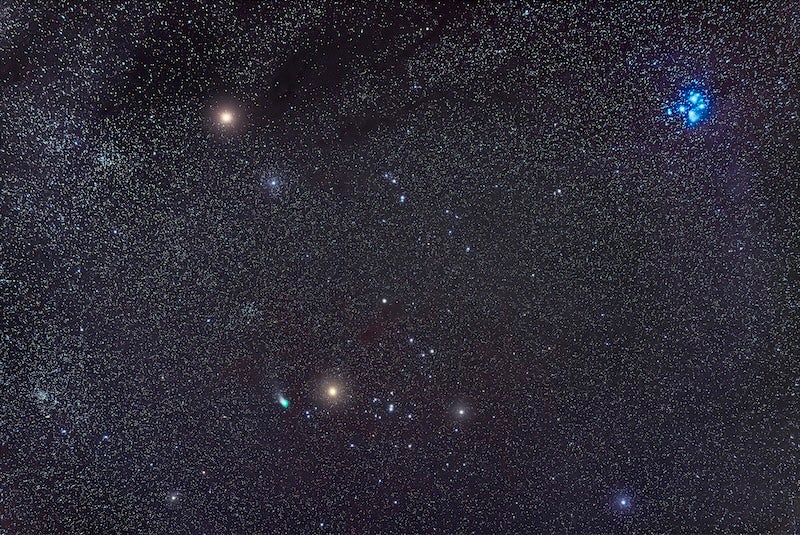
July 2026: Astro Letters

A richly detailed telescope image of a star-forming nebula, filled with swirling clouds of blue, orange, and pink gas and dust. Dark pillars of dense dust cut through the center of the image, surrounded by glowing nebular material and hundreds of orange and yellow stars scattered throughout. A bright cluster of young stars illuminates the lower right portion of the image, casting a warm glow against the surrounding gas clouds.
Stars

RCW 36: A bird of prey sails away

A close-up photograph of two hands cradling a dark, angular meteorite. The rock is roughly fist-sized with a black, slightly textured fusion crust and irregular flat faces, characteristic of a chondrite meteorite.
Solar System

How can I get a rock tested to see if it’s a meteorite?

An artist's illustration of two stars against a dense, starry background with red and blue nebula clouds. A large, intensely bright white star dominates the left side of the image, while a smaller, vivid blue star glows to its right, suggesting a binary star system.
Stars

How can a young blue giant have a white dwarf companion star that’s billions of years older?

Observing

Underappreciated Serpens

Comets

The best comets this century

A diagram illustrating the outer solar system from an angled top-down perspective. Concentric orbital paths are shown around a central yellow Sun, with Jupiter, Saturn, Uranus, and Neptune labeled at increasing distances. Pluto is shown in yellow text outside Neptune's orbit, and the entire outer region is surrounded by a diffuse haze representing the Kuiper Belt, labeled in white text.
Solar System

How do planets clear out objects on the other side of their orbit?

A James Webb Space Telescope deep field image showing hundreds of distant galaxies scattered across a black background in a range of shapes — spirals, ellipticals, and elongated streaks — in colors from white and blue to orange and red. A large, detailed barred spiral galaxy with a bright white core and faint blue spiral arms dominates the center-left of the frame. Several foreground stars display the distinctive six-pointed diffraction spikes characteristic of JWST imagery.
Cosmology, Stars

JWST studies a supernova near the dawn of time

A wide-angle night sky photograph showing a glowing, diffuse white cloud created by a rocket fuel dump, billowing against a deep blue starry sky. A bright streak of light is visible within the expanding plume. Silhouetted trees and a hillside are visible along the bottom, and the sky fades to a lighter blue near the horizon.
Observing

What’s that in the sky?

Observing

From the Editor, July 2026: See it for yourself

Telescopes and Equipment

20 essential observing accessories

A size comparison illustration showing Earth and the Moon side by side against a black background. Earth appears on the left, showing the Americas, swirling cloud cover, and blue oceans, while the gray, crater-marked Moon is shown to the right at roughly one-quarter of Earth's diameter, accurately reflecting their relative sizes.
Solar System

How is the Moon 1% of Earth’s mass, but its gravity is 17% of Earth’s?

Posts pagination

Newer posts 1 2 3 4 … 298 Older posts

Astronomy Newsletter

Get newsletters, updates and special offers via email from Astronomy.com!

Please enter a valid email address.
Astronomy Magazine logo
  • Facebook
  • LinkedIn
  • YouTube
  • Instagram
  • Twitter
  • About Us
  • Contact Us
  • Subscribe
  • Customer Service
  • Advertising
  • Terms of Use
  • Privacy Policy
  • Do Not Sell

@ 2025 Firecrown Media. All Rights Reserved.

More Sites from Firecrown Media Publisher logo
Scroll to Top

Sign In

New User? Create an Account

Why Sign In? Subscribers can access their digital magazine issues, and registered users can participate in our Community forums and galleries.

Please enter your email.
Please enter your password.

Lost your password?

Manage My AccountCustomer Support