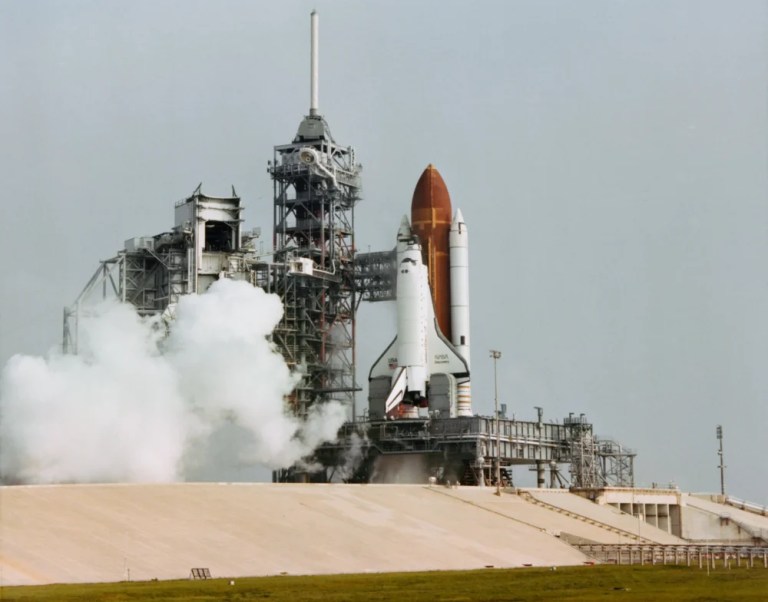
On the morning of Feb. 1, 2003, Space Shuttle Columbia was set to return to Florida’s Kennedy Space Center following a 16-day orbital mission packed with scientific experiments.
But just 15 minutes after breaching Earth’s atmosphere — while still at an altitude of some 39 miles (63 kilometers) and traveling at about 18 times the speed of sound — Columbia catastrophically broke apart over northeast Texas, killing all seven astronauts on board.
Those astronauts were Commander Rick Husband, Pilot Willie McCool, mission specialists Michael Anderson, Laurel Clark, and Kalpana Chawla, and Payload Specialist Ilan Ramon of Israel.
Columbia’s final mission
What turned out to be Columbia’s last mission, STS-107, was the first of six space shuttle missions NASA had planned for 2003. It was also the only mission that year that wasn’t focused on continuing the construction of the ever-growing International Space Station (ISS).
Instead, the Columbia crew was tasked with carrying out the first shuttle mission dedicated to microgravity research in nearly five years. Conducting some 80 experiments over the course of 16 days in orbit, the crew’s investigations spanned the physical, biological, and space sciences.
Many of these experiments had applications for future studies that would be conducted aboard the International Space Station. This fact led STS-107 Mission Scientist John B. Charles to describe the mission’s research as “simulated space station science, although the science itself stands on its own right,” according to a NASA news release.
To complete their ambitious list of tasks, on their first day in space, the Columbia crew split into two teams so they could work opposite shifts. The Red Team consisted of Husband, Chawla, Clark, and Ramon, while the Blue Team was made up of McCool, Anderson, and Brown.
Over the next 15 days, the teams worked tirelessly, overcoming numerous technical issues to complete their planned experiments. In fact, the crew was so productive that scientists on the ground were greatly impressed with the astronauts’ scientific output.
A potential problem arises
While in orbit, NASA engineers carried out a routine analysis of Columbia’s Jan. 16 launch.
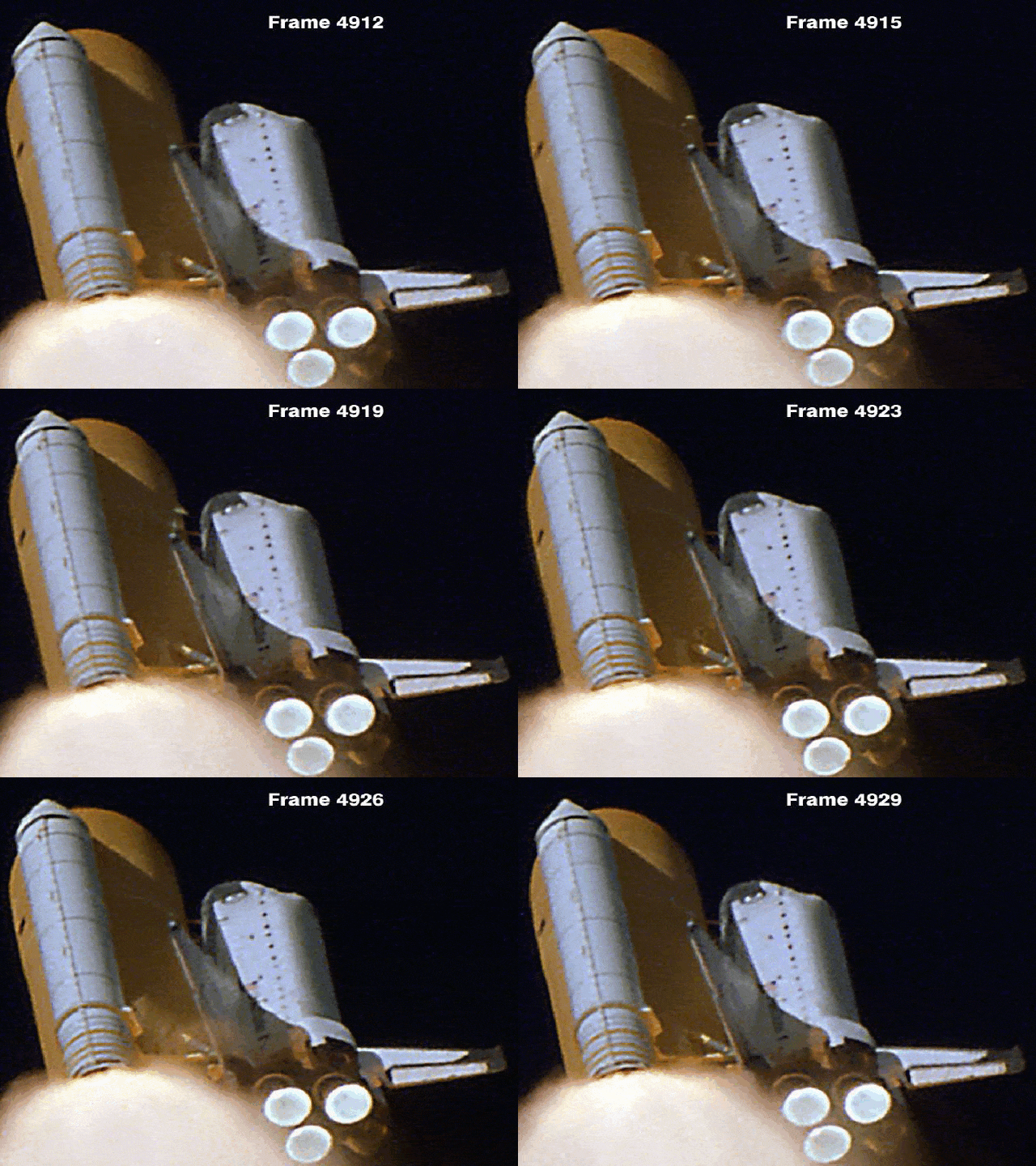
Upon reviewing the footage, the engineers noticed that a suitcase-sized piece of foam insulation had broken off the shuttle’s external tank about 82 seconds after liftoff. This rogue piece of foam went on to strike Columbia’s left wing at a relative speed between 425 mph (685 km/h) and 575 mph (920 km/h).
At the time, NASA was unable to identify the exact location of the strike, as well as how much damage it caused to Columbia. But because similar strikes had occurred during previous shuttle launches, NASA management ultimately decided that the issue was not a pressing concern. The space agency even went as far as sending the astronauts a brief video clip of the foam strike, reassuring them that it posed no danger.
As the mission approached its end, just days before the ill-fated reentry, Columbia’s crew took a moment to pay tribute to the astronauts who had lost their lives during the Challenger disaster on Jan. 28, 1986, as well as during the Apollo 1 fire that took place Jan. 27, 1967.
From orbit, Columbia Commander Rick Husband said: “It is today that we remember and honor the crews of Apollo 1 and Challenger. They made the ultimate sacrifice: giving their lives in service to their country and for all mankind. Their dedication and devotion to the exploration of space was an inspiration to each of us, and still motivates people around the world to achieve great things in service to others.”
Columbia breaks apart during reentry
During STS-107, Space Shuttle Columbia completed 255 trips around Earth, traveling a total of some 6.6 million miles (10.6 million km) over the course of its mission. But it wasn’t until the craft was just a few thousands miles from its planned landing site in Florida that disaster struck.
As Columbia tore through the upper atmosphere, the hole in its left wing gouged out by the foam strike allowed superheated plasma to breach the shuttle’s protective thermal tiles and penetrate the wing.
Mission Control began receiving odd signals from the wing’s tire pressure and temperature sensors. But when they attempted to contact the crew about the problem, they received no response. Very quickly, the superheated plasma had destroyed the wing, ultimately causing Columbia itself to begin to disintegrate.
Shortly thereafter, civilians started reporting debris falling from the sky above north Texas. It soon became clear Columbia had experienced a catastrophic failure none of the crew members could have possibly survived.
After the disaster, NASA commissioned a thorough review of the accident. The report found “The organizational causes of this accident are rooted in the Space Shuttle Program’s history and culture, including the original compromises that were required to gain approval for the Shuttle, subsequent years of resource constraints, fluctuating priorities, schedule pressures, mischaracterization of the Shuttle as operational rather than developmental, and lack of an agreed national vision for human space flight.”
In short, the report says, “Cultural traits and organizational practices detrimental to safety were allowed to develop.”
NASA grounded the entire Space Shuttle Program for more than 29 months. The program resumed operations with STS-114, launching Space Shuttle Discovery in July 2005.
Remembering the Columbia crew
In the wake of the Columbia disaster, in August 2003, seven asteroids were named after the seven crew members who lost their lives: 51823 Rickhusband, 51824 Mikeanderson, 51825 Davidbrown, 51826 Kalpanachawla, 51827 Laurelclark, 51828 Ilanramon, and 51829 Williemccool.
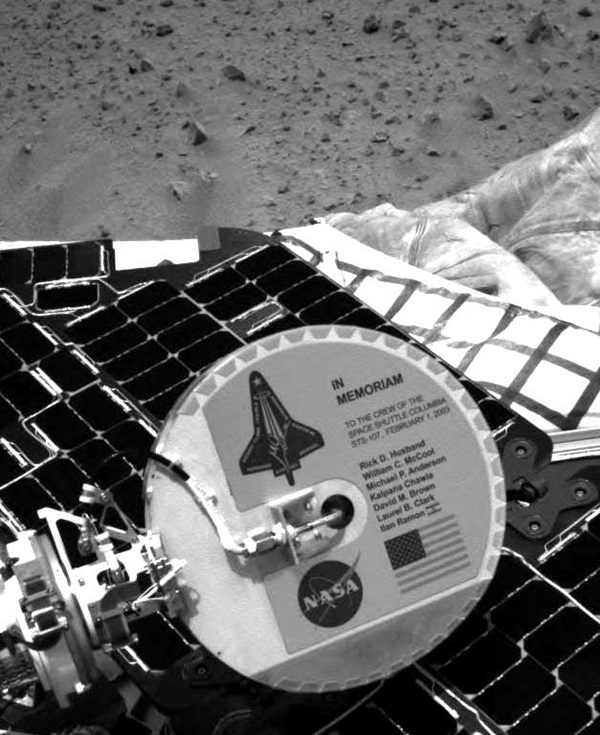
Additionally, when the Spirit rover landed on Mars the following year, it carried with it a memorial plaque honoring the Columbia crew.
“During this time of great joy for NASA, the Mars Exploration Rover team and the entire NASA family paused to remember our lost colleagues from the Columbia mission,” NASA Administrator Sean O’Keefe said after Spirit reached Mars in 2004. “To venture into space, into the unknown, is a calling heard by the bravest, most dedicated individuals.”