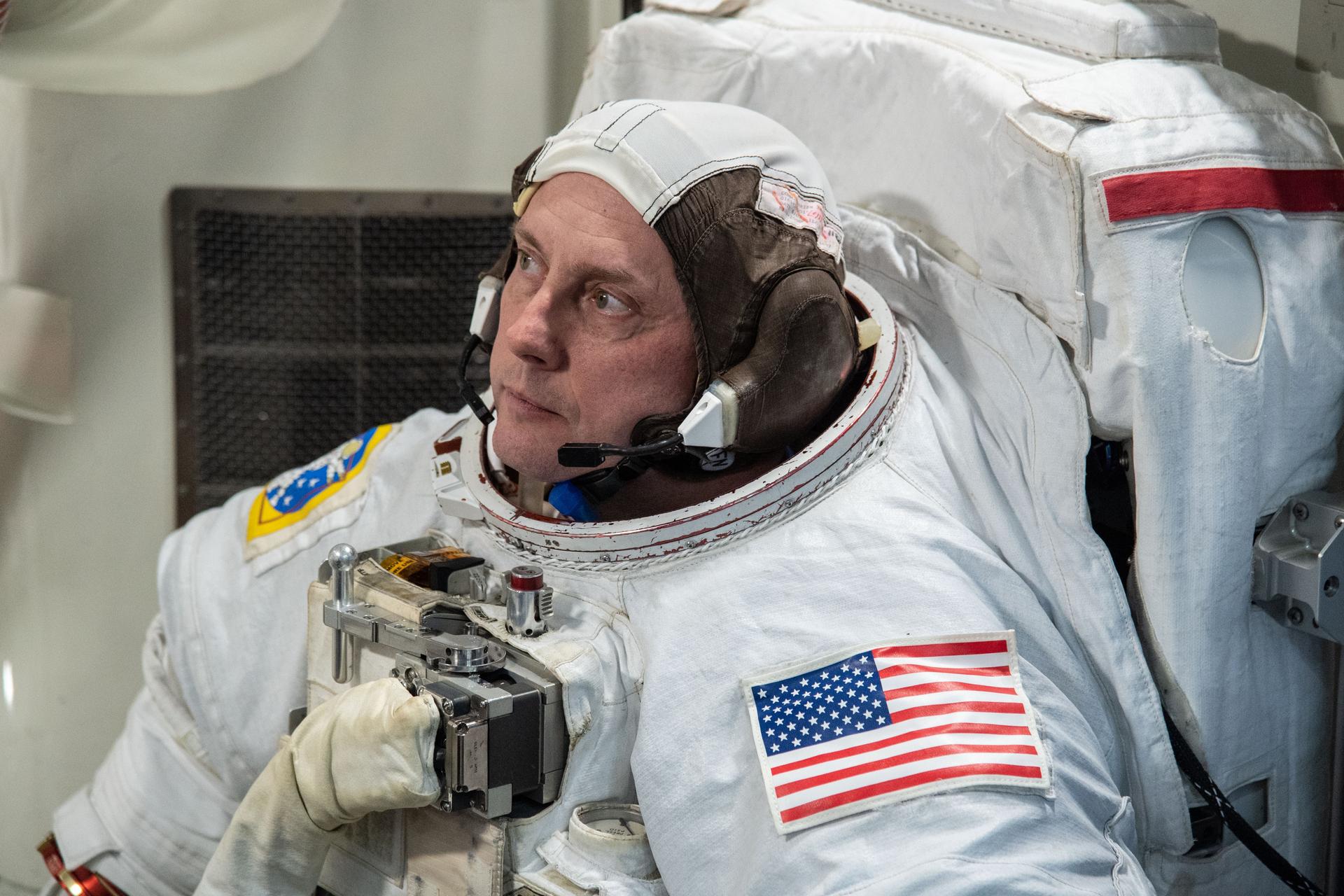
On Feb. 25, NASA revealed that the medical evacuation of Crew-11 from the International Space Station (ISS) last month — the first early return of a crew in more than 25 years of continual occupancy for the orbiting laboratory — was due to a health concern with veteran astronaut Mike Fincke.
“On Jan. 7, while aboard the International Space Station, I experienced a medical event that required immediate attention from my incredible crewmates. Thanks to their quick response and the guidance of our NASA flight surgeons, my status quickly stabilized,” Fincke said in a NASA statement released at his request.
The incident first came to light on Jan. 8, when NASA held a special press conference to announce the early return of Crew-11 — which included Commander Zena Cardman, JAXA’s Kimiya Yui, and Roscosmos’s Oleg Platonov — citing health concerns for an then-unidentified astronaut. “The health and the well-being of our astronauts is always and will be our highest priority,” NASA Administrator Jared Isaacman said during the press conference.
Working with SpaceX, NASA developed a plan to bring the crew home for diagnostics that the station’s onboard medical suite could not provide. On Jan. 14, the SpaceX Dragon Endeavour undocked from the ISS with all four members of Crew-11. The capsule splashed down safely off the coast of San Diego on Jan. 15. The crew, including Fincke, received routine medical examinations at Scripps Memorial Hospital following the splashdown.
While the specific nature of the condition remains private, NASA officials emphasized that the return was not an emergency, but a cautious decision to utilize imaging equipment unavailable in orbit. Fincke’s condition was monitored on orbit using the station’s portable ultrasound machine, a tool he noted should be included on all future spaceflights in a Jan. 21 press conference held before it was revealed that he was the affected astronaut.
Fincke thanked the public for their concern and stated that he was in good health, not disclosing any particulars on the condition that led to the crew’s early return. “I’m doing very well and continuing standard post-flight reconditioning at NASA’s Johnson Space Center in Houston. Spaceflight is an incredible privilege, and sometimes it reminds us just how human we are. Thank you all for your support,” Fincke said.
Fincke, 58, is one of NASA’s most experienced explorers. A retired Air Force Colonel selected as an astronaut in 1996, this mission marked his fourth flight to the ISS. With this latest stay, Fincke has accumulated 549 days in space, putting him fourth on the list of NASA astronauts who have spent the most days in orbit. Known for his technical expertise, he has performed nine spacewalks and is one of the few Americans certified to fly the Space Shuttle, the Russian Soyuz, the Boeing Starliner, and the SpaceX Crew Dragon.
Despite the early departure, NASA considers the Crew-11 mission a success. During their 167 days in orbit, the crew completed more than 140 scientific experiments and traveled nearly 71 million miles. “Over the past five months aboard the International Space Station, Crew eleven completed a series of demanding and productive mission objectives,” Isaaacman said during the Jan. 15 press conference.
The ISS, which was briefly understaffed following Crew-11’s departure, returned to its full seven-person complement on Feb. 14 with the arrival of Crew-12. The new residents — Jessica Meir, Jack Hathaway, Sophie Adenot, and Andrey Fedyaev — are now beginning their planned six-month stay to continue the work Fincke and his team started.