Key Takeaways:
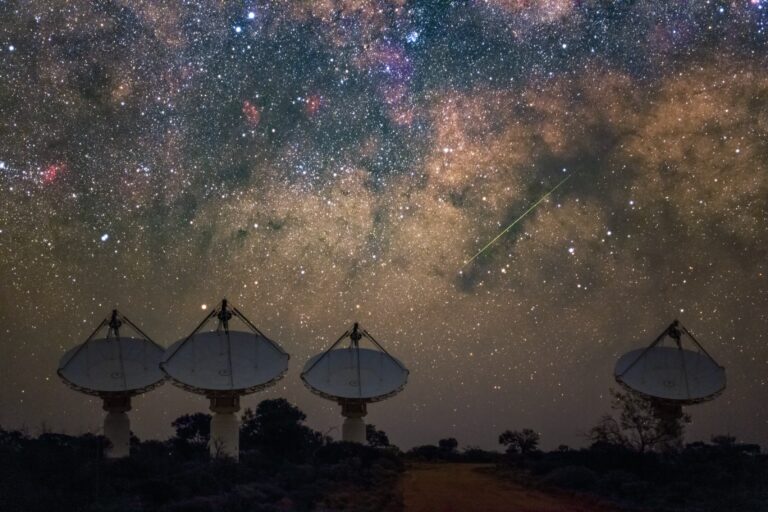
While astronomers use Earth-based observatories to identify gamma ray bursts, they still utilize orbiting telescopes for studying gamma rays. These satellites have made significant contributions to gamma-ray astronomy in their five-decade history.
Listed below are gamma-ray satellites that have helped us develop a better understanding of these high-energy photons.

Launch Year: 1961
Agency: NASA
Carrying a telescope built by Massachusetts Institute of Technology (MIT) scientists William L. Kraushaar and George W. Clark, Explorer XI was the first satellite dedicated to gamma-ray astronomy. Placed in an eccentric orbit around Earth, the satellite searched for the signs of cosmic-ray interaction with interstellar material. Because Explorer could not be actively directed, the spacecraft rotated end over end, providing a rough scan of the celestial sphere. The satellite detected 22 cosmic gamma-ray events before its power source deteriorated.
For more information: http://heasarc.gsfc.nasa.gov/docs/heasarc/missions/explorer11.html

Launch Year: 1975
Agency: European Space Agency (ESA)
Launched from California, Cos-B was ESA’s first satellite dedicated to a single experiment – in this case, detecting gamma rays. The Caravane Collaboration, a collection of research laboratories throughout Western Europe, directed the project. Over six years, Cos-B provided important gamma-ray data, most significantly the first complete map of the Milky Way in gamma rays.
For more information: http://www.esa.int/export/esaSC/120375_index_0_m.html

Launch Year: 1989
Agency: Russian Space Agency
Granat was used to study both interstellar x rays and gamma rays. The instruments on board were developed by Russia and France. For the first few years of its nine years of service, the satellite made targeted observations. In 1994, Granat began operating in survey mode because its fuel supply was exhausted so the spacecraft could no longer aim. Besides its cosmic ray detections, a highlight of the mission is its deep imaging of the galactic center.
For more information: http://heasarc.gsfc.nasa.gov/docs/granat/granat.html

Launch Year: 1991
Agency: NASA
Compared to Explorer XI’s weight of roughly 82 pounds, CGRO was a behemoth at 17 tons, making it the largest astrophysical payload of its time. Gamma-ray instruments comprised almost half of the satellite’s bulk. By using these larger telescopes, CGRO could gather more gamma-ray photons than previous satellites. The instruments studied photon energies ranging from 20,000 electron volts (20 keV) to more than 30 billion electron volts (30 GeV). CGRO’s productive career lasted until 2000, when NASA directed the satellite into Earth’s atmosphere. Before its death, CGRO showed us that our universe is a violent and rapidly changing place with its detection of gamma rays, identification of gamma-ray bursts, and the discovery of a new class of quasars. A number of European countries in association with the ESA contributed to this mission’s success.
For more information: http://cossc.gsfc.nasa.gov/

Launch Year: 1991
Agency: Japan’s Institute for Space and Astronautical Sciences (ISAS)
Japanese for “sunbeam,” Yohkoh studied x rays and gamma rays produced by the sun. A gamma-ray detector from NASA monitored gamma-ray emissions. The satellite functioned reliably until December 14, 2001. During the annular eclipse that day, Yohkoh fell into the shadow of the eclipsed sun, causing the spacecraft to discharge its batteries and lose its ability to point toward the sun.
For more information: http://www.solar.isas.ac.jp/english/

Launch Year: 2000
Agency: NASA and MIT Center for Space Research
Three years after the malfunction of HETE’s launch vehicle, astronomers in France, Italy, Japan, and the United States collaborated for a second attempt. So far so good with this productive observatory, designed to detect and localize gamma-ray bursts. In October, HETE detected a gamma-ray burst that lasted for 100 seconds. This discovery led to the most detailed observations of a gamma-ray burst.
For more information: http://space.mit.edu/HETE/
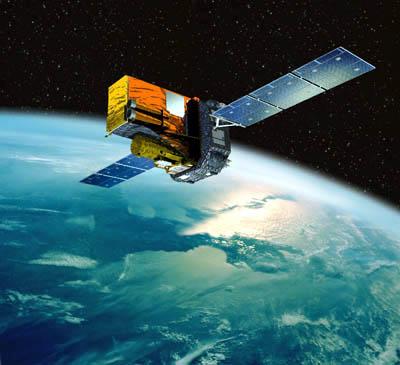
Launch Year: 2002
Agency: ESA
Integral’s telescope possesses two imagers that can scan 20,000 to 10 million electrons, making it the most sensitive gamma-ray observatory ever launched. Astronomers expect Integral will be key in not only gamma-ray detections, but also in providing clues about the explosions from which these high-energy photons originated.
For more information: http://sci.esa.int/home/integral/index.cfm

Launch Year: Planned for 2003
Agency: NASA
Swift will search for and investigate gamma-ray bursts while focusing on the afterglow of these explosions.
For more information: http://swift.gsfc.nasa.gov/