Key Takeaways:
- New data from the Hubble Space Telescope suggests the Sombrero galaxy (M104) may have undergone a major merger event in its past.
- This conclusion is primarily drawn from the detection of an unexpectedly high number of younger, metal-rich stars within the galaxy’s extended halo, an area typically dominated by older, metal-poor stars.
- Through the application of models and simulations, astronomers hypothesize that this influx of metal-rich stars resulted from a merger with another galaxy of similar mass billions of years ago.
- Notably, the galaxy’s disk and halo maintain a remarkably smooth appearance, presenting a puzzling lack of other morphological indicators typically associated with such a turbulent merger event.
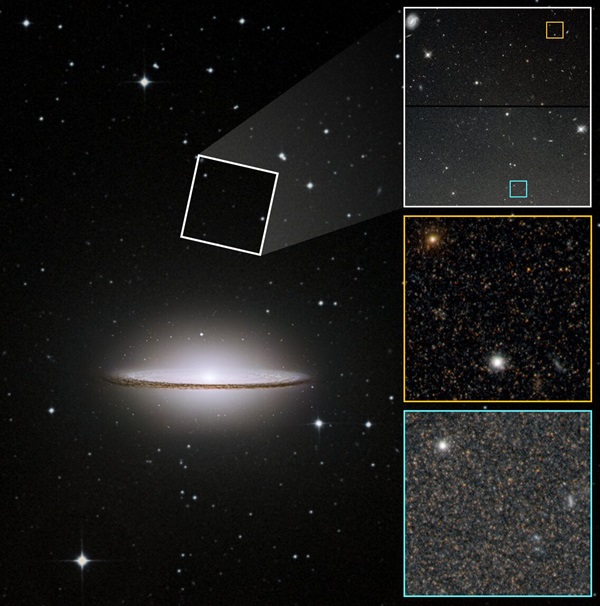
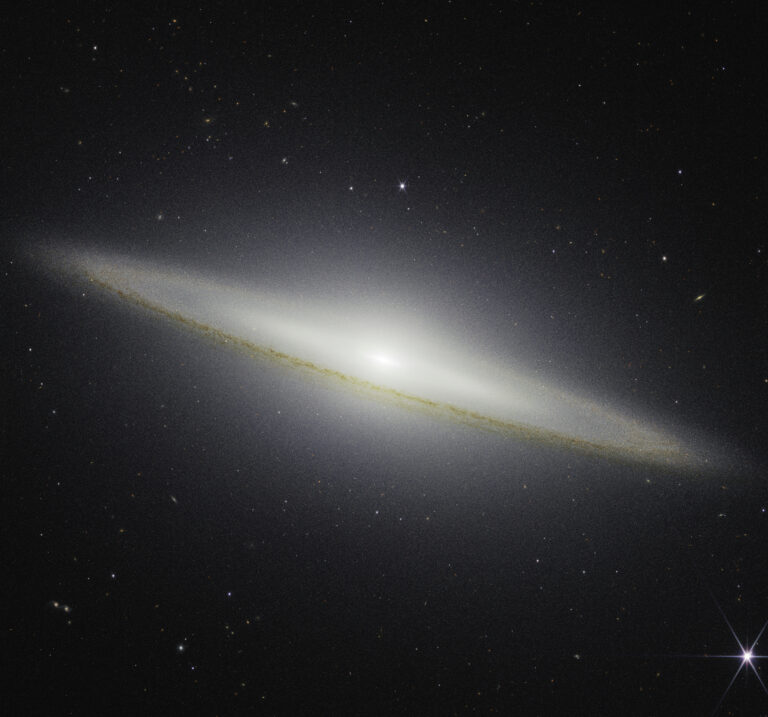
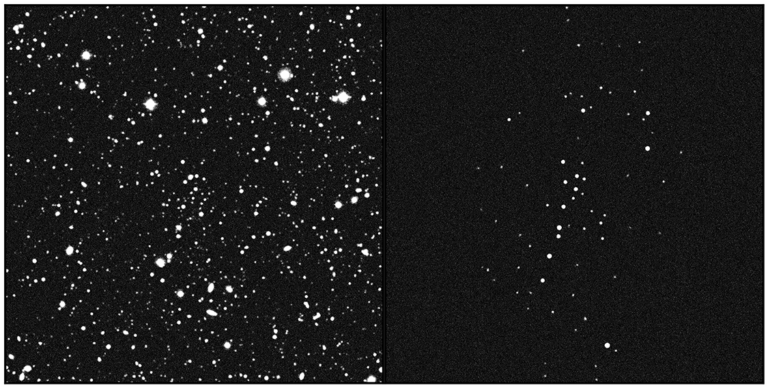
On the left is an image of the Sombrero galaxy, and on the right side shows the detail in which Hubble was able to capture of the stars in the halo.
“The Sombrero has always been a bit of a weird galaxy, which is what makes it so interesting,” Paul Goudfrooij, a scientist for the Space Telescope Science Institute, said in a press release.
The Sombrero galaxy is a go-to target for amateur observers, largely due to the stunningly smooth brim of its disk, which appears to us nearly edge on. This is where the Sombrero gets its name. But, as with most galaxies, the Sombrero’s stars extend far beyond the galaxy’s disk. This area of space surrounding the “sombrero” is called the halo.
Halos are usually packed with old, metal-poor stars. But using Hubble, astronomers resolved tens of thousands of stars in the Sombrero’s dim halo. They surprisingly found it contains many more younger, metal-rich stars than expected.
Utilizing models and simulations, scientists investigated different ways the metal-rich stars could have ended up in the Sombrero’s halo. Based on the evidence, astronomers speculate that billions of years ago, the galaxy merged with another galaxy of similar mass.
Oddly, the Sombrero galaxy’s disk and halo don’t show any other signs that such an event happened though. Both have a silky smooth appearance, which doesn’t seem to suggest a turbulent past. The team will continue to observe the Sombrero galaxy, especially when the powerful James Webb Space Telescope is launched in 2021.
The findings were published February 12 in the Astrophysical Journal.