Key Takeaways:
- Space agencies actively monitor Near-Earth Objects (NEOs), defined as comets and asteroids with orbits that bring them within 1.3 astronomical units of the Sun, with over 2,200 Potentially Hazardous Asteroids (PHAs) identified by 2022.
- The largest recognized near-Earth asteroid is 1036 Ganymed, measuring approximately 37 kilometers in diameter, with a closest solar approach of 1.24 AU.
- The largest near-Earth comet is 109P/Swift-Tuttle, approximately 26 kilometers in diameter, which approaches the Sun at 0.95 AU every 133 years and is responsible for the Perseid meteor shower.
- Smaller NEOs pose a detection challenge, as evidenced by objects like 2020 VT4, which was observed only after its closest recorded passage of 375 kilometers above Earth's surface.
What is the largest asteroid and comet considered to be a near-Earth object? How large are they?
Doomsday impactors are a staple of modern science fiction. The most famous real-world example of an impact wiping out much of the life on Earth is, of course, the object that took out the dinosaurs some 66 million years ago.
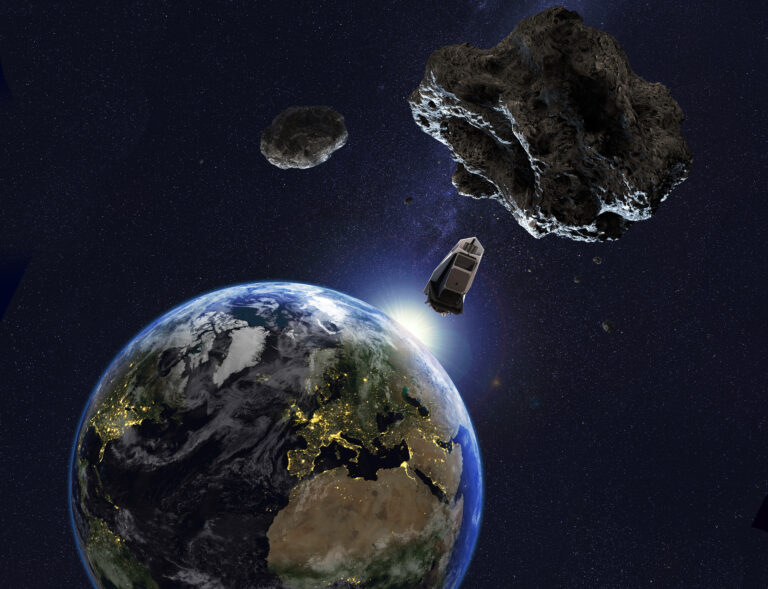
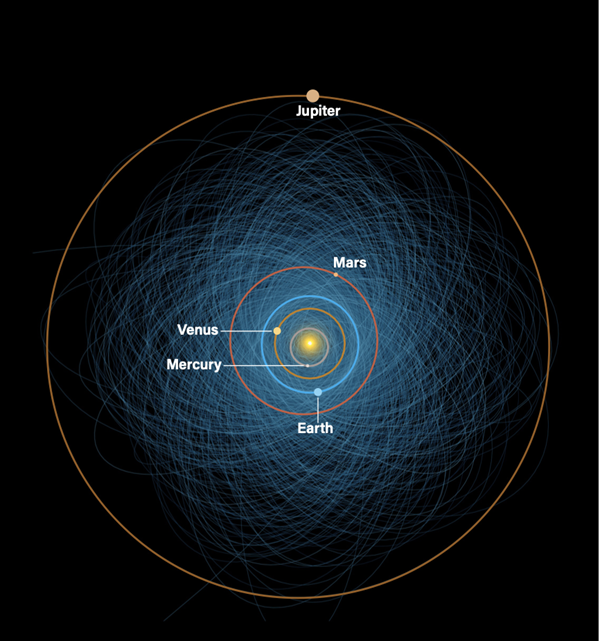
Thankfully, events of that magnitude are fairly uncommon, happening about once every few hundreds of millions of years. But the possibility is there, so space agencies around the globe have taken to monitoring the skies for near-Earth objects (NEOs). These objects are comets and asteroids whose orbits take them within 1.3 astronomical units (AU; where 1 AU is the average distance between Earth and the Sun) of our star.
On that note, the largest comets and asteroids tend to stay far enough away that we have very little to worry about. The largest asteroid considered a NEO is 1036 Ganymed. This asteroid is about 23 miles (37 kilometers) in diameter. With a closest solar approach of 1.24 AU, 1036 Ganymed is just within the minimum distance to categorize it as an NEO.
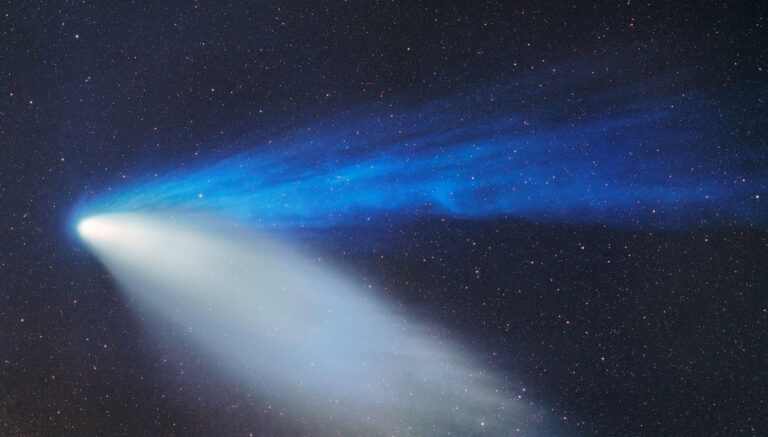
The largest comet in the sky today is 109P/Swift-Tuttle. At 16 miles (26 km), Swift-Tuttle is about twice the size of the object believed to have wiped out the dinosaurs. However, this comet poses little threat to us, as it makes its closest solar approach of 0.95 AU every 133 years. And, in fact, we have it to thank for the Perseid meteor shower.
It’s actually the little guys that we need to be more concerned about, as they’re more likely to sneak past our detection. Earth’s closest encounter on record with a known NEO was with 2020 VT4, which passed a mere 232 miles (375 km) above Earth’s surface Nov. 13, 2020. The asteroid was spotted only after it made its closest approach. The previous closest asteroid, 2020 QG, had skimmed past Earth just three months before 2020 VT4; it, too, was not seen prior to its close pass.
Associate Editor