Looking for a sky event this week? Check out our full Sky This Week column.
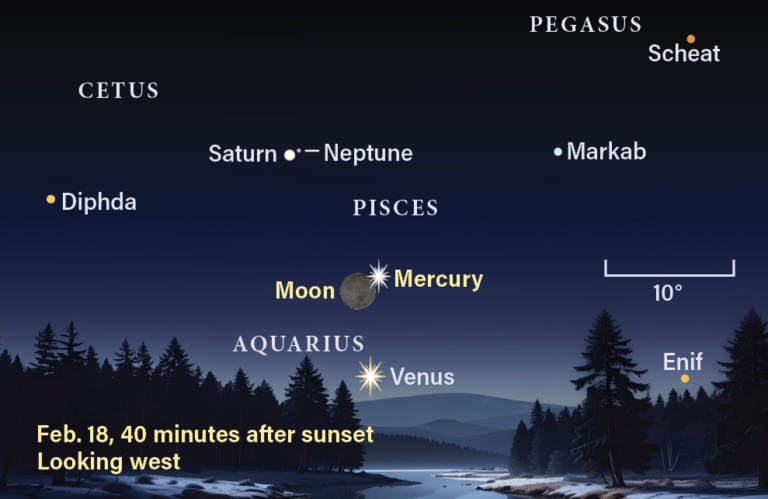
February 18: The Moon meets Mercury
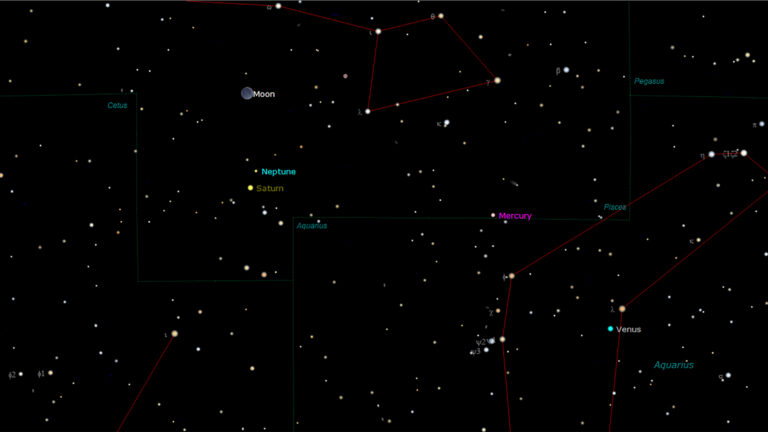
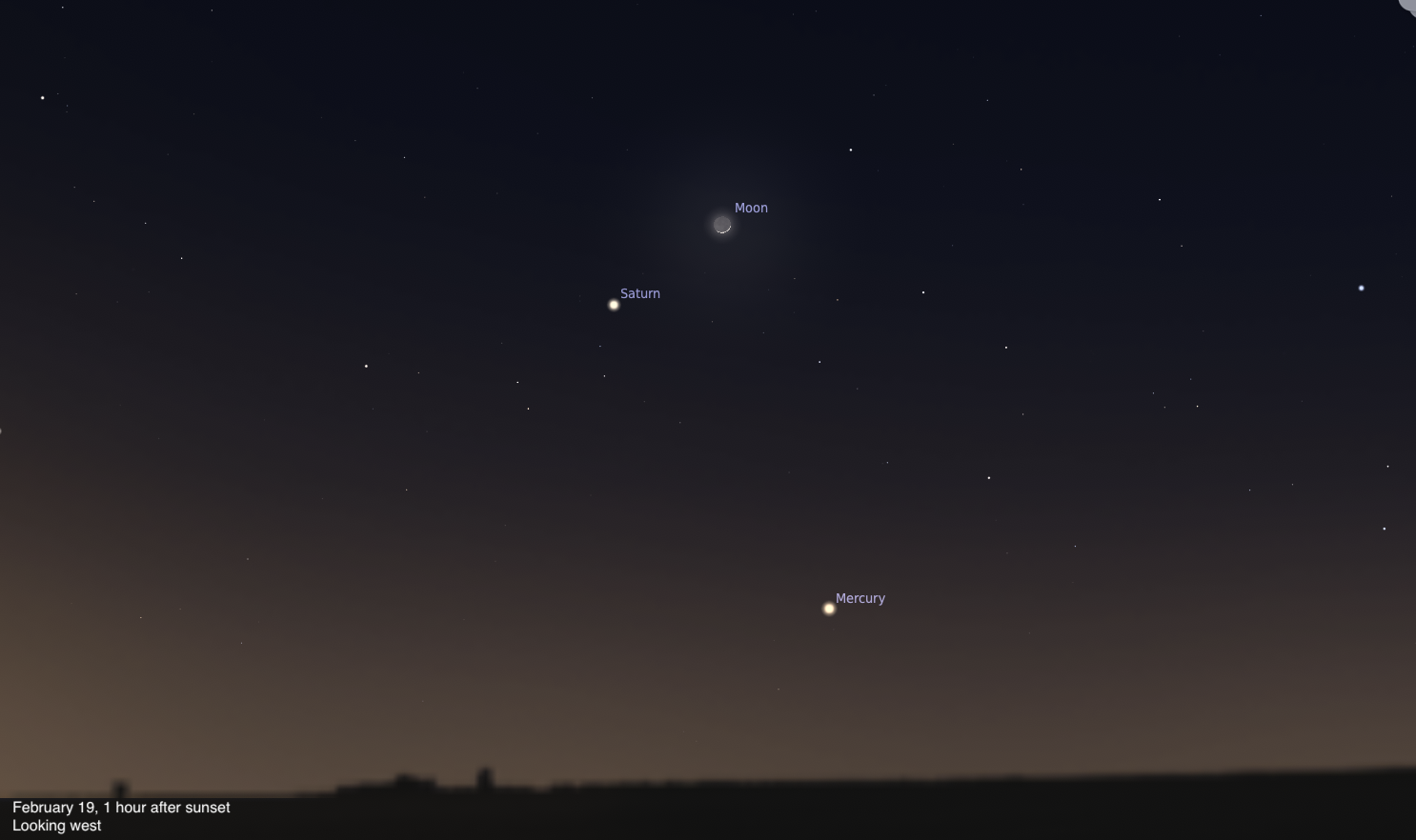
Mercury reaches greatest eastern elongation (18°) at 1 P.M. EST. You can catch the solar system’s smallest planet in the evening sky, shining at magnitude –0.5 in the west. It stands 11° high 30 minutes after sunset, about 8° above brighter Venus, which is close to the horizon. A thin crescent Moon lies above Mercury as well, creating a lovely naked-eye trio.
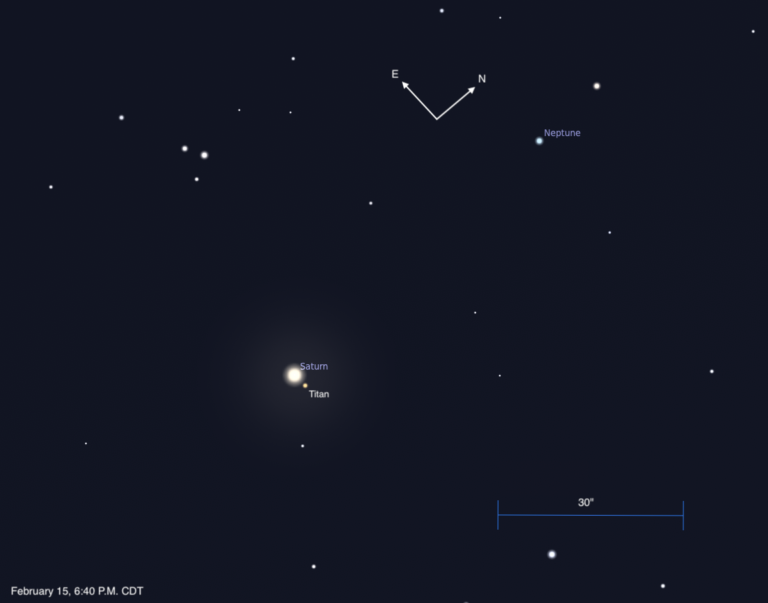
The Moon passes 4° north of Neptune and 5° north of Saturn at 7 P.M. EST, as the two distant planets are still less than a degree apart in Pisces. Once the sky grows darker, 1st-magnitude Saturn should pop out against the background sky to the lower left of the Moon. It’s the brightest point of light in this region, and the third-brightest light in the sky, after Venus and Mercury. Neptune, at magnitude 7.8, is not visible to the naked eye. Once full darkness falls, however, you can find the distant ice giant by centering binoculars or a telescope on Saturn, then glancing to the north. The planets are currently just 0.8° apart.
Sunrise: 6:47 A.M.
Sunset: 5:41 P.M.
Moonrise: 7:47 A.M.
Moonset: 8:22 P.M.
Moon Phase: Waxing crescent (8%)
*Times for sunrise, sunset, moonrise, and moonset are given in local time from 40° N 90° W. The Moon’s illumination is given at 10 P.M. local time from the same location.