
Key Takeaways:
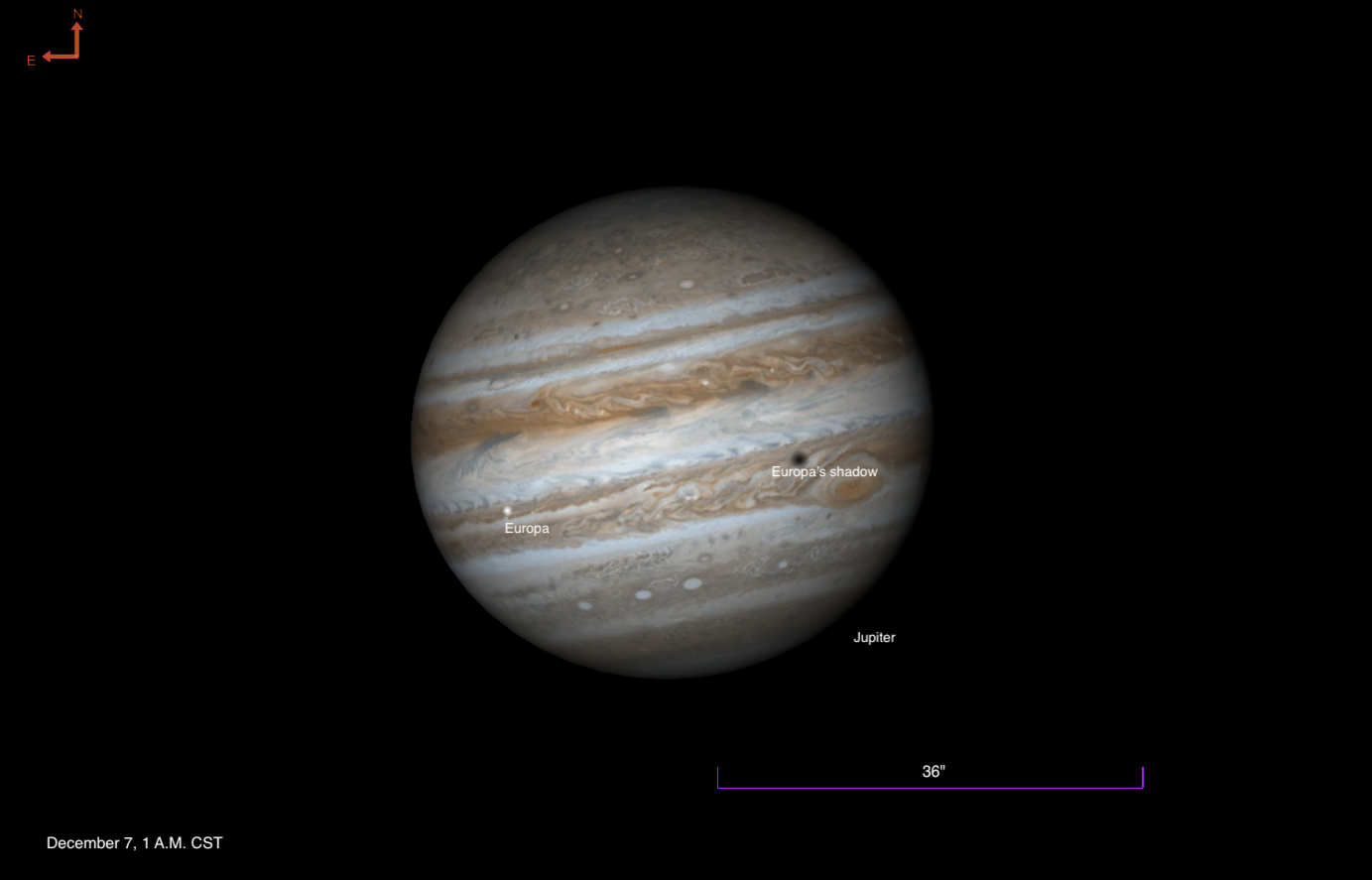
- On December 5, Jupiter, located in eastern Gemini, featured a transit of Io and its shadow, followed by Europa and its shadow across the planetary disk; Europa's shadow appeared at 11:54 P.M. EST, with the moon's transit commencing at 1:31 A.M. EST on December 7.
- Jupiter, shining at magnitude –2.6 and rising around 7:30 P.M. local time on December 5, remained visible to the naked eye despite the proximity of a bright waxing Moon, though a telescope was necessary to observe the detailed transits of its moons.
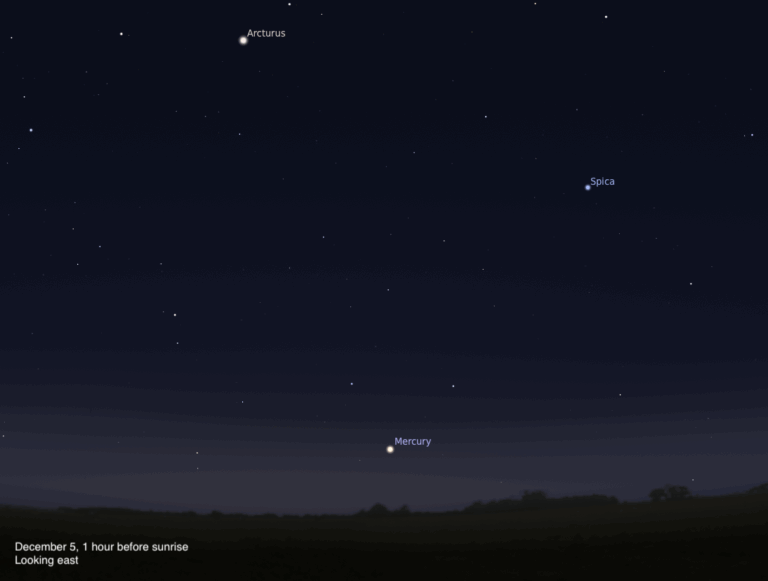
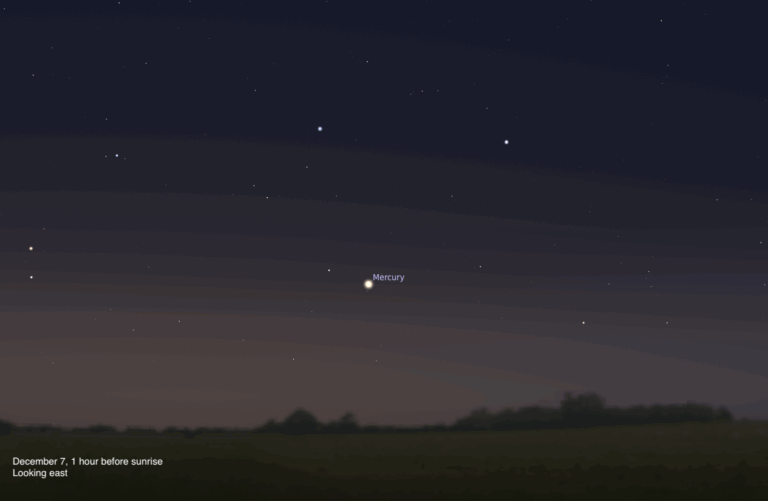
- Mercury achieved its greatest western elongation on December 7 at 4 P.M. EST, placing it 21° west of the Sun and making it observable in the eastern predawn sky around 6 A.M. local time, situated amidst the stars of Libra.
- During this period, Mercury presented a magnitude of –0.4 and, when viewed through a telescope, displayed a 7-arcsecond disk that was 61 percent illuminated from below, indicating the Sun's position.
Looking for a sky event this week? Check out our full Sky This Week column.
December 5: Mercury improving
This evening brings a transit of Europa and its shadow across Jupiter, beginning late and lasting overnight.
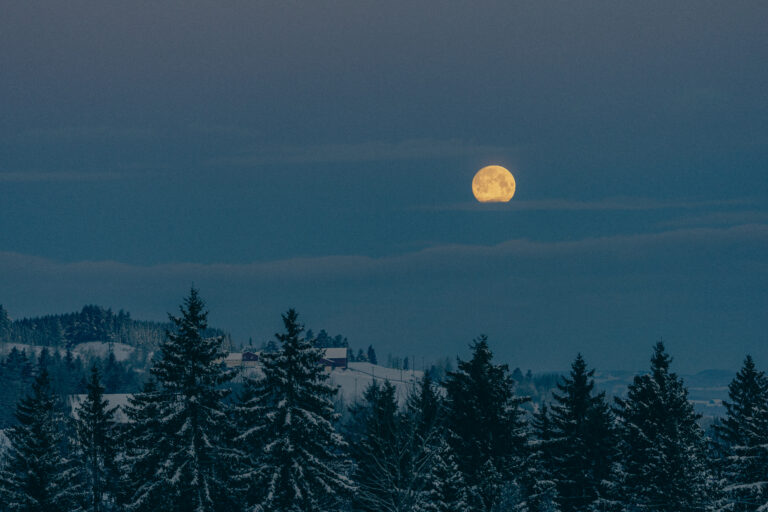
Jupiter is located in eastern Gemini; the giant planet rises around 7:30 P.M. local time, not long after the waxing Moon (now in western Gemini). At magnitude –2.6, Jupiter should still stand out well to the naked eye, despite the bright Moon nearby.
East Coast observers and even some skywatchers in the eastern Midwest may catch Io and its shadow both on the jovian disk as it rises. You’ll need a telescope to spot the pair (and Europa’s transit later on). At 8:30 P.M. EST, Io is roughly midway across the disk, following its shadow, which appears closer to the western limb. The shadow reaches the limb and disappears shortly after 9 P.M. EST, leaving Io alone on the disk, also heading for the western limb. Io’s transit ends around 9:50 P.M. EST, leaving Jupiter’s disk clear — for now.
For a while, Io is alone to Jupiter’s west. Europa is closing in from the east, with Callisto and Ganymede much farther west (the former is closer to the planet than the latter). Late in the evening, before Europa has reached the limb, its shadow appears at 11:54 P.M. EST. Its transit takes nearly three hours to complete as it moves from east to west.
Europa itself finally reaches the planet and begins its transit at 1:31 A.M. EST (Now the 7th for the eastern U.S.). Observers can watch the moon’s progress for several hours, until Europa finally leaves the disk just minutes after 4:20 A.M. EST on the 7th.
Sunrise: 7:08 A.M.
Sunset: 4:34 P.M.
Moonrise: 6:18 P.M.
Moonset: 9:19 A.M.
Moon Phase: Waning gibbous (93%)
*Times for sunrise, sunset, moonrise, and moonset are given in local time from 40° N 90° W. The Moon’s illumination is given at 10 P.M. local time from the same location.
Early-morning observers on December 7 can catch Mercury just hours before it reaches greatest western elongation from the Sun at 4 P.M. EST. The solar system’s smallest planet now stands 21° west of our star, rising nearly two hours before the Sun.
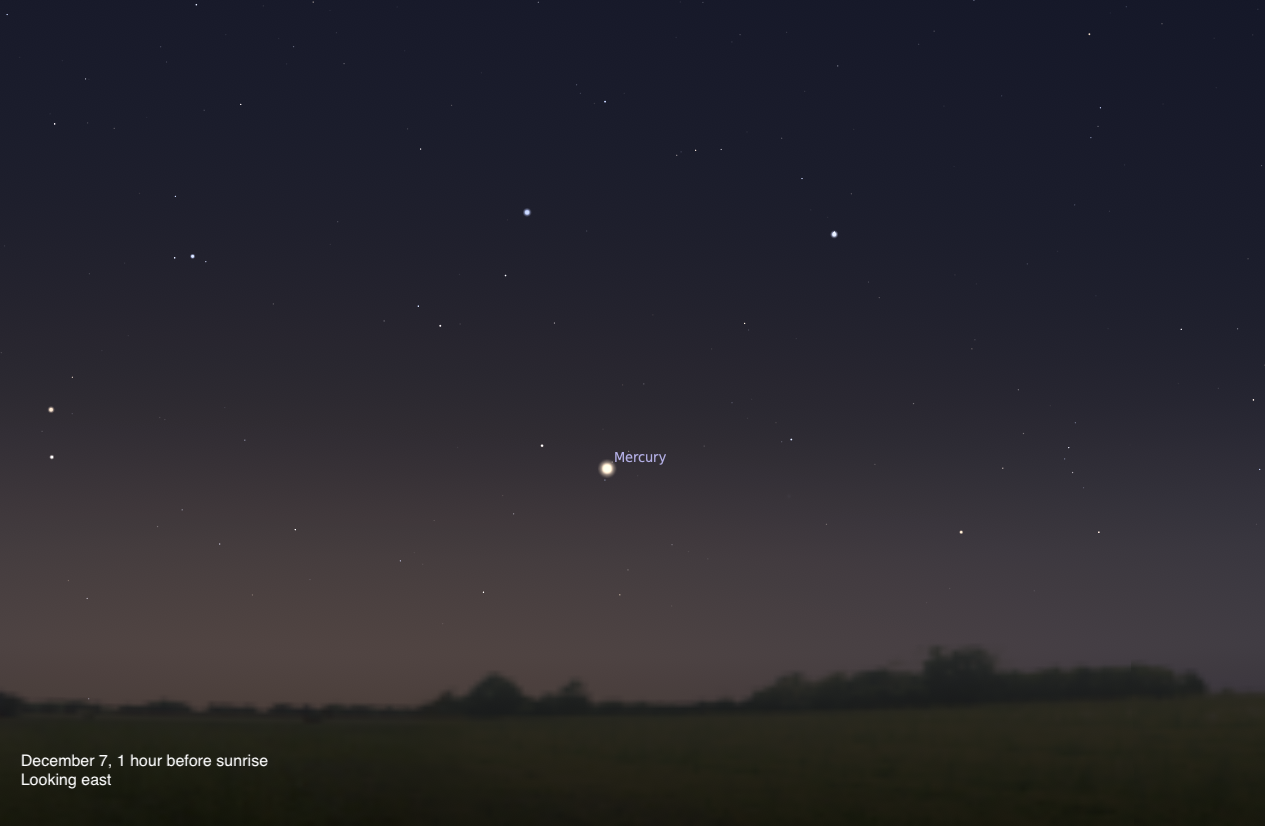
By 6 A.M. local time, Mercury is about 6° high in the east, amid the stars of Libra. Shining at magnitude –0.4, it should be easy to spot in the still-dark sky, close to the fainter, 4th-magnitude star Gamma (γ) Librae. Through a telescope, Mercury shows off a disk that is 7” wide and 61 percent lit. Pay particular attention to the orientation of the lighting — Mercury appears illuminated from below as it rises, indicating the direction of the Sun as it follows Mercury into the sky.
As always, make sure to put away any optics at least several minutes before sunrise from your location. That time may differ from the one given below.