
Key Takeaways:
- The article details an astronomical event on December 7 involving Titan's transit across Saturn.
- This transit begins around 17:40 UT, with prime viewing opportunities for observers in Europe, though the event's latter stages may be visible to those on the U.S. East Coast.
- Observers are advised to use a telescope to discern Titan against Saturn's disk, noting that contrast will improve as evening darkness deepens, and to observe other moons like Rhea, Tethys, and Dione.
- This represents the second-to-last Titan transit of the year, with another scheduled for Christmas Eve, and the article provides specific local astronomical times for sunrise, sunset, moonrise, moonset, and moon phase.
Looking for a sky event this week? Check out our full Sky This Week column.
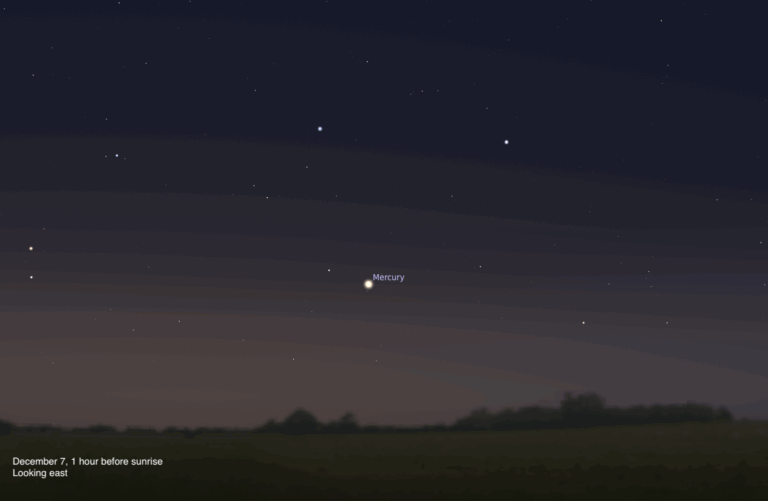
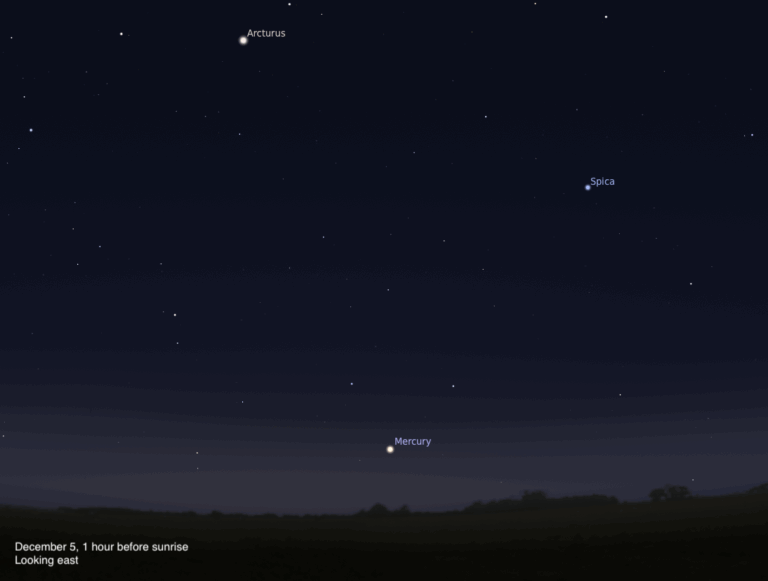
December 7: Mercury reaches greatest western elongation
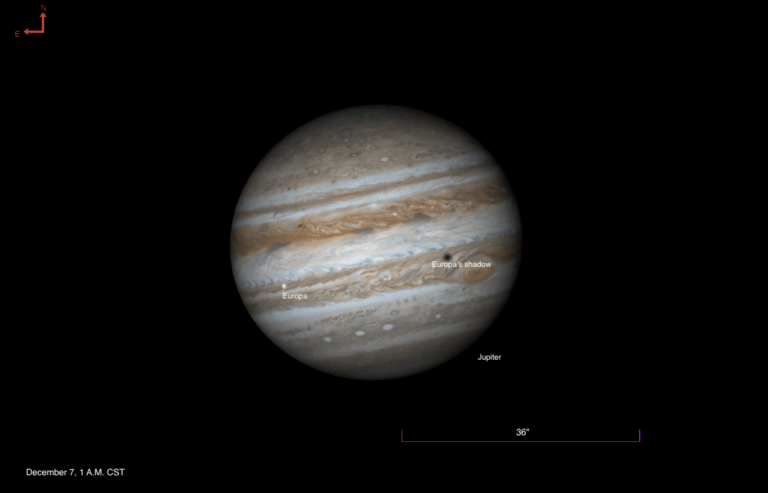
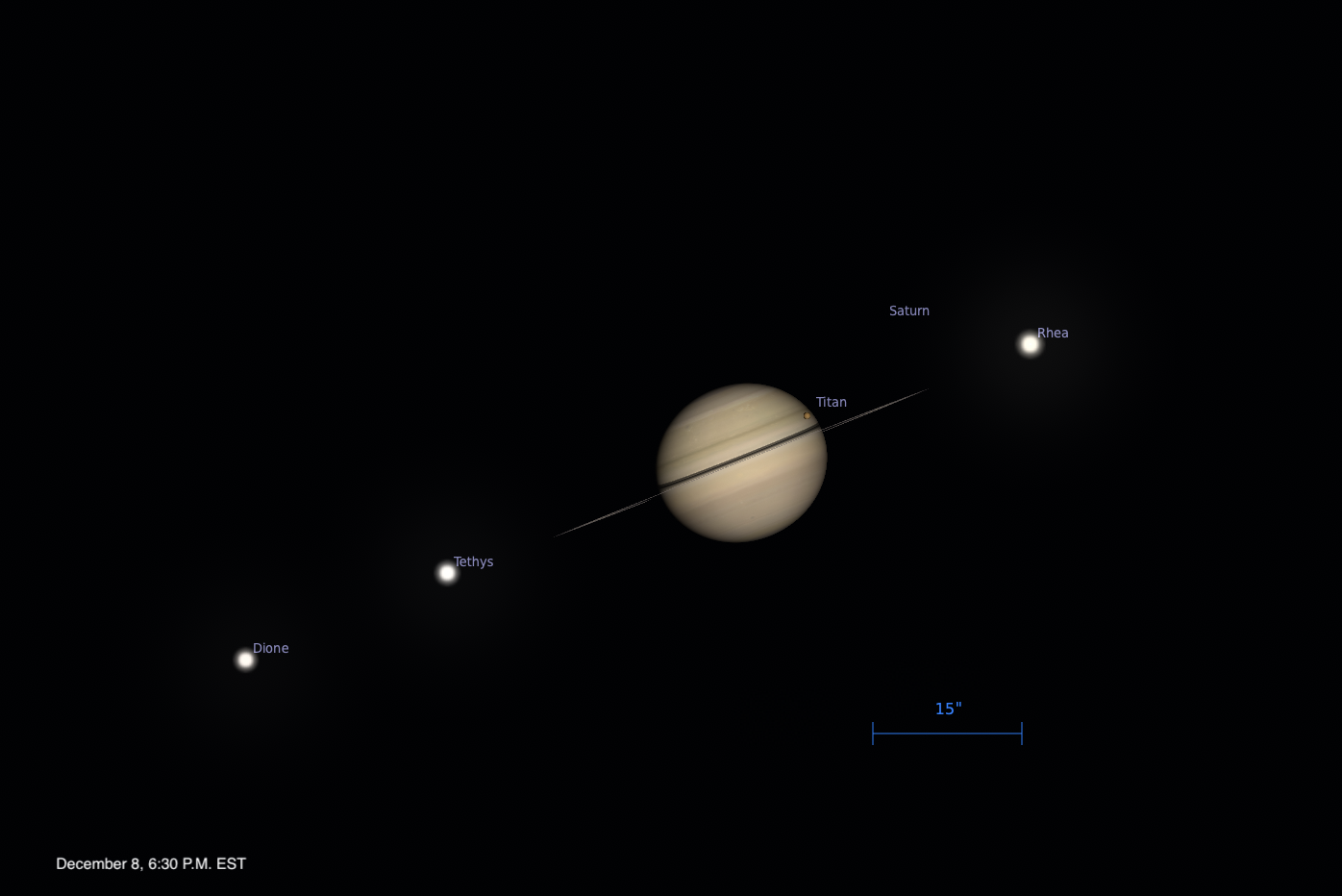
Titan crosses Saturn early this evening, an event best observed from Europe as the transit begins around 17:40 UT (12:40 P.M. EST). The large moon takes several hours to pass in front of the ringed planet, however, and U.S. East Coast observers might be able to catch the tail end of the event, as there are roughly two hours left in the transit around sunset along the Eastern Seaboard. Try swinging your telescope over to Saturn, high in the south, as soon as the sky starts to grow dark. It may take some effort early on to make out the moon in front of the bright disk, as contrast will be lower, but as the evening grows darker, you may spot Titan closing in on Saturn’s western limb, north of the rings.
The transit ends around 6:40 P.M. EST, as darkness is now falling across the Midwest. After this time, Titan will still appear near Saturn, moving farther west of the ringed world with time. Also visible west of Saturn later this evening will be 10th-magnitude Rhea, while similarly bright Tethys and Dione are east of the planet. Take note of their locations — tomorrow we’ll be back to observe these two moons make a close pass, but they’ll be on the other side of the planet.
This is the second-to-last transit of Titan for the year; the other occurs on Christmas Eve, although it begins about an hour earlier and will again be best observed from Europe.
Sunrise: 7:10 A.M.
Sunset: 4:34 P.M.
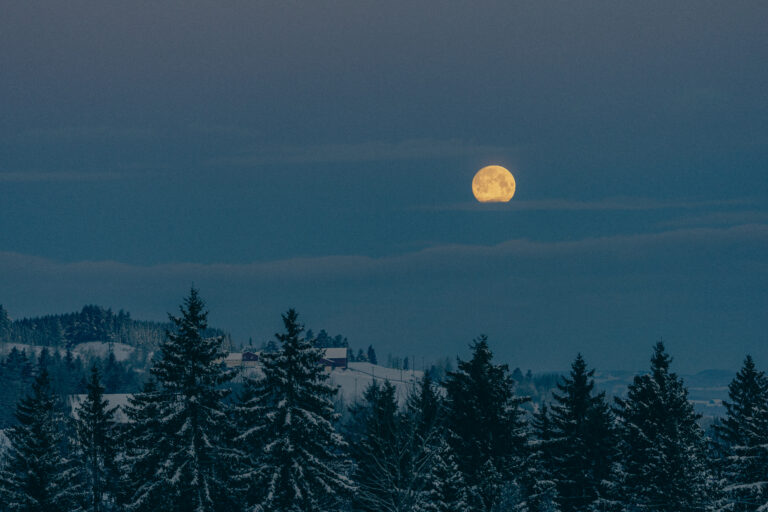
Moonrise: 8:50 P.M.
Moonset: 10:49 A.M.
Moon Phase: Waning gibbous (77%)
*Times for sunrise, sunset, moonrise, and moonset are given in local time from 40° N 90° W. The Moon’s illumination is given at 10 P.M. local time from the same location.