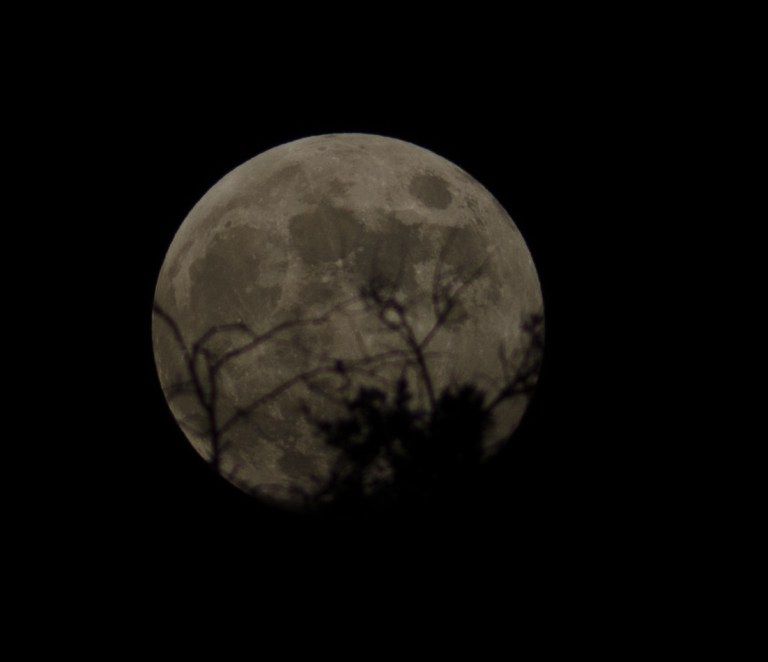
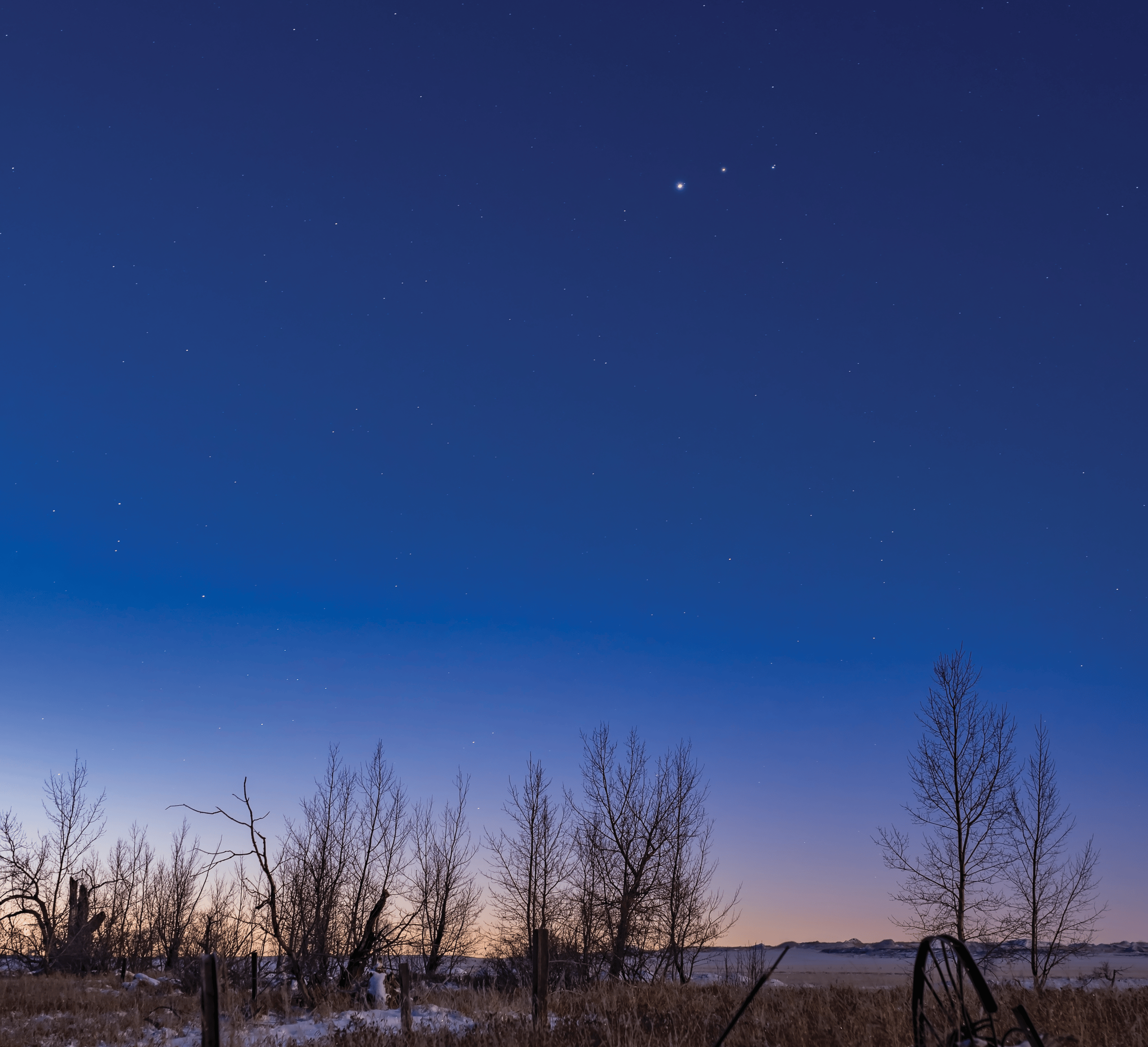
Saturn is already visible as darkness falls; some challenging transits of its moons occur this month. Neptune is a binocular object close to Saturn, while Uranus is an easy target in Taurus. A Full Moon courses in front of the Pleiades in late November. Mars and Jupiter dominate the early-morning sky, and in the hour before dawn, look also for Venus and Mercury.
Neptune and Saturn are well placed for observation after sunset. They’re about 7° apart all month, with Neptune in southern Pisces and Saturn just across the border in Cetus. Only Saturn is visible to the naked eye, shining at magnitude 0.5. Neptune, at magnitude 7.7, requires binoculars to spot.
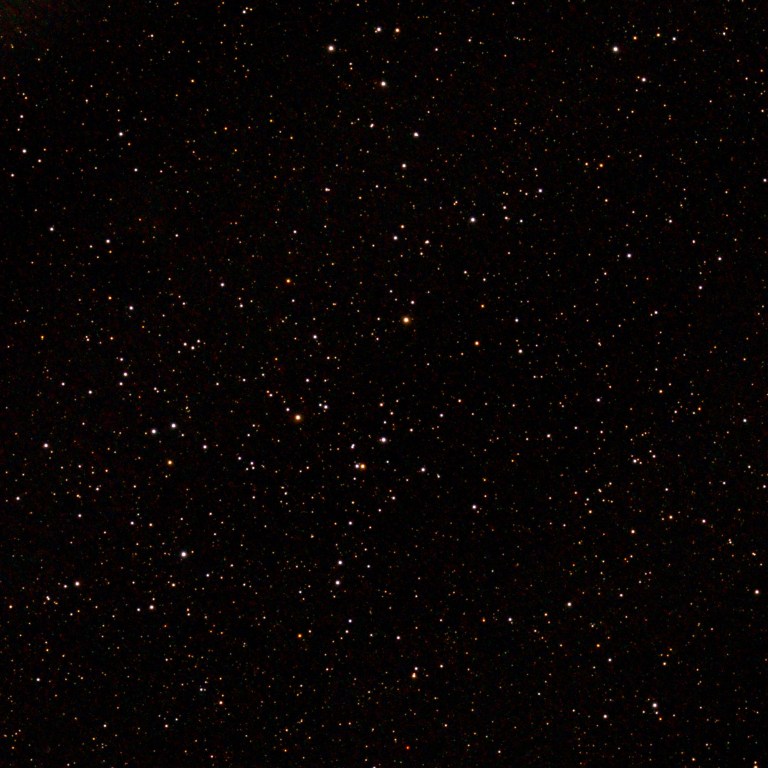
Swing 7×50 binoculars one field of view west of Saturn and look for a parallelogram of 4th- and 5th-magnitude stars: 27, 29, 30, and 33 Piscium. Neptune is within 3° northeast of 29 Psc all month. A waning gibbous Moon hangs 5° northwest of Neptune’s location on the 19th. The following night, Saturn is 6° south of the Moon.
As the month opens, Saturn is 24° high in the east an hour after sunset, reaching 50° by 9 p.m. local time following its opposition last month. It’s observable overnight and by the end of November sets by 2 a.m. local time. The rings are angled 6° to our line of sight and reveal their southern side. The planet spans 19″ through a telescope and the disk exhibits a pale yellowish hue. Atmospheric details are tricky to spot unless you have very good conditions.
Titan, Saturn’s brightest moon (magnitude 8.3), sits closest to the planet Nov. 8 and 24 (north), and Nov. 16 (south). Tenth-magnitude Tethys, Dione, and Rhea orbit closer in. Dione and Tethys transit Saturn’s disk this month. These transits and shadow transits are extremely challenging. They’re good targets for advanced observers with video imaging experience. Visit Astronomy.com for more details on the timing of their transits if you’d like to try for them.
Iapetus reaches greatest eastern elongation Nov. 10, when it stands 9.4′ east of Saturn. The moon’s darker face is turned earthward, dimming it to magnitude 11.9. It’s hard to find but as the month progresses, Iapetus brightens nearly a magnitude by the time it reaches inferior conjunction early on the 30th, 1.7′ due north of Saturn.
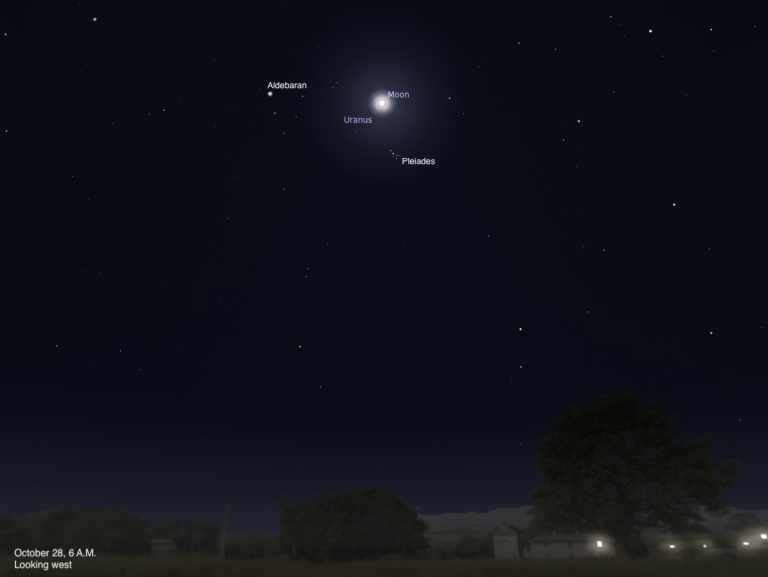
Uranus remains midway between Aldebaran and the Pleiades (M45). This position makes the planet easier to find than in previous years. It reaches opposition Nov. 25, visible from dusk to dawn. From 1.71 billion miles away, its disk spans 4″. Uranus shines at magnitude 5.6, within easy range of binoculars and potentially visible to the unaided eye from the darkest skies.
To find Uranus, look between Aldebaran and M45 for two stars: 37 and 39 Tauri (4.5° southeast of M45). Brighter 37 Tau glows at magnitude 4.4. On Nov. 1, Uranus is 1.6° southeast of 37 Tau, and by the end of November stands 1.5° due south of this star. Another star, some 2.7° southeast of 37 Tau, shines at magnitude 5.5. This is 43 Tau; in mid-November, Uranus is halfway between the two stars.
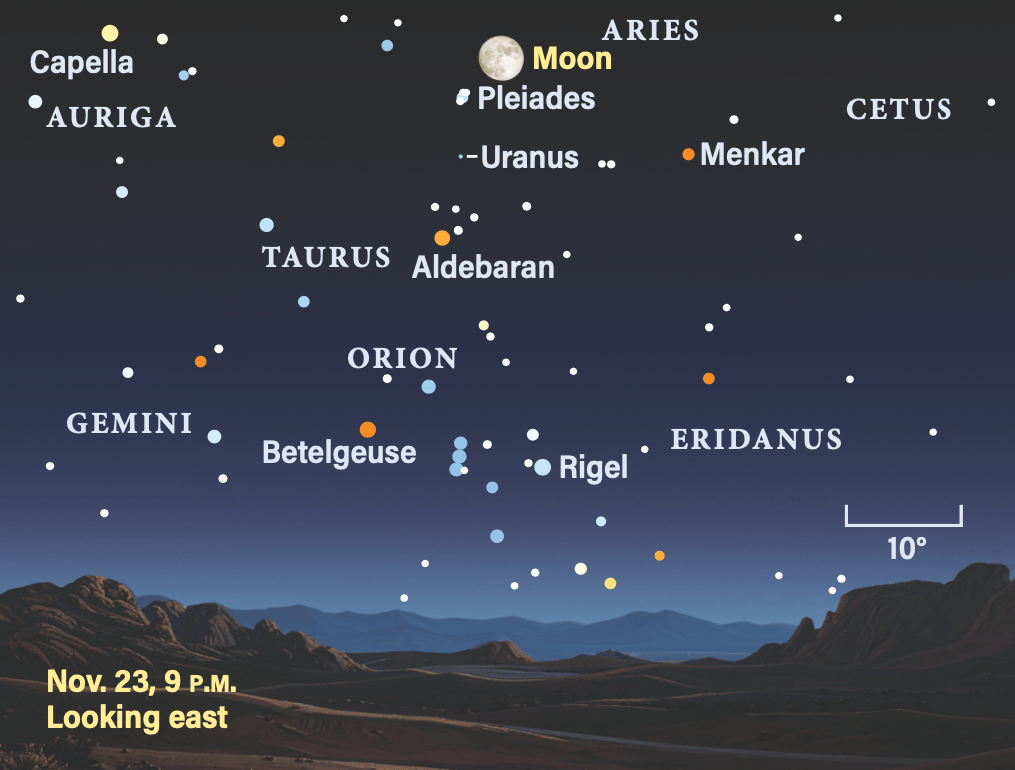
The Full Moon crosses the Pleiades early on Nov. 24, setting up a series of occultations of the northern part of the cluster just before dawn across the western half of the U.S. You’ll need a telescope — plan for higher magnification so you can place the brilliant Moon largely out of your field of view. Fifth-magnitude Celaeno is the first of the cluster’s brighter stars to be occulted, around 6 a.m. CST. Both visibility and timing heavily depend on your location, so set up at least 30 minutes before the event starts. You can download timings for the brightest occultations from 40 major North American cities from the International Occultation Timing Association at http://www.lunar-occultations.com/bobgraze/index.html.
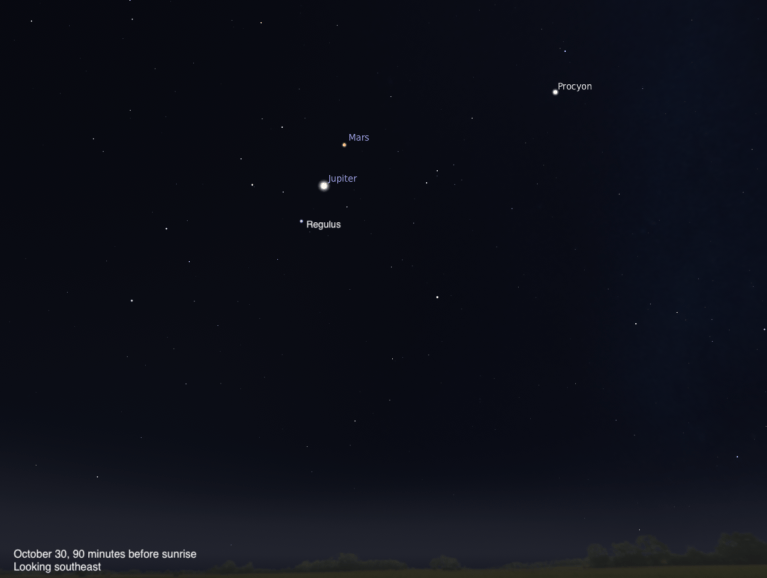
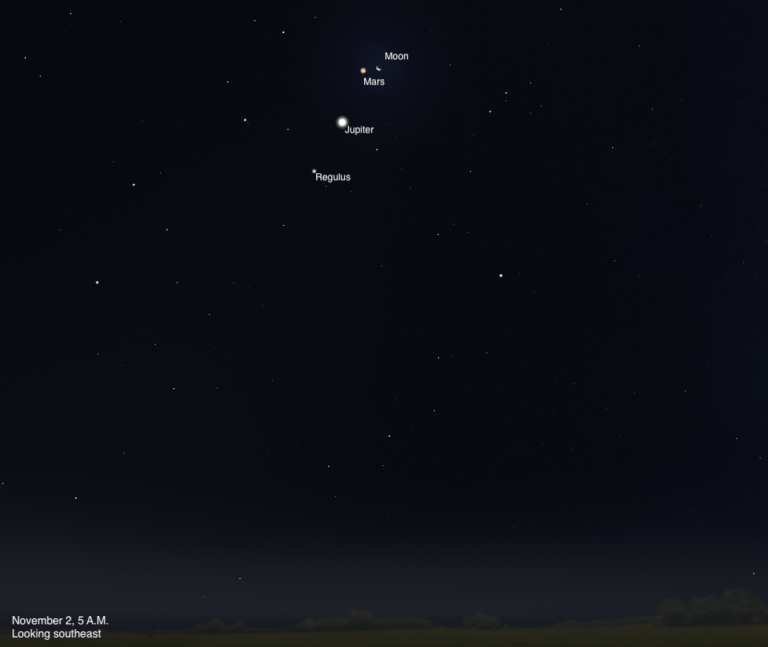
Mars and Jupiter rise close together in Leo. They meet in a conjunction midmonth not far from Leo’s brightest star, Regulus. Mars rises first, soon after midnight on the 1st, followed by Jupiter about 30 minutes later. Jupiter shines at magnitude –2.0 and Mars at 0.8. They’re hard to miss.
On Nov. 1, Jupiter stands midway between Mars and Regulus, each just over 5° from its neighbor. A waning gibbous Moon sits in Cancer only a few degrees west of M44, the Beehive star cluster. On the 2nd, Mars and the Moon are 1.5° apart, and by the 3rd the Moon lies less than 2° from Regulus as they rise in the Midwest. Mars and Jupiter close in on each other, and by the 15th Mars is 1.2° due north of Jupiter.
Mars continues eastward, reaching a point 1.7° due north of Regulus on the 25th. By the 30th, Mars is just over 2° northeast of Regulus and is rejoined by the waning gibbous Moon, just southwest of Regulus. Through a telescope at the end of November, Mars has reached 8″ in diameter and its magnitude has increased to 0.4.
Home to the most visibly dynamic atmosphere in the solar system, Jupiter has a lot to offer through a telescope. The planet shows off a 36″-wide disk on the 1st, which grows to 39″ by the 30th. The hour before dawn can hold remarkable views if there is steady seeing. Look for the occasional appearance of the Great Red Spot.
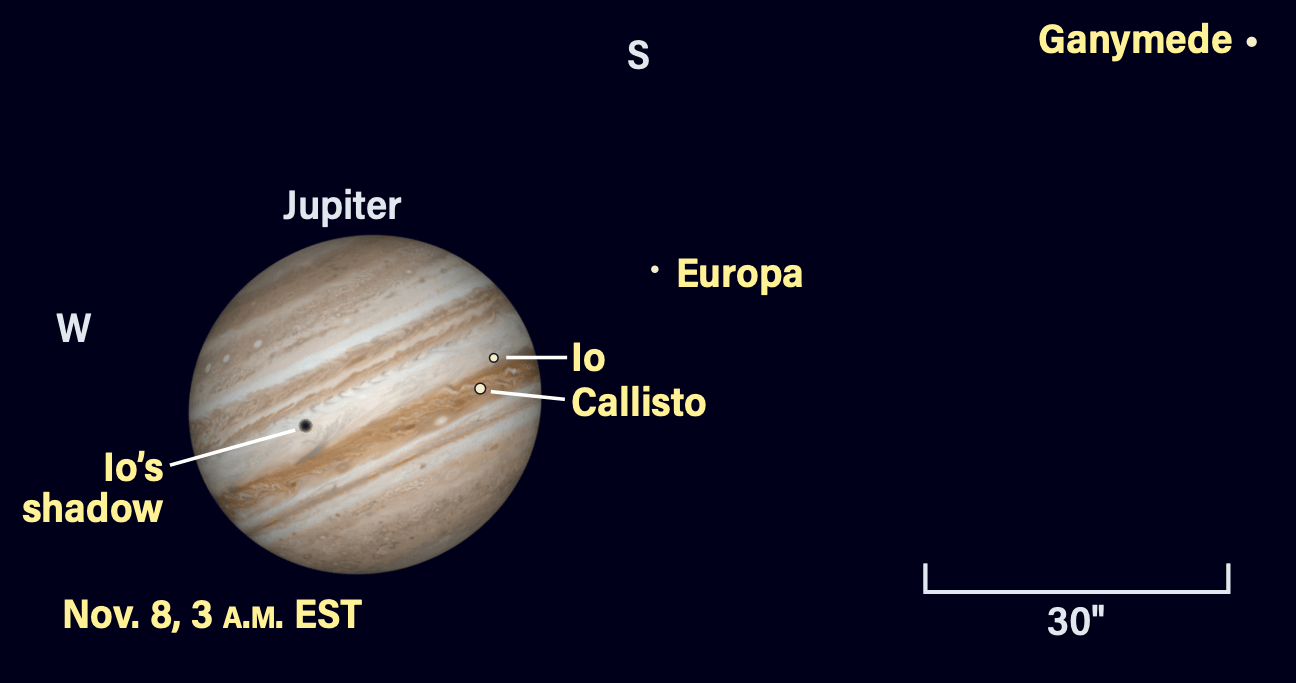
Jupiter’s moons and their shadows often transit the planet or are eclipsed by it. Nov. 8 finds Io and Callisto transiting Jupiter’s disk along with Io’s shadow. Soon after, Europa exits from an occultation. East Coast observers will see the whole event; the Pacific Coast, only the latter half. It begins as Io’s shadow appears on the planet’s eastern limb at 1:29 a.m. EST, followed 24 minutes later by the reappearance of Europa from behind Jupiter. Callisto’s transit begins at 2:07 a.m. EST. Io approaches the eastern limb, passing due north of Europa at 2:23 a.m. EST and beginning its transit 19 minutes later. Because of Io’s faster orbital speed compared with Callisto, it overtakes the larger moon within half an hour. Io’s shadow exits the disk at 3:45 a.m. EST, and Io itself ends its transit 74 minutes later. Callisto’s transit ends at 5:51 a.m. CST, as the sky is growing light in the Midwest.
Ganymede’s huge shadow crosses Jupiter’s face Nov. 11. The start of the transit at 12:27 a.m. EST is visible from the Eastern time zone; it ends at 4:03 a.m. EST, visible across the U.S. Ganymede begins to transit at 5:29 a.m. EST.
Ganymede, Europa, and Io orbit in resonance, so similar events recur, although they are not always observable. On Nov. 15, Io’s shadow begins a transit at 3:22 a.m. EST. Europa reappears at 4:27 a.m. EST, with Io close to the limb. They pass north-south just seven minutes later. Io’s transit begins at 4:36 a.m. EST. Its shadow leaves at 5:38 a.m. EST, and Io departs at 5:52 a.m. CST (in daylight for EST). Ganymede’s shadow transits again three days later, Nov. 18, from 4:25 a.m. EST to 6:01 a.m. MST (note the time zone change).
On Nov. 22, Io and its shadow are already transiting by the time Europa reappears. Io’s shadow transit starts at 5:15 a.m. EST; Io follows at 5:29 a.m. CST, with the sky very bright along the East Coast. Europa reappears at Jupiter’s eastern limb at 6:00 a.m. CST, as twilight begins in the Midwest and visible in darkness farther west.
To cap off the month, watch Ganymede reappear from behind Jupiter Nov. 29 at 5:53 a.m. CST (minutes before sunrise in EST), followed by Io’s shadow transit starting a few minutes later, at 6:08 a.m. CST. Io is due north of Ganymede at 6:49 a.m. CST, seen in twilight in the Midwest.
Mercury is at inferior conjunction Nov. 4, then moves into the morning sky. Northern Hemisphere observers gain good views in the second half of the month. Look for it Nov. 13, when it’s magnitude 0.5. An hour before sunrise, it is 4° high in the eastern sky, nearly 13° to the lower left of Venus. Swing binoculars toward Mercury to spot 4th-magnitude Kappa (κ) Virginis 0.9° north of the planet.
Mercury reaches its greatest western elongation 20° from the Sun late on Nov. 20. The next morning, it shines at magnitude –0.5 and stands 7° high an hour before sunrise, easy to spot with a clear eastern horizon. Mercury displays a 62%-lit globe when viewed with a telescope, though it spans only 7″, so you’ll need steady air to see the phase. That phase grows to 84% by Nov. 30.
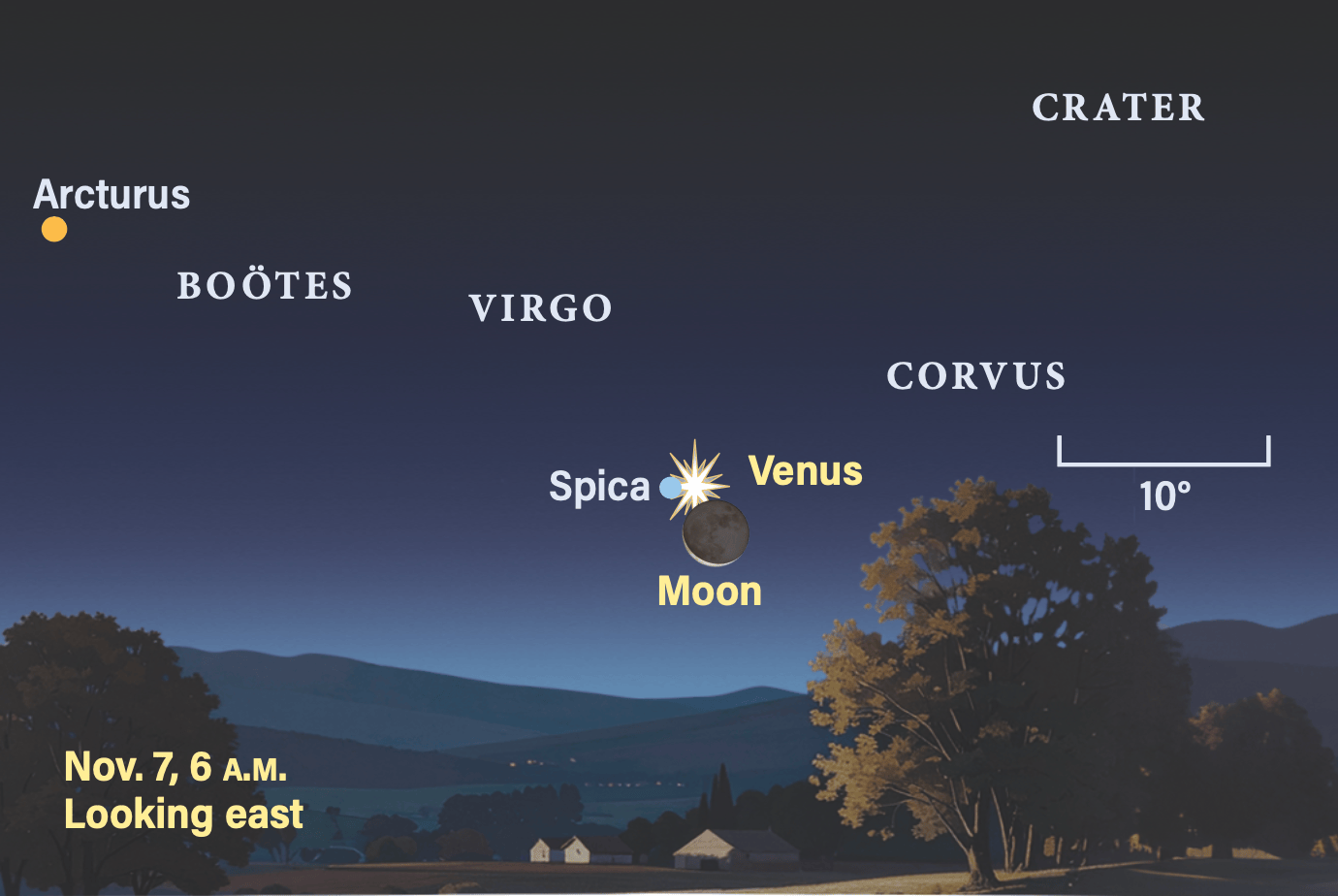
On Nov. 4, look for Venus 2° south of 1st-magnitude Spica, Virgo’s brightest star. A 25-day-old crescent Moon stands high above the pair. Three days later, on Nov. 7, Venus, Spica, and the Moon lie close together in the morning sky. Venus is 1.3° from Spica, with the waning crescent Moon about 2° below Venus, a stunning view in the brightening twilight. Venus rises about 100 minutes before the Sun and the trio is 11° high at 6 a.m. local time.
Venus reaches a stationary point Nov. 11. From the 10th to the 12th, Venus appears not to move in right ascension relative to Spica, as the planet slides due north to stand 1.2° due west of Spica on the 10th.
Check out Venus with a telescope. The bright planet becomes easier on the eyes as twilight grows, reducing the contrast. It’s already dazzling at magnitude –4.2 on the 1st, when its disk is 3% lit. By Nov. 15 it is 14% lit and magnitude –4.8, and reaches its greatest illuminated extent Nov. 29 at magnitude –4.9 and 27% lit. If you’re under Bortle 1 or 2 skies, can you see your shadow? Venus rises more than three hours before the Sun, so you’ll have a dark sky for an hour or so to check.
Rising Moon: Punched, flooded, sprayed, and strafed
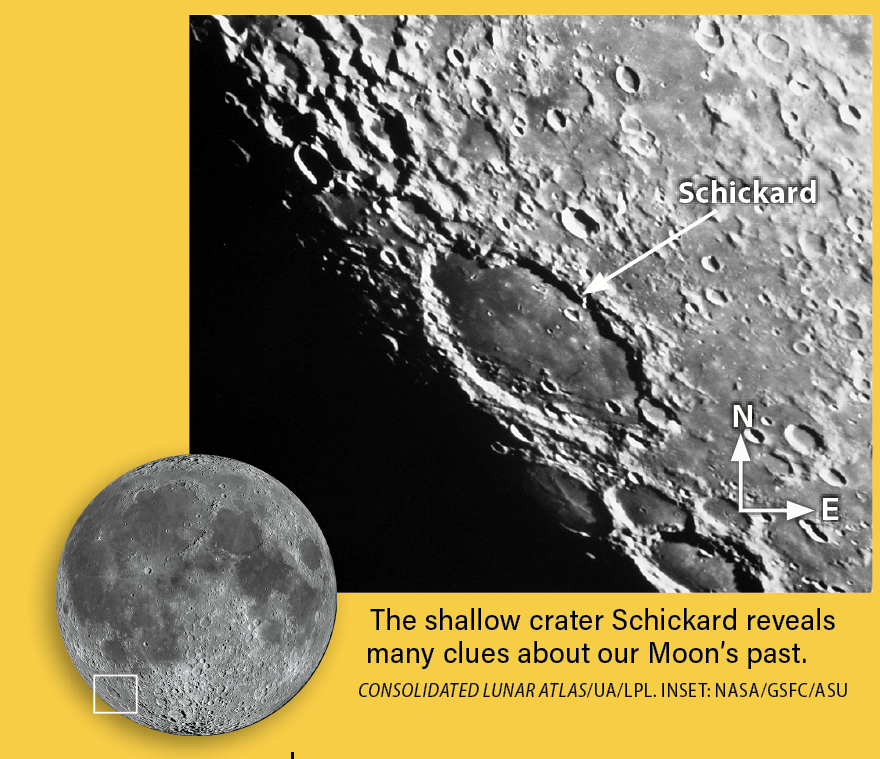
Much of the Moon’s history is encapsulated in one feature: the crater Schickard, way down in the lunar southwest. Protective measures are necessary to comfortably carry out this observation. Screw in a dark filter, mask off part of your scope’s aperture, or pump up the magnification to reduce the glare of an almost full lunar disk.
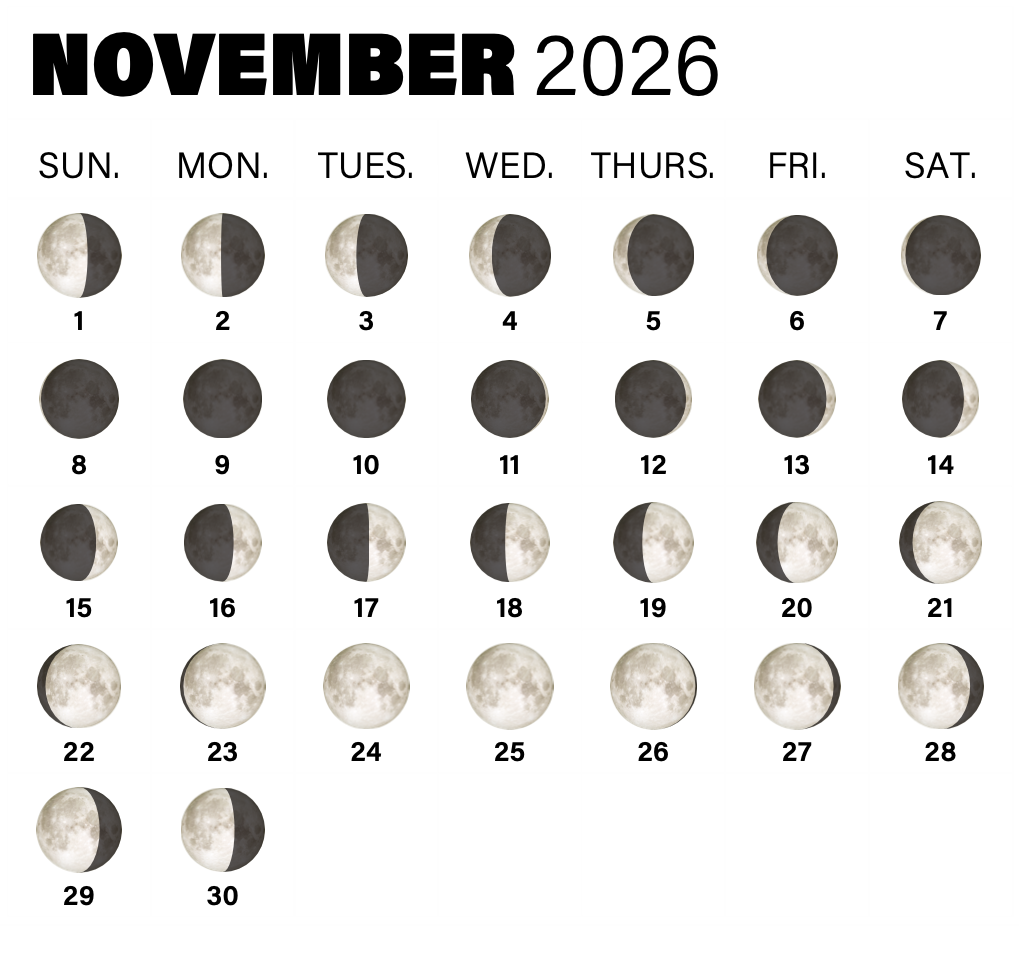
Start on the evening of the 21st, when the rays of sunlight strike the flooded crater at a glancing angle, highlighting the differences in height of the smaller features. This is an old crater, its rounded rim pounded down across the ages. The splatter of smaller craters across the smooth floor sport the classic sharp edges of relative youth. The western wall, steep at the instant of formation, slumped abruptly down into terraces that remain visible to this day. Shadows disappear over the next two evenings as the climbing Sun almost erases these features.
During the following nights, Schickard transforms into a two-faced striped crater, an unusual swath of lighter gray painted across the middle of this time-worn feature. The 130-mile-wide depression was carved out some 4 billion years ago as bombardment was ending. Lava soon welled up and covered its central peaks. Then the giant Orientale impact event to the west sprayed the whole region with lighter-hued material. A final surge of lava managed to cover the northern and southern portions, but did not rise enough to erase the lighter stripe.
Meteor Watch: Leo gets busy
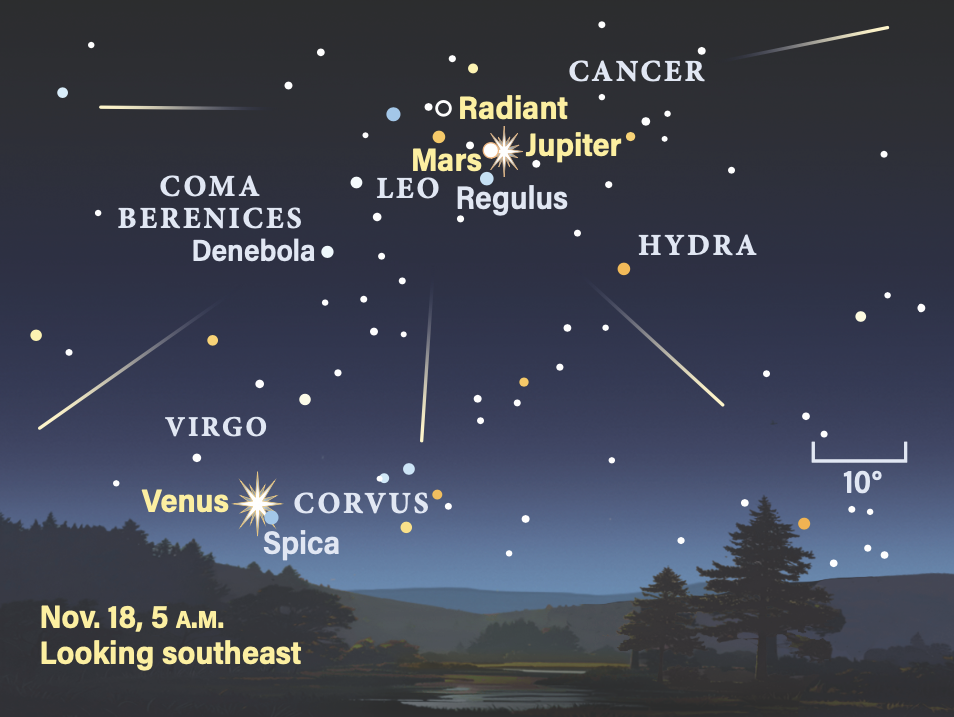
This year’s annual Leonid meteor shower is active from Nov. 6 to 30 and peaks Nov. 17/18. A nine-day-old gibbous Moon sets right around midnight on this night, favoring the best time for meteor observing, which is after midnight. That’s when we’re on the leading hemisphere as Earth plows into the meteoroid stream.
Leo is also rising around local midnight and the radiant, located in the Sickle asterism, climbs to more than 60° in altitude by dawn. But don’t look at the radiant — meteors come head-on from that direction. Longer trails occur 40° to 60° away from Leo.
Rates are predicted to be 15 meteors per hour if the radiant were overhead. If you get more than a half-dozen per hour, you’re doing well. If you want a change, spend some time with Jupiter (also in Leo) through a telescope — Ganymede’s shadow is transiting the morning of the 18th.
The Leonids are known to be swift and some leave glowing, persistent trains, which are fascinating to experience. The shower is associated with Comet 55P/Tempel-Tuttle, which last reached perihelion in 1998.
Comet Search: Part of the crowd
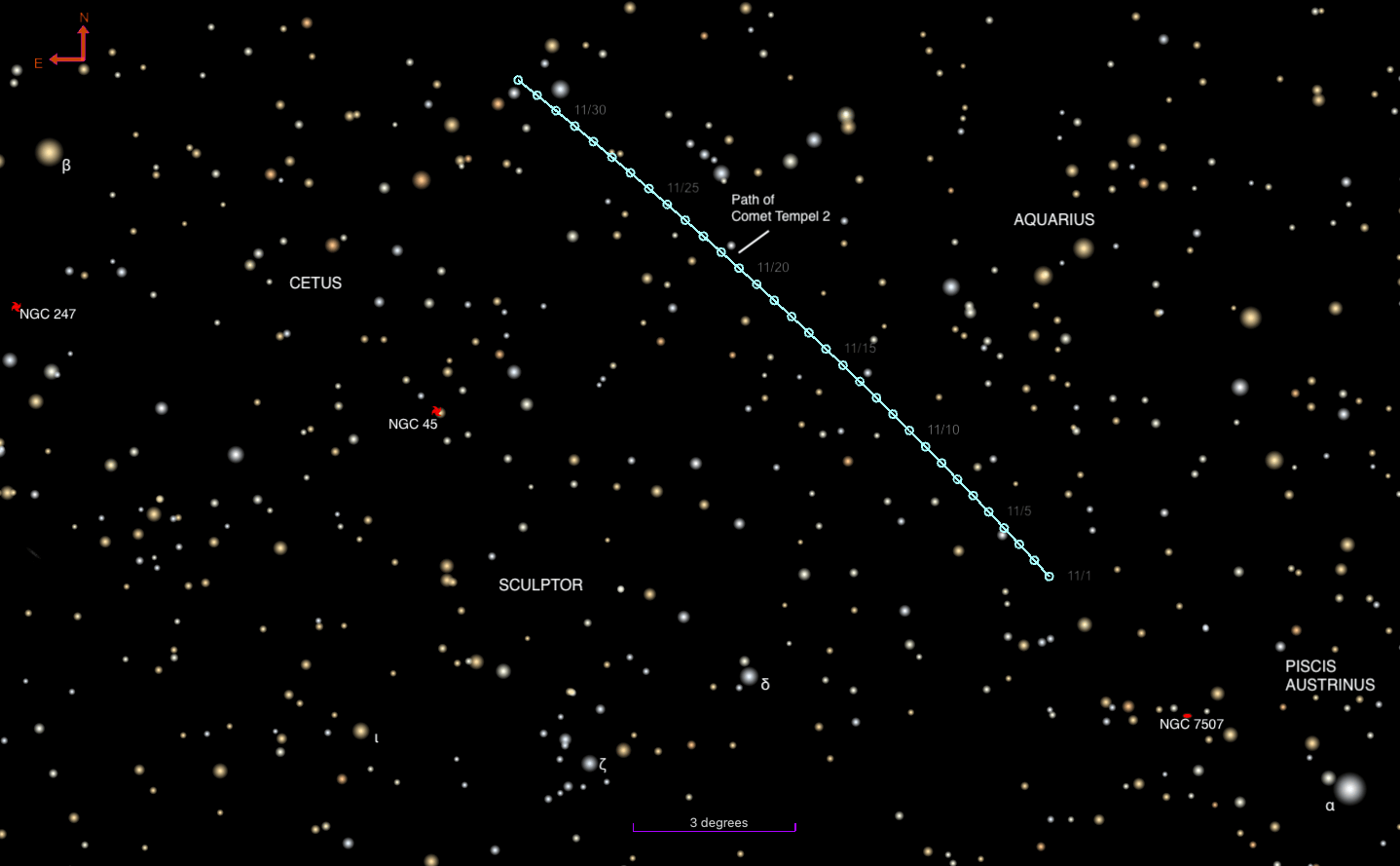
Comet 10P/Tempel is floating halfway between Fomalhaut and Beta (β) Ceti. It’s about 10th magnitude, but historically has had post-perihelion outbursts, which could help it shine through the thicker air near the ground.
Meanwhile, Comet 161P/Hartley-IRAS is higher and in a more interesting sky as darkness settles.
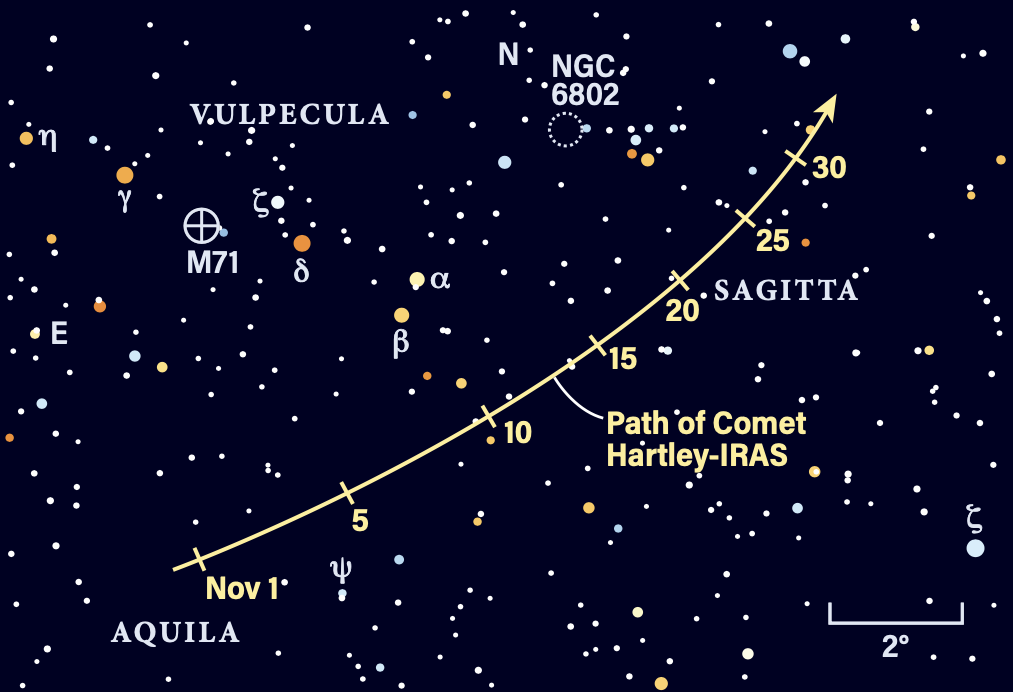
The Moon-free window closes after the 14th but reopens on the 27th. To see this 10th-magnitude fuzzy, a site well away from city lights is needed. Despite Earth’s increasing distance, the comet is sunward bound for perihelion Nov. 27, so its magnitude is fairly constant.
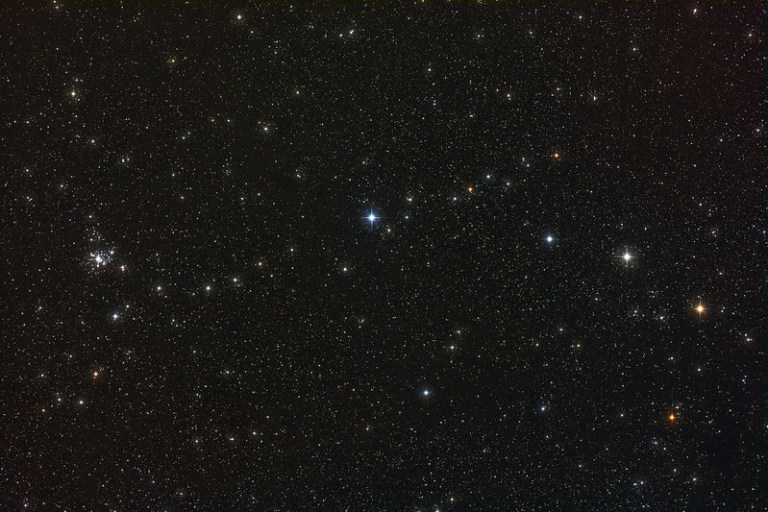
The short, broad fan should sport a circular green coma that looks great on images as it floats across the rich Milky Way north of Altair. At month’s end, Hartley-IRAS lies within 3° of the Coathanger asterism. Visually, a 4-inch scope can pull it in, but a larger one will show more detail, especially the sharp south flank where the solar wind pushes away the expelled dust in a bow shock.
Discovered in 1983, the comet returns every 21.5 years. Next month will be our last chance for a good look until two revolutions down the road, in 2069.
Locating Asteroids: Whale watching
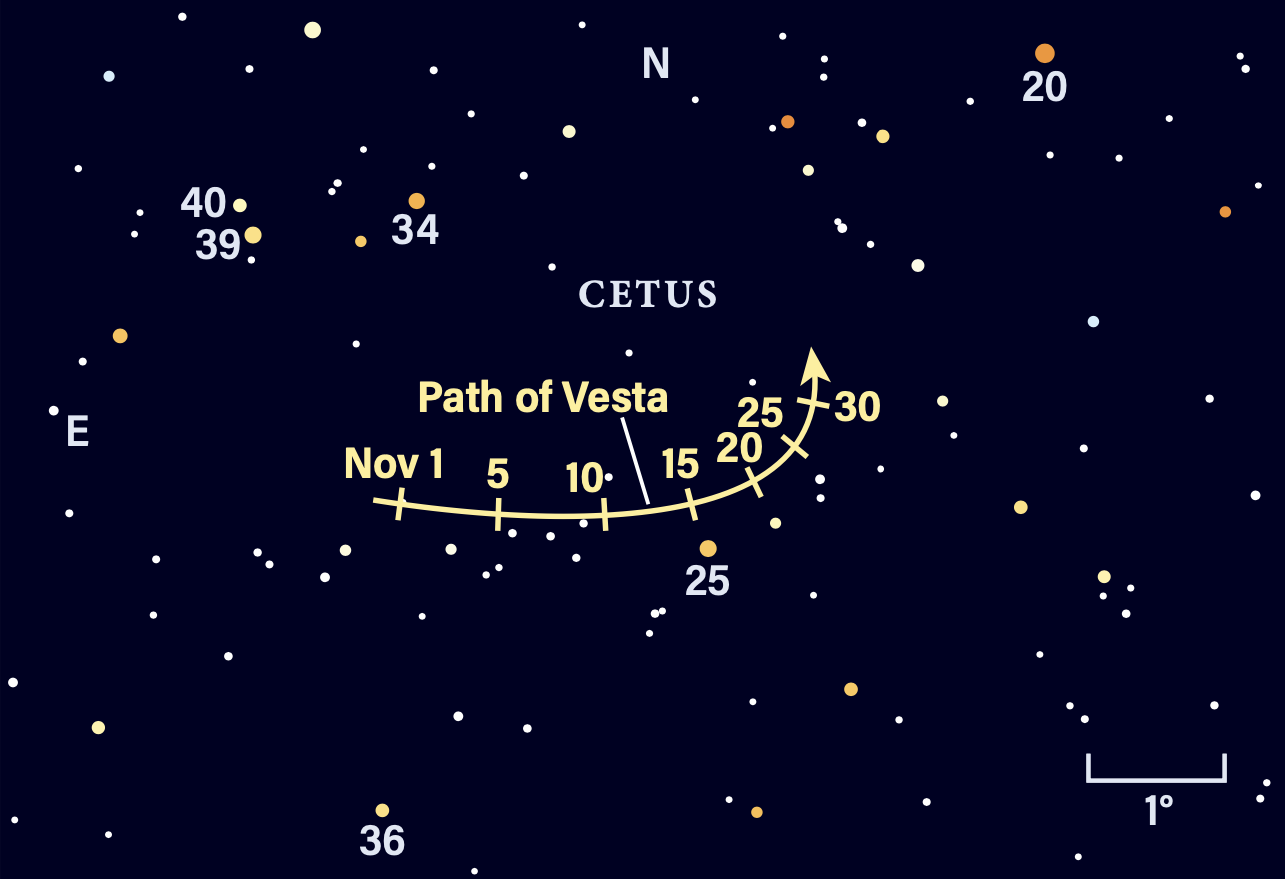
With five minutes of dark adapting, it’s easy to follow a main-belt asteroid along a retrograde curve. Saturn leads the way to 4 Vesta in the midevening sky — just drop down 9°, two binocular fields, to 25 Ceti, a magnitude 5.4 candle compared to the other nearby 8th- to 9th-magnitude stellar points. None of those will get confused with the brighter asteroid.
Use 25 Ceti and the more northerly 20 Ceti (closer to Saturn) to anchor a sketch or your memory. Watch a simple hockey stick pattern morph every three nights or so into a golf club, and then become a vertical line.
Spanning about 320 miles, Vesta is the second-largest body in the main belt. It was initially thought to be a chunk of the “missing” world astronomers expected between Mars and Jupiter. We now know it is an unfinished building block left over from the formation of the solar system, a rocky mantle surrounding an iron core.
Star Dome
The map below portrays the sky as seen near 35° north latitude. Located inside the border are the cardinal directions and their intermediate points. To find stars, hold the map overhead and orient it so one of the labels matches the direction you’re facing. The stars above the map’s horizon now match what’s in the sky.
The all-sky map shows how the sky looks at:
9 p.m. November 1
8 p.m. November 15
7 p.m. November 30
Planets are shown at midmonth
Martin Ratcliffe is a planetarium professional with Evans & Sutherland and enjoys observing from Salt Lake City. Alister Ling, who lives in Edmonton, Alberta, is a longtime watcher of the skies.