
Key Takeaways:
- An aperture mask is a device designed to increase a telescope's effective focal ratio and significantly reduce its light throughput.
- This modification can alter a telescope's optical characteristics; for instance, an 8-inch f/6 instrument with a 4-inch aperture mask effectively becomes a 4-inch f/12 system.
- Practical applications include facilitating observations of exceptionally bright celestial objects, such as the Moon, and determining the minimum aperture necessary to resolve specific astronomical features like double stars.
- A specialized technique involves utilizing an off-axis variable aperture mask with distinct clear apertures (e.g., 94mm down to 50mm) to progressively evaluate the resolution capabilities required for splitting double stars.
I hope this series of thoughts (can I call them blogs?) help you become better observers. I’ll include observing tips and techniques, facts about constellations, reviews of books or websites, and trivia. Because there’s no right way to order this series, I’m just going to do the one I’m thinking about on that day. Some will be short, others longer. Some will be for beginners and others will be a bit more advanced.
I want to thank all the observers I’ve known who have helped me be able to do such a list. Whether it was through a book, video, internet, or in person, please accept my deepest gratitude. You know who you are.
Today’s topic: Aperture Masks
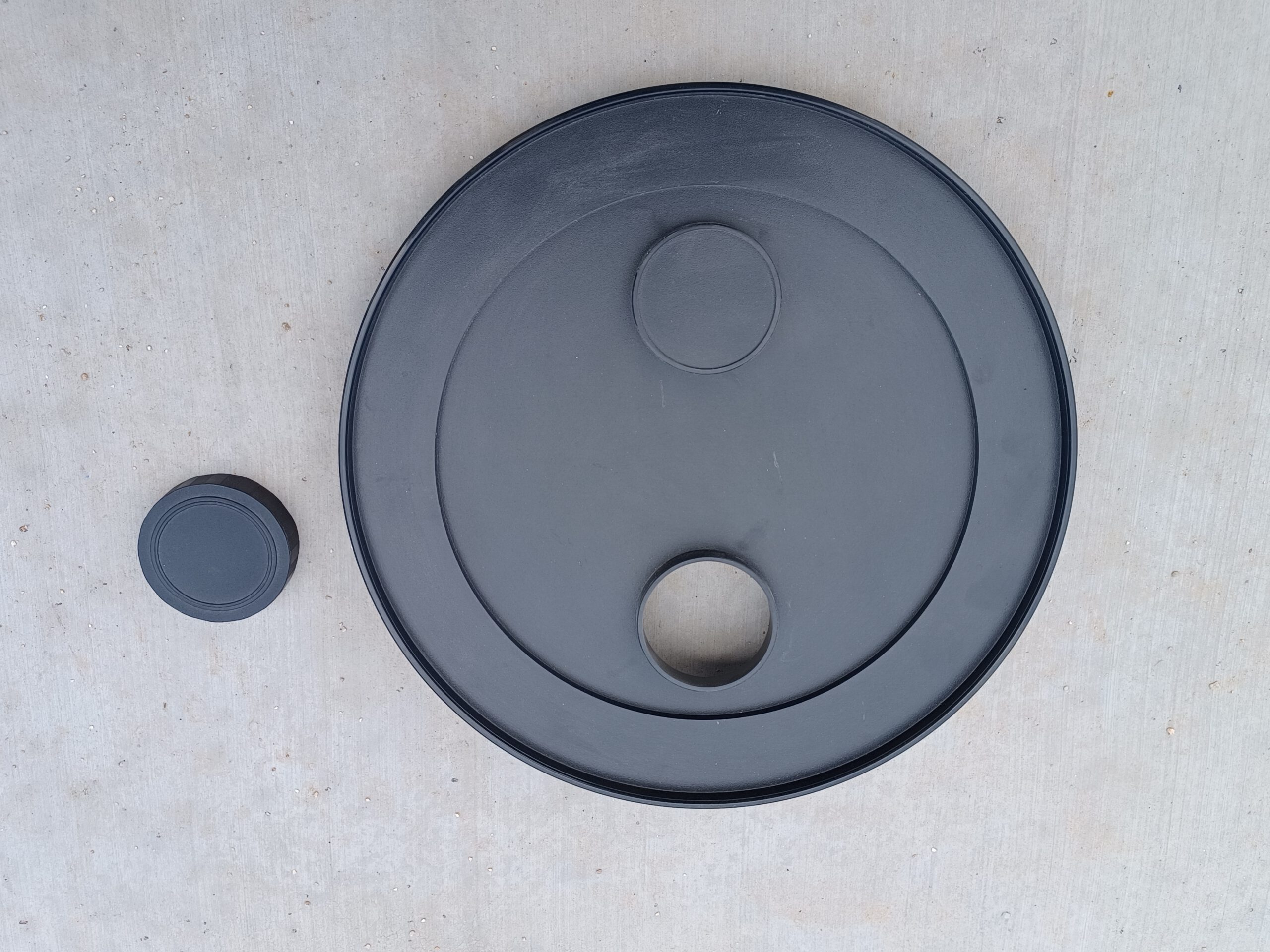
An aperture mask is a device (it can be as simple as a piece of cardboard with a hole cut out in it) that increases the effective focal ratio of a telescope. For example, if you put a 4-inch aperture mask on an 8-inch f/6 telescope, it becomes, in effect, a 4-inch f/12 telescope. Said another way, it’s a way to dramatically cut the light throughput of any telescope. So, someone with an 11-inch Schmidt-Cassegrain telescope might use a 3-inch aperture mask to observe the Moon during one of its brighter phases. Using an aperture mask also can tell you the minimum aperture someone would need to, say, split a double star.
Years ago, David Knisely, of Lincoln, Nebraska, shared a great idea with me: “I occasionally use an off-axis variable aperture mask I built for my 10-inch f/5.6 Newtonian reflector to judge double star resolution. This mask provides me with 94mm, 80mm, 70mm, 60mm, and 50mm clear apertures. This way, I am able to stop down the scope in well-defined steps to see at which point the division between a the pair becomes invisible.”
Pretty well thought out technique, David. Thanks.