Astronomy tests William Optics’ new refractor

Superb craftsmanship and high-quality optics make this a 4-inch telescope you'll be proud to own.
By | Published: September 29, 2014 | Last updated on May 18, 2023

Gemini Sparkle

Key Takeaways:

  • The William Optics GT102 102mm f/6.9 Apo Refractor is noted for its lightweight design (11 pounds/5 kilograms) and versatility across various astronomical observations, including wide-field imaging and high-power viewing.
  • Refractor telescopes are generally favored for their minimal maintenance requirements, portability, and excellent optical performance, though historically, higher cost per aperture inch and chromatic aberration (false color) have been noted drawbacks.
  • Refractor optical designs have evolved from achromatic systems, which employ two glass types to reduce false color, to more advanced apochromatic configurations.
  • Apochromatic refractors, developed in the 1980s using rare-earth glass elements, achieve superior color correction by precisely focusing different light wavelengths, a particular advantage for faster focal ratio systems.
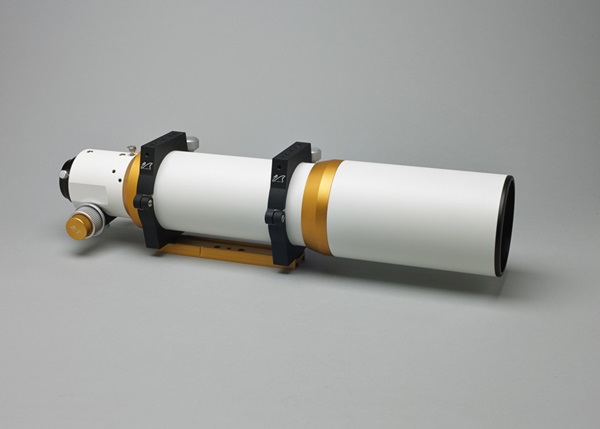
William Optics' GT102 102mm f/6.9 Apo Refractor
William Optics’ GT102 102mm f/6.9 Apo Refractor weighs just 11 pounds (5 kilograms), so it’s great for grab-and-go astronomy.
Astronomy: William Zuback
To an amateur astronomer, nothing says flexibility like a good refractor. That’s why I jumped at the chance to review the William Optics GT102 102mm f/6.9 Apo Refractor. Perfect for grab-and-go observing, lens-type telescopes are capable of stunning wide-field views, high-power double star splits, and excellent lunar and planetary images. And that’s not even mentioning astroimaging.

The design has other benefits as well. Such scopes are essentially maintenance free, lightweight, and portable. The biggest drawbacks have typically been cost per inch of aperture and that bugaboo of the refractor design — false color (fringes around bright objects like the Moon and planets).

While there are many refractor designs, for most observers it boils down to just two: achromatic and apochromatic. In their day, achromats brought all wavelengths of light to focus in a much smaller circle than their predecessors. This dramatically reduced false color at the eyepiece. Typically having lenses that combine two types of glass, they remain popular today.

If you’re looking for a faster (i.e., wider field) telescope, however, color error begins to rear its ugly head. In the 1980s, designers realized that they could combine glass with rare elements to bring colors to an even tighter focus. Thus, the apochromat now generally available was born.


Downloadable File(s)