Edward Morley, born Jan. 29, 1838, is perhaps most famous for an experiment that didn’t work.
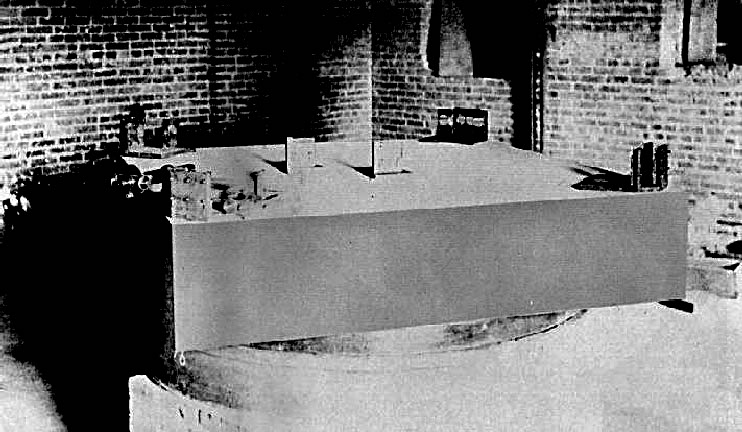
The speed of light is one of the most important constants that appears in nature and defines the relationship of causality itself. As far as we can measure, it is a constant. It is the same speed for every observer in the entire universe. And this constancy was first established in the late 1800s with the experiments of Morley and Albert Michelson at Western Reserve University. They attempted to measure changes in the speed of light as the Earth orbited around the Sun. But they found no such variation, and no experiment ever since then has either.
Observations of the cosmic microwave background, the light released when the universe was 380,000 years old, show that the speed of light hasn’t measurably changed in over 13.8 billion years. In fact, we now define the speed of light to be a constant, with a precise speed of 299,792,458 meters per second. This constancy forms the basis of Einstein’s special theory of relativity, which tells us that while all motion is relative – different observers won’t always agree on the length of measurements or the duration of events – some things are truly universal, like the speed of light.