Over 20 years after construction began, and over six months after its dedication, the Hale Telescope saw first light on Jan. 26, 1949. It was the largest telescope in the world, employing a 200-inch mirror that had taken 11 years to grind and polish, and allowing for the study of eight times as much space as previously had been achievable.
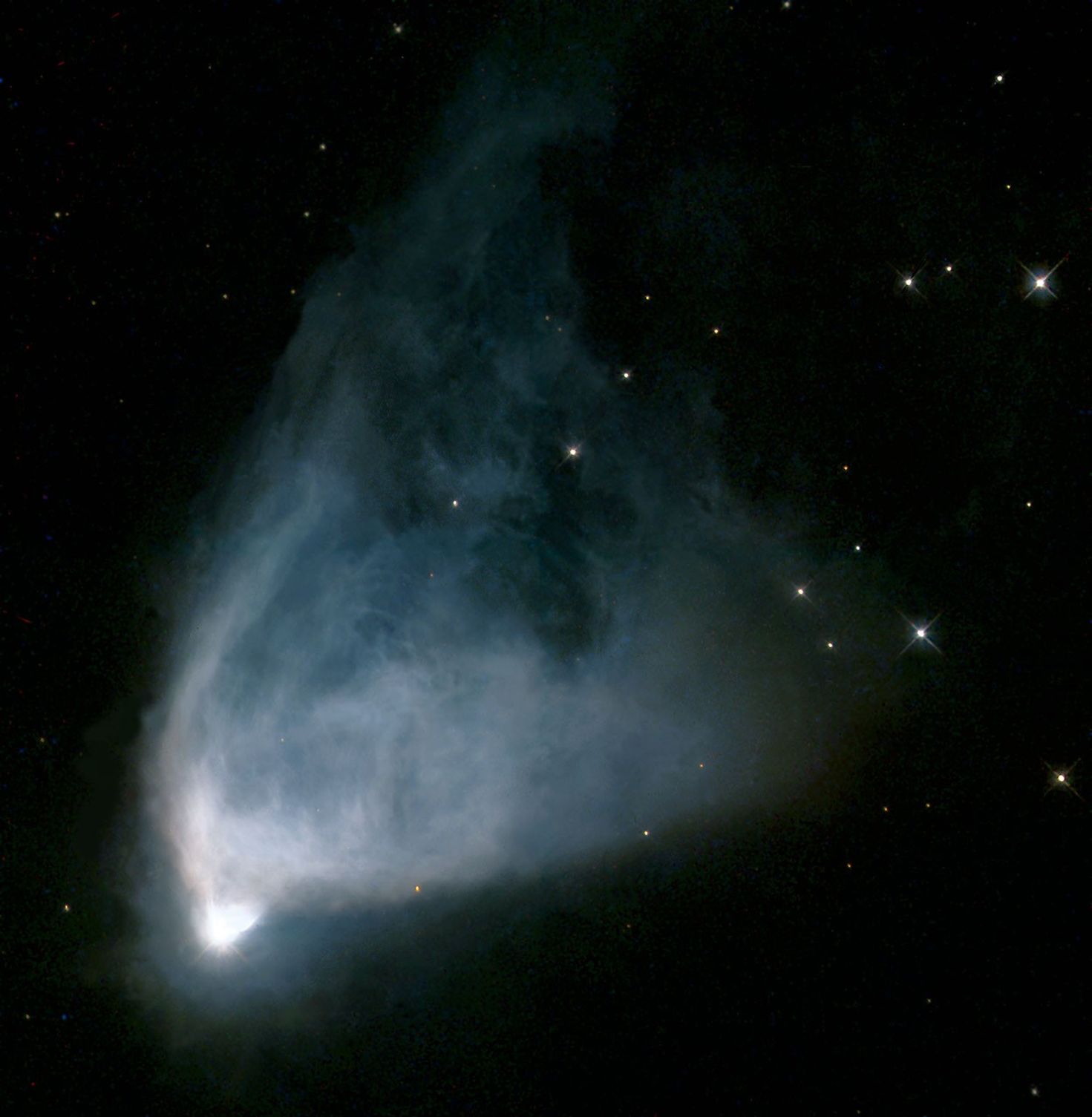
On Jan. 26, around 10:00 p.m., Edwin Hubble rode an elevator up 78 feet to the telescope’s prime focus cage, and opened a photographic plate for a 15-minute exposure of NGC 2261 (now known as Hubble’s Variable Nebula). Hubble had been waiting a week for weather conditions to allow for his observing session, and even that night, the seeing was poor and the mirror itself was dirty. Nevertheless, the trial was a success, and the Hale Telescope’s storied career – which would include, among many other achievements, the discovery of quasars and measuring the rate of the universe’s expansion – began.