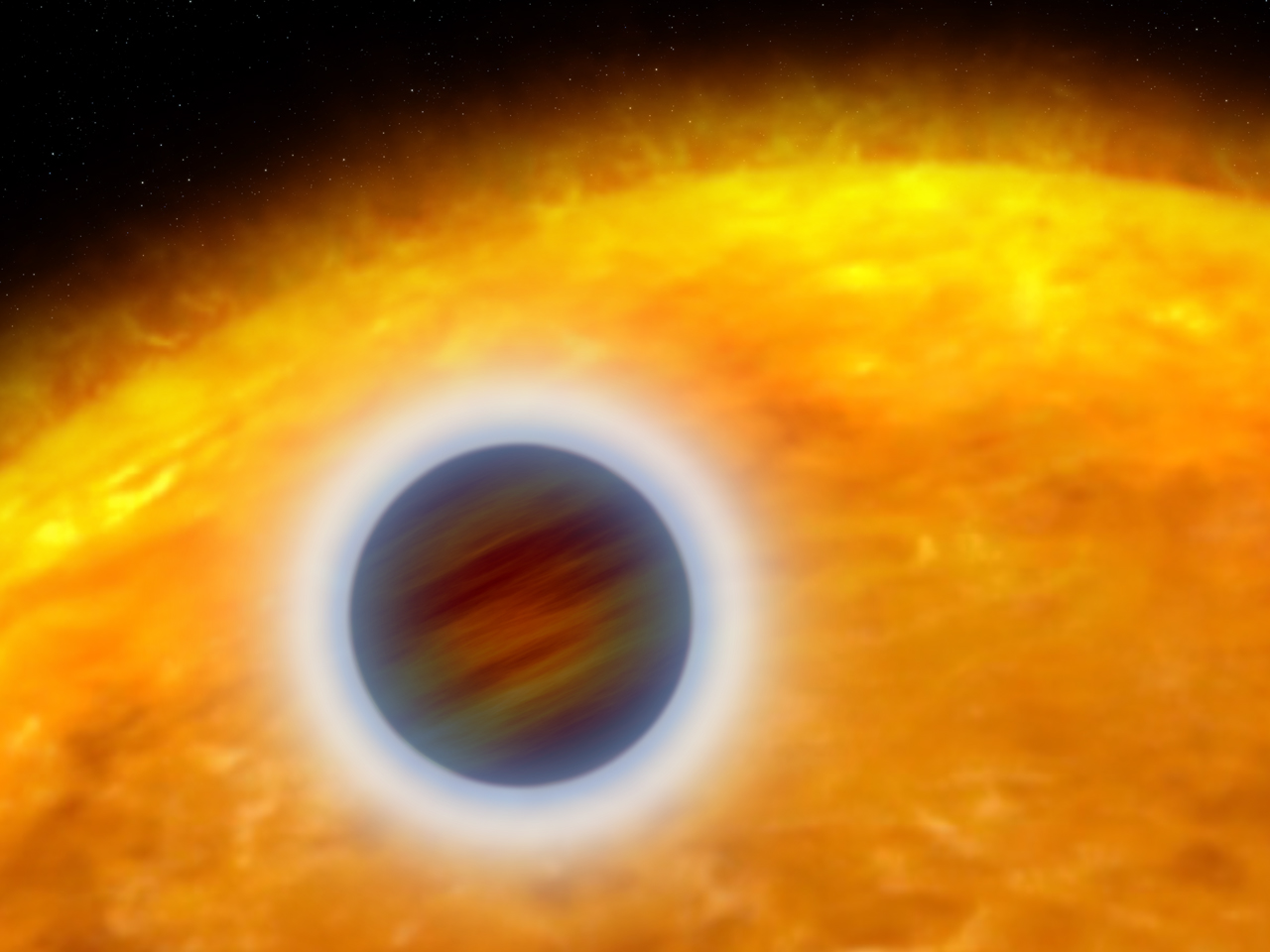
On Nov. 27, 2001, NASA announced the first detection of an exoplanet atmosphere. Using the Hubble Space Telescope’s spectrometer, astronomers observed HD 209458b, orbiting a 7th-magnitude, Sun-like star 150 light-years away in Pegasus. The researchers were able to detect sodium in the exoplanet’s atmosphere – though it was less sodium than models had predicted for a planet of that class, a hot Jupiter. (Some theories suggest that high-altitude clouds in the atmosphere affected the observations.) The finding proved that Hubble could use the transit method to study alien atmospheres, with exciting implications for future exoplanet exploration.