
Key Takeaways:
- The James Webb Space Telescope (JWST) utilized its infrared imaging capabilities to present a novel perspective of the Sombrero Galaxy (Messier 104), significantly altering its visible-light appearance by resolving dust and diminishing central star glow.
- JWST's observations revealed a smooth inner disk and detailed, textured dust clumps within M104's outer disk, which are typically indicative of star-forming regions.
- Despite the presence of these dust structures, star formation in Messier 104 is notably reduced, with the galaxy instead characterized by a substantial population of old globular clusters, approximately ten times more numerous than those in the Milky Way.
- This high-resolution infrared imaging by JWST showcases superior resolving power compared to previous missions, such as the Spitzer Space Telescope, in discerning intricate details of this well-known celestial object.
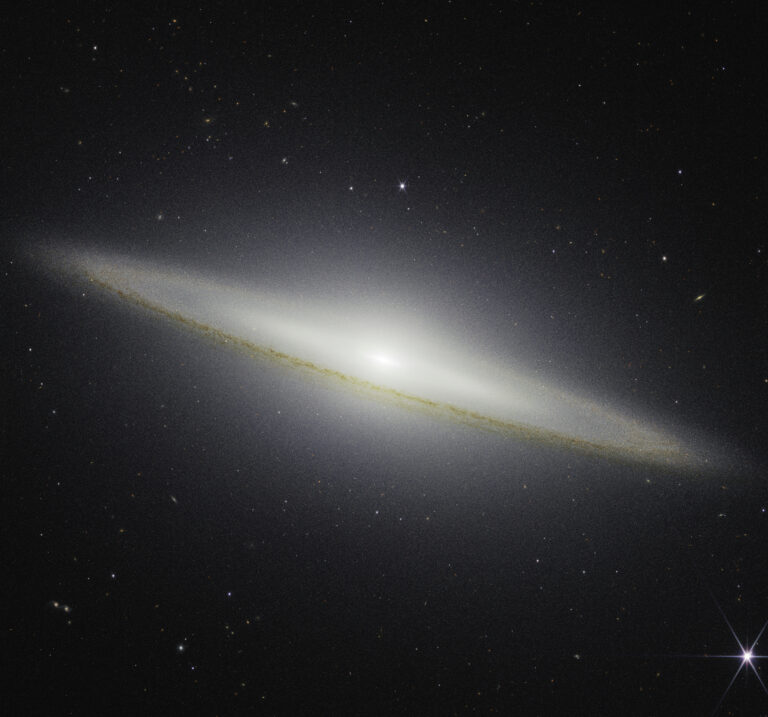
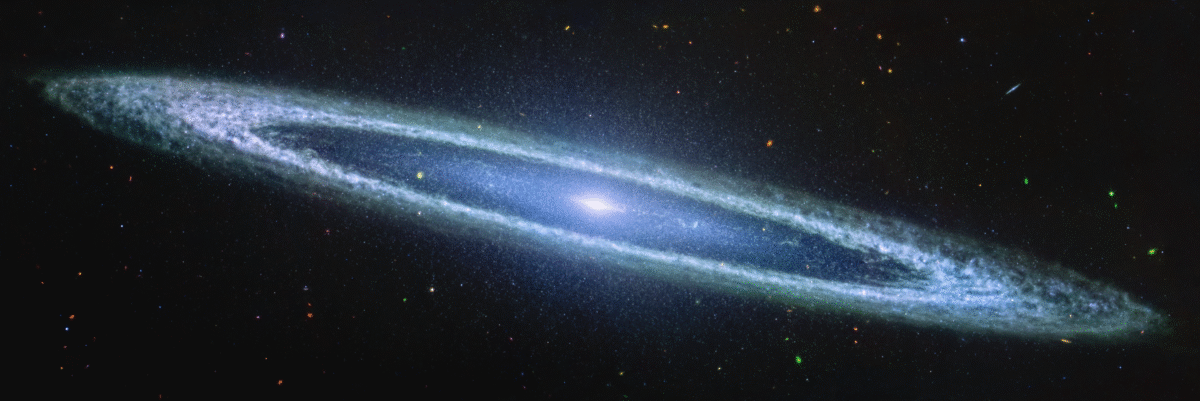
The James Webb Space Telescope (JWST) shows off its infrared capabilities once again in new imaging of the well-known Sombrero Galaxy, otherwise known as Messier 104. By resolving the thickly textured dust clouds in the outer disk and toning down the brilliant central star glow, JWST shows a whole new side of the famous galaxy.
In visible light, the system looks much like its namesake, with a broad flat disk for a brim and a brilliant central core, shining with old stars. But JWST eyes the skies in infrared light, where many objects take on surprising appearances that don’t always align with their visible-light counterparts. In particular, infrared vision can peer through dust clouds, make clouds of gas suddenly visible, and tone down the light from stars, allowing other features to shine.
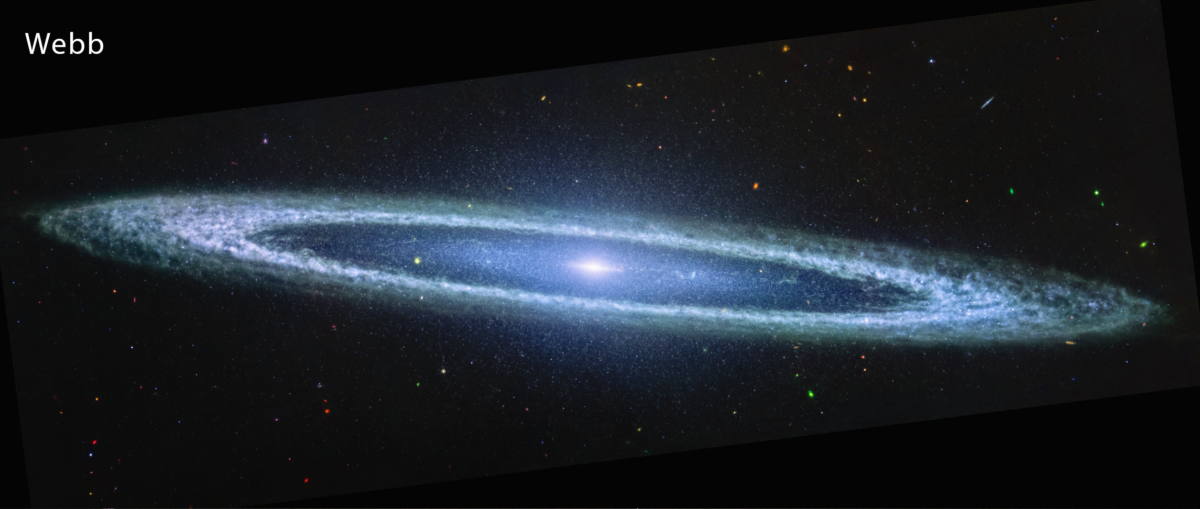
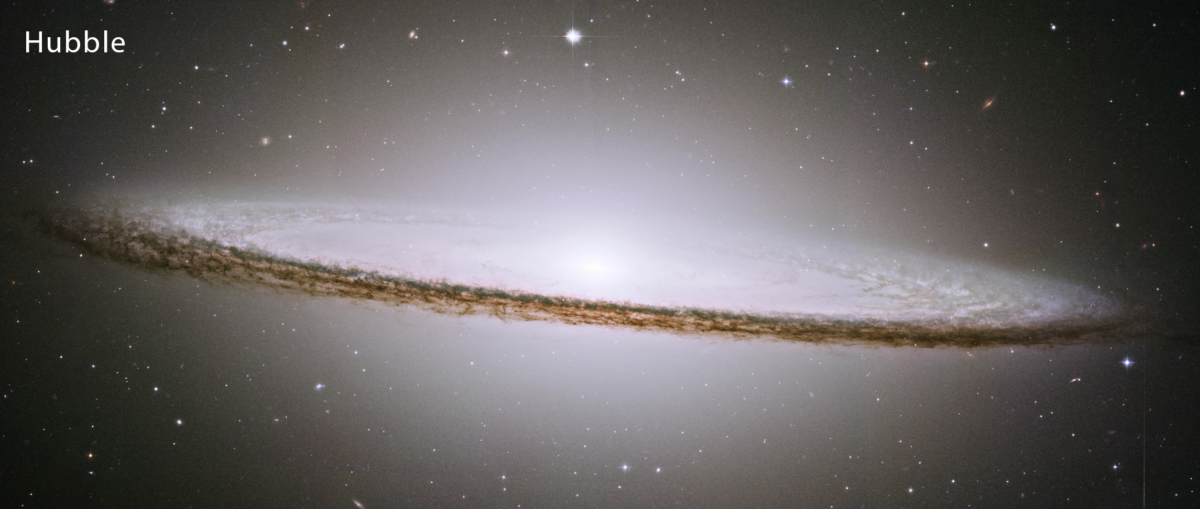
This means that for JWST’s view of M104, the bright core is diminished to a small spark. Without that overwhelming glow, the overall galaxy appears empty, replaced by the now visible smooth inner disk. But this is misleading — M104 is far from empty. In fact, it contains more stars than the Milky Way (though it’s roughly the same size).
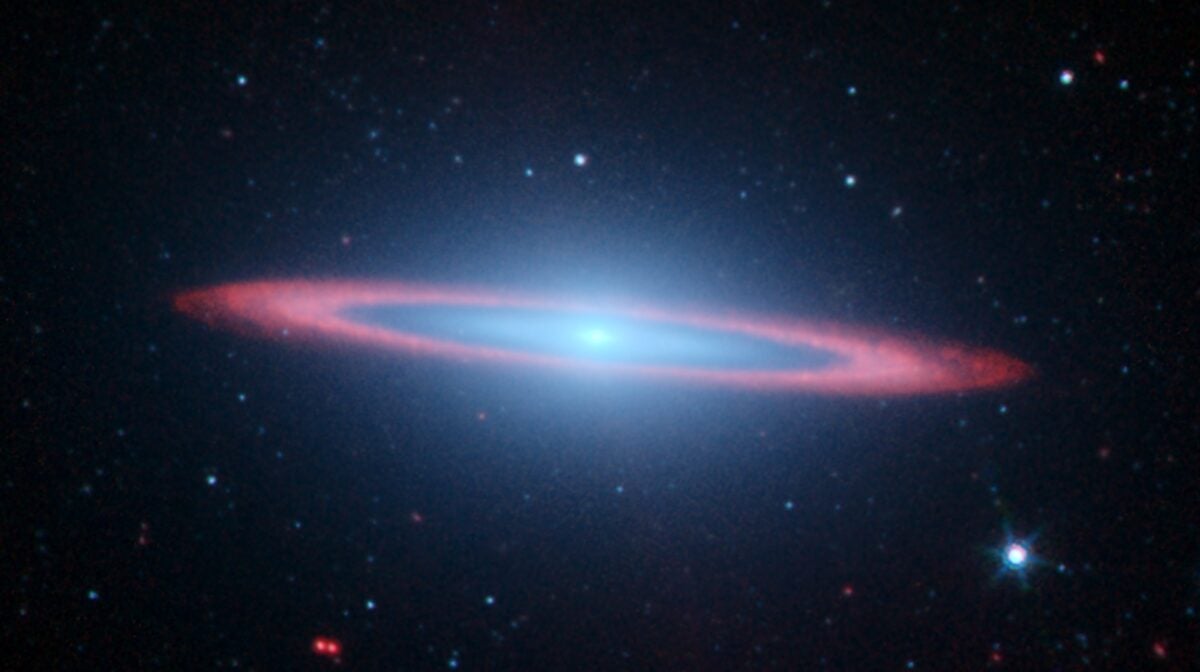
JWST’s predecessor, the Spitzer Space Telescope, also obtained an infrared view of the Sombrero, painting it more like a bullseye than a hat. But Spitzer lacked JWST’s stunning resolving power; JWST’s advantage is obvious in a comparison.
In JWST’s image, the outer disk shows detailed texture, like ruffled clouds, which represent clumps of dust. In many galaxies, such sites are often where stars form. But star formation has slowed to a crawl in M104. In fact, M104 is known more for its older star groups: globular clusters. It has far more than its fair share, some 10 times more than the Milky Way, despite being only modestly bigger.
Globular clusters are stars that are bound together gravitationally, resembling a sort of miniature, irregular galaxy. Many of the stars in a globular are siblings, born from the same molecular cloud. But most globulars also contain interlopers or multiple generations of stars. Astronomers are still teasing out the secrets of these clusters and how they contribute to galaxy formation and evolution.
The Sombrero Galaxy is a magnitude-8 galaxy, “only” about 30 million light-years away, making it a popular and easy target for backyard observers, as well as NASA flagships. But despite its popularity, the sharp infrared gaze of JWST can still reveal new details in this old favorite.