
Key Takeaways:
- String theory, a mathematical construct aiming to unify physics, posits the existence of extra, curled-up dimensions.
- Public and media interest in string theory has waned in recent years, coinciding with a lack of experimental evidence supporting its predictions, such as from the Large Hadron Collider.
- A 2013 poll of theoretical physicists revealed a roughly even split in belief regarding string theory's potential to unify physics, with a significant portion deeming it unlikely to succeed.
- The article concludes that, based on current scientific thinking and lack of supporting evidence, string theory's prospects appear unfavorable.
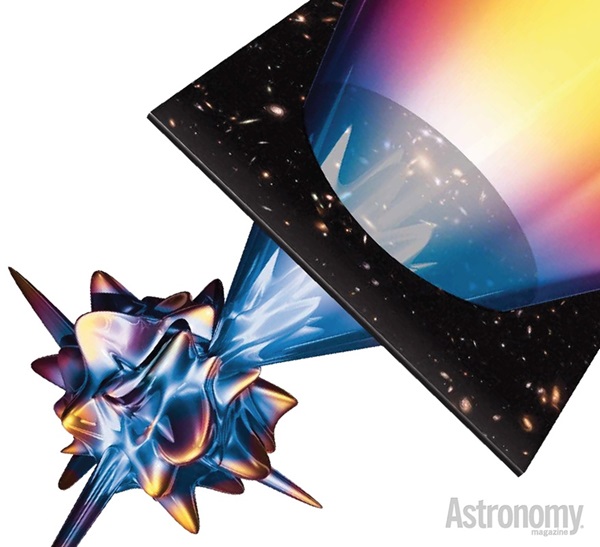
The topic has since slowly faded from regular media coverage. And some physicists now view strings as a failed theory because it doesn’t make useful predictions about the universe. The debate has accelerated as the Large Hadron Collider hasn’t found any hints of an underlying “new physics,” as many theorists predicted it would.
In 2013, theoretical physicists attending a conference were asked a few simple questions about their current beliefs. Voters split evenly — a total of roughly one-quarter each — for and against string theory’s prospects to unite physics. The remaining physicists said that string theory wasn’t likely to pan out, but it was at least a step in the right direction.
A poll is no way to determine what is and isn’t good science, but it can tell you what scientists are currently thinking. And, for now, it looks like string theory is out.
So what would that mean for the universe? What if string theory is wrong?
Read on for Astronomy magazine’s analysis.