Looking for a sky event this week? Check out our full Sky This Week column.
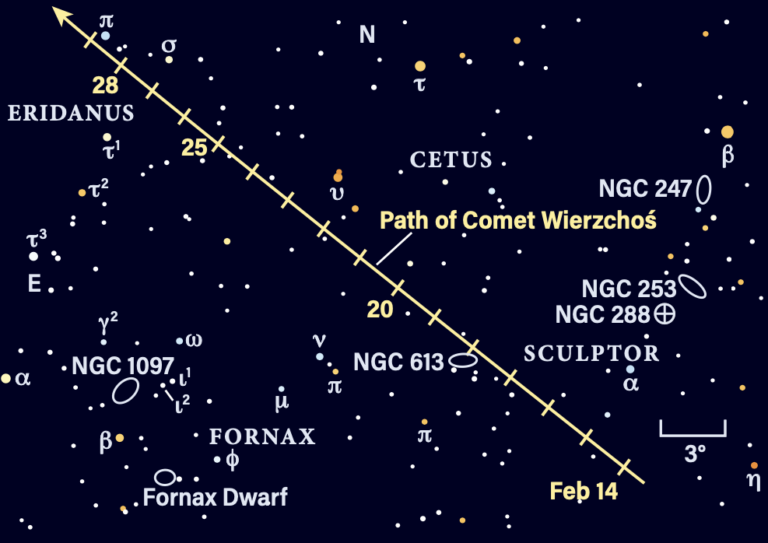
February 16: Catch Comet Wierzchoś in twilight
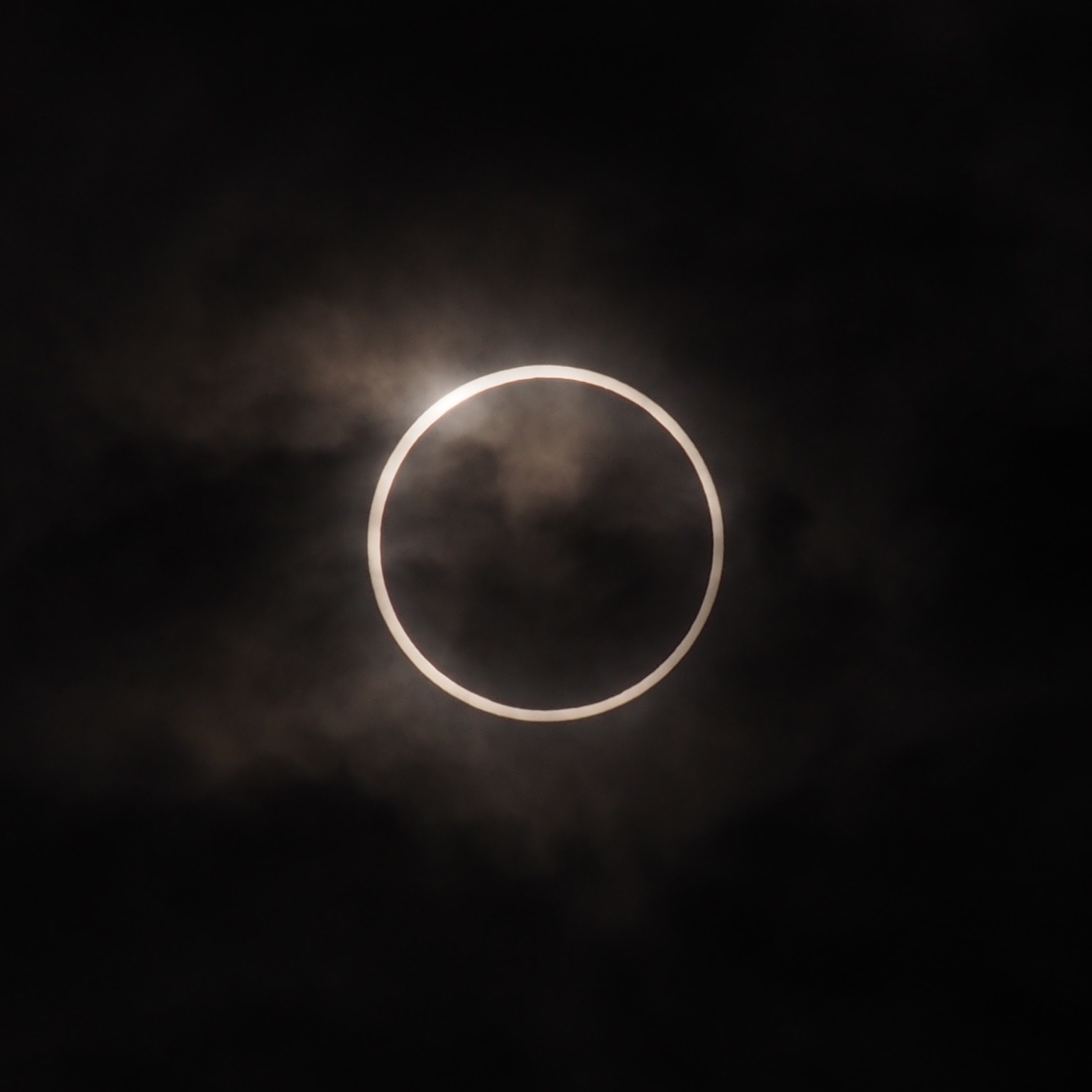
New Moon occurs at 7:01 A.M. EST, bringing an annular solar eclipse to Antarctica and part of the Southern Ocean. Only travelers in these regions will see the Moon cover nearly all of the Sun’s disk, leaving only a thin ring of sunlight around the darkened outline of our satellite. Annular eclipses occur when the Moon is too far from Earth to completely cover the solar disk, so a thin annulus remains visible even at maximum eclipse (such eclipses are never safe to observe with the naked eye).
Additionally, the very southern tip of South America, all of Madagascar, and parts of southern Africa will see a partial eclipse, though no more than 29 percent of the Sun will be covered from any of these locations (and generally much less). Again, partial eclipses are never safe to view with the naked eye, but can be watched through eclipse glasses or with other safe solar viewing options.
You can find more information about the eclipse, as well as maps and further links, at eclipsewise.com.
Sunrise: 6:50 A.M.
Sunset: 5:39 P.M.
Moonrise: 7:01 A.M.
Moonset: 6:03 P.M.
Moon Phase: Waxing crescent (1%)
*Times for sunrise, sunset, moonrise, and moonset are given in local time from 40° N 90° W. The Moon’s illumination is given at 10 P.M. local time from the same location.