Looking for a sky event this week? Check out our full Sky This Week column.
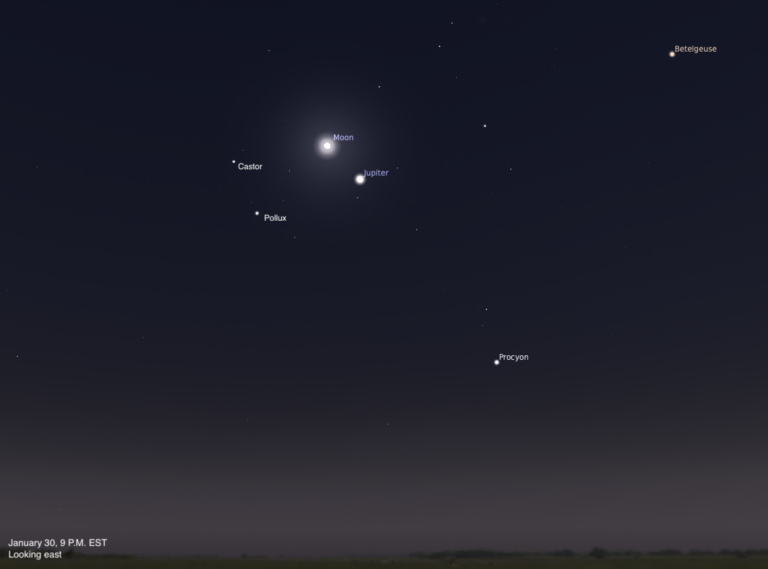
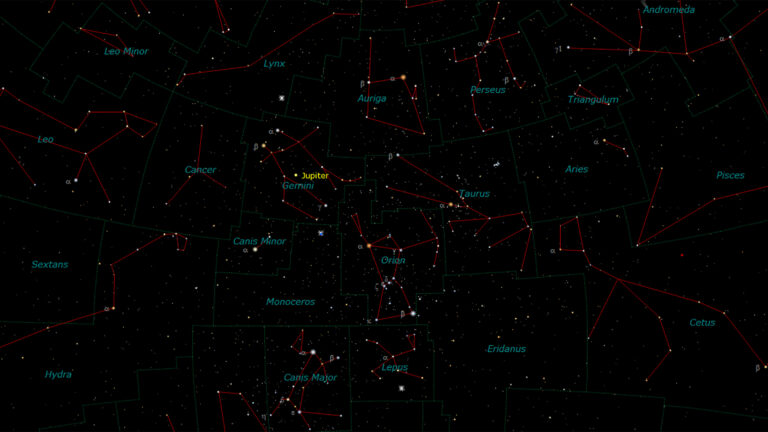
January 30: The Moon and Jupiter share Gemini
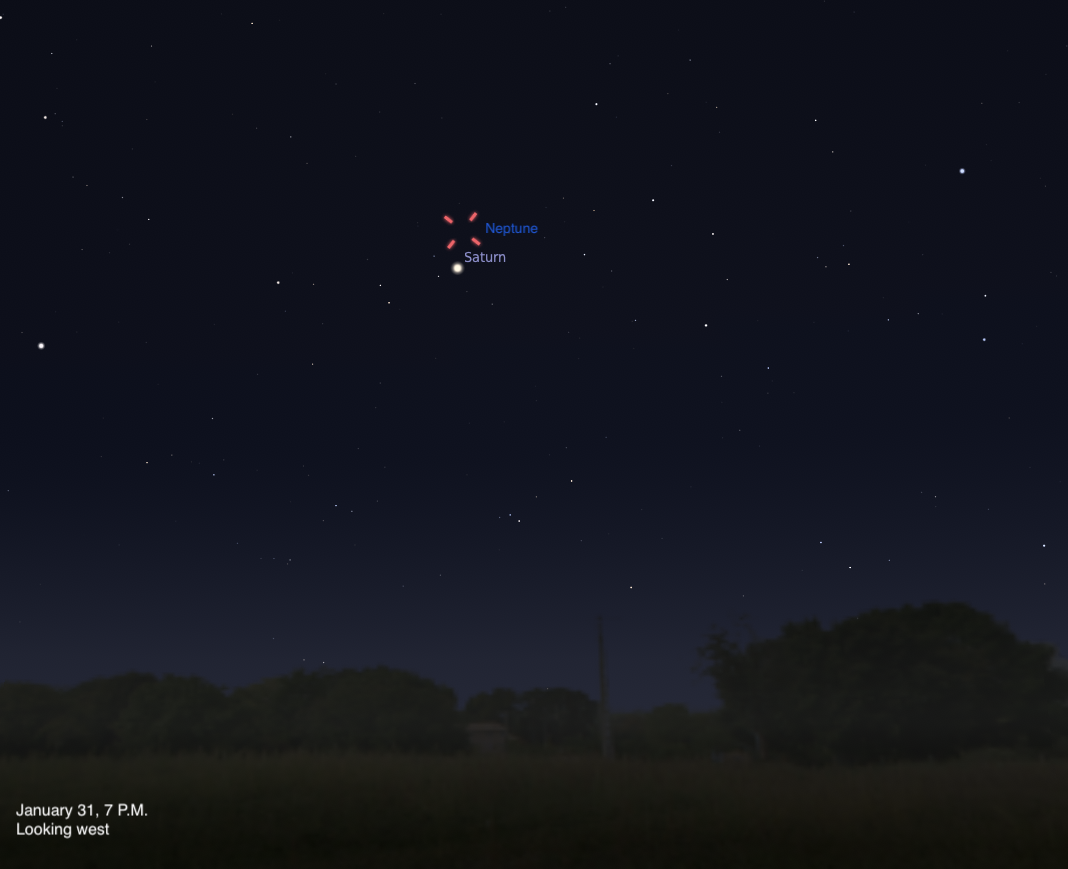
Saturn and Neptune have been near neighbors for a while. By the last day of January, the two planets are just 1.7° apart, visible in the early-evening hours and setting before midnight.
About 90 minutes after sunset (roughly 7 P.M. local time), the pair is still 20° above the western horizon. They are located in southwestern Pisces, near the Circlet asterism. Of course, you need no tricks to identify 1st-magnitude Saturn, the brightest light in this part of the sky. Neptune, at magnitude 7.8, is invisible to the naked eye.
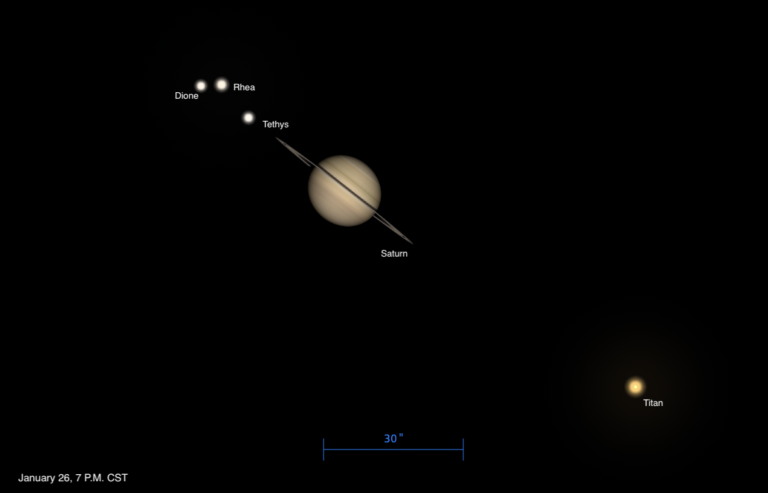
With a telescope, home in on Saturn first. Its disk is 16” across, with rings that appear thin, tilted at an angle of just 2.2° — though this is more than they have been all month. The planet’s brightest moon, Titan, will likely be visible just under 2’ west of Saturn’s center. A few fainter, smaller moons cluster closer to the planet, though these may be more difficult to see.
From Saturn, Neptune is a short slide to the northeast. You may just catch the pair together in a wide-field eyepiece; otherwise you may need to nudge Saturn just slightly out of your field of view to land on Neptune. The solar system’s most distant planet appears just 2” in diameter. It will likely look like a “flat,” dim star that might have a bluish or grayish hue.
By mid-February, Neptune will sit less than a degree from Saturn, as the former passes due north of the ringed planet.
Sunrise: 7:09 A.M.
Sunset: 5:18 P.M.
Moonrise: 3:56 P.M.
Moonset: 6:31 A.M.
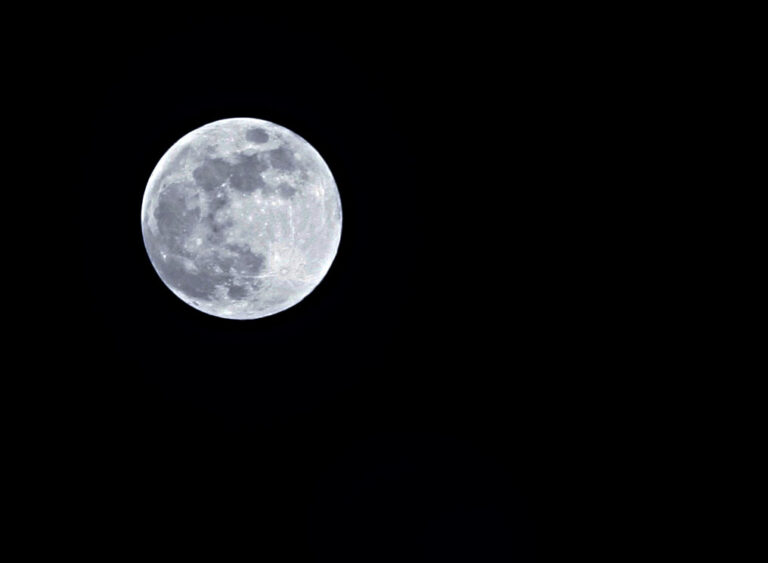
Moon Phase: Waxing gibbous (99%)
*Times for sunrise, sunset, moonrise, and moonset are given in local time from 40° N 90° W. The Moon’s illumination is given at 10 P.M. local time from the same location.