Looking for a sky event this week? Check out our full Sky This Week column.
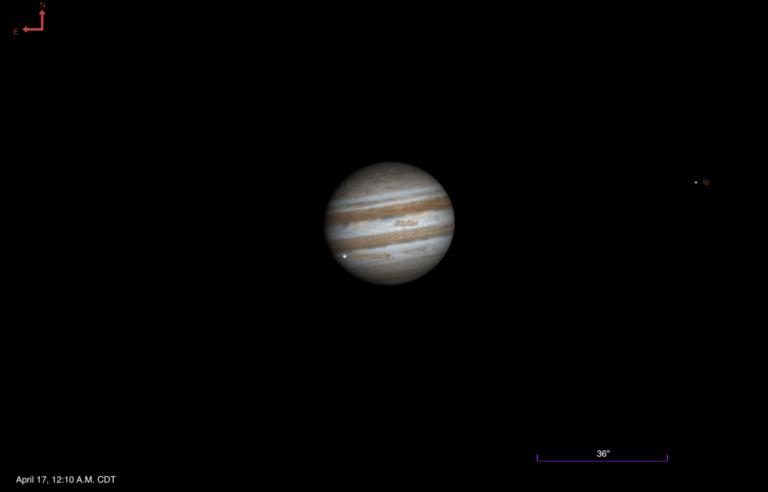
April 16: Ganymede transits Jupiter
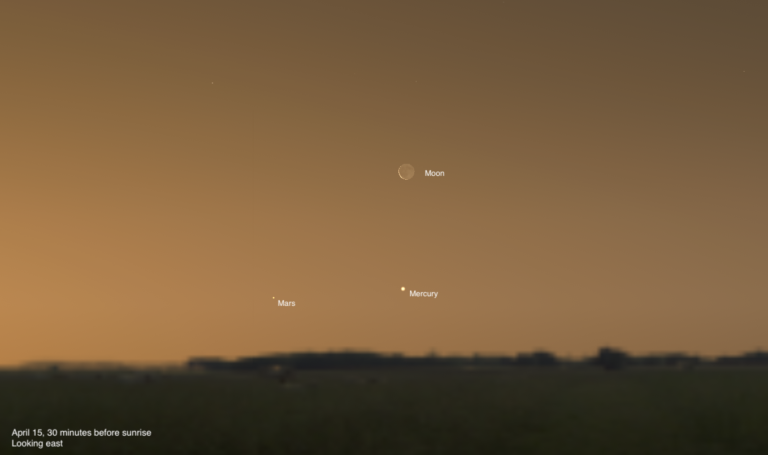
New Moon occurs at 7:52 A.M. EDT, leaving the sky pristine all night and setting the stage for a possible sighting of the zodiacal light after dark.
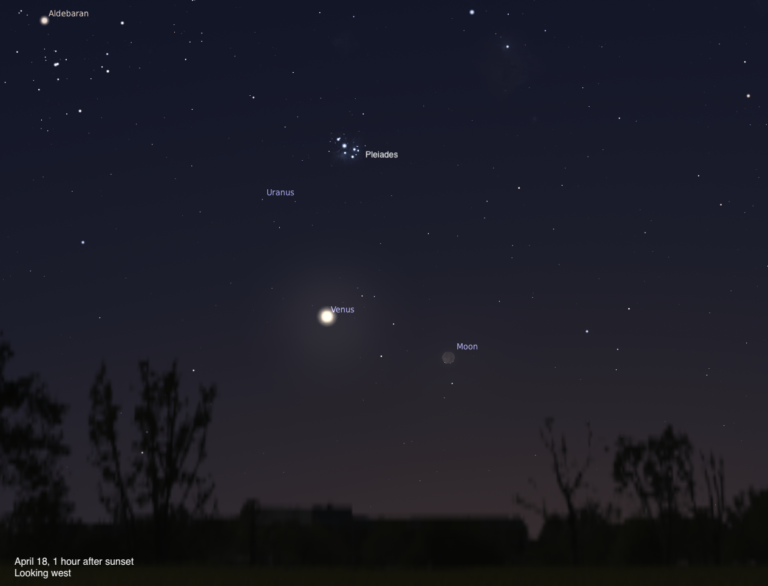
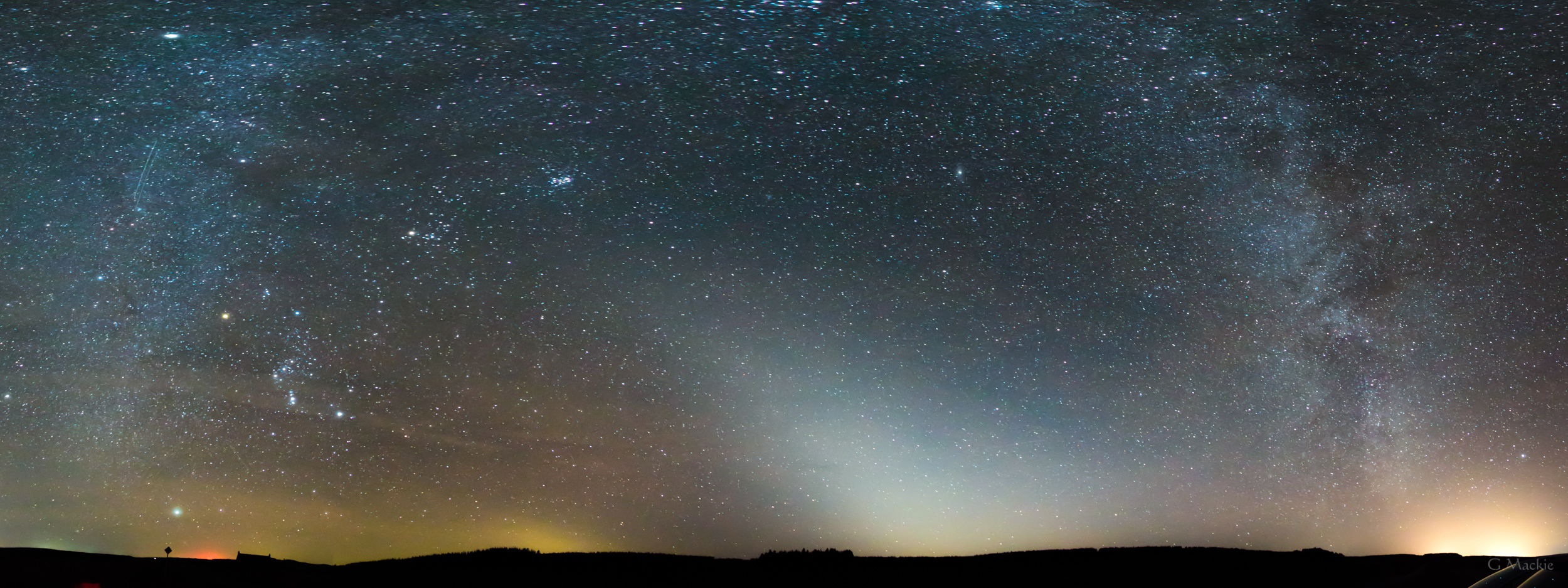
This ethereal glow is generated by sunlight scattering off dust that’s settled along the plane of the solar system. That dust is left by comets as they travel through the inner solar system, where they are heated by the Sun and spew gases and small grains from their nuclei in the process. Over time, the dust settles into orbits along the ecliptic, creating a cone-shaped glow in our nighttime sky. During the spring, this glow can be viewed after dark in the west.
At this time of year, the ecliptic rises upward toward the left when you look at the western horizon. It slices up through Taurus and into Gemini above it, then on into Cancer. After the glow of twilight has faded, look for lingering light in this region of the sky, with a wider base and pointed tip ending in Gemini or Cancer. This is the zodiacal light.
Even if you can’t view it by eye, try taking a long-exposure photo with a camera or even your phone. The glow may pop out then!
Sunrise: 6:19 A.M.
Sunset: 7:41 P.M.
Moonrise: 6:04 A.M.
Moonset: 8:24 P.M.
Moon Phase: Waxing crescent (1%)
*Times for sunrise, sunset, moonrise, and moonset are given in local time from 40° N 90° W. The Moon’s illumination is given at 10 P.M. local time from the same location.