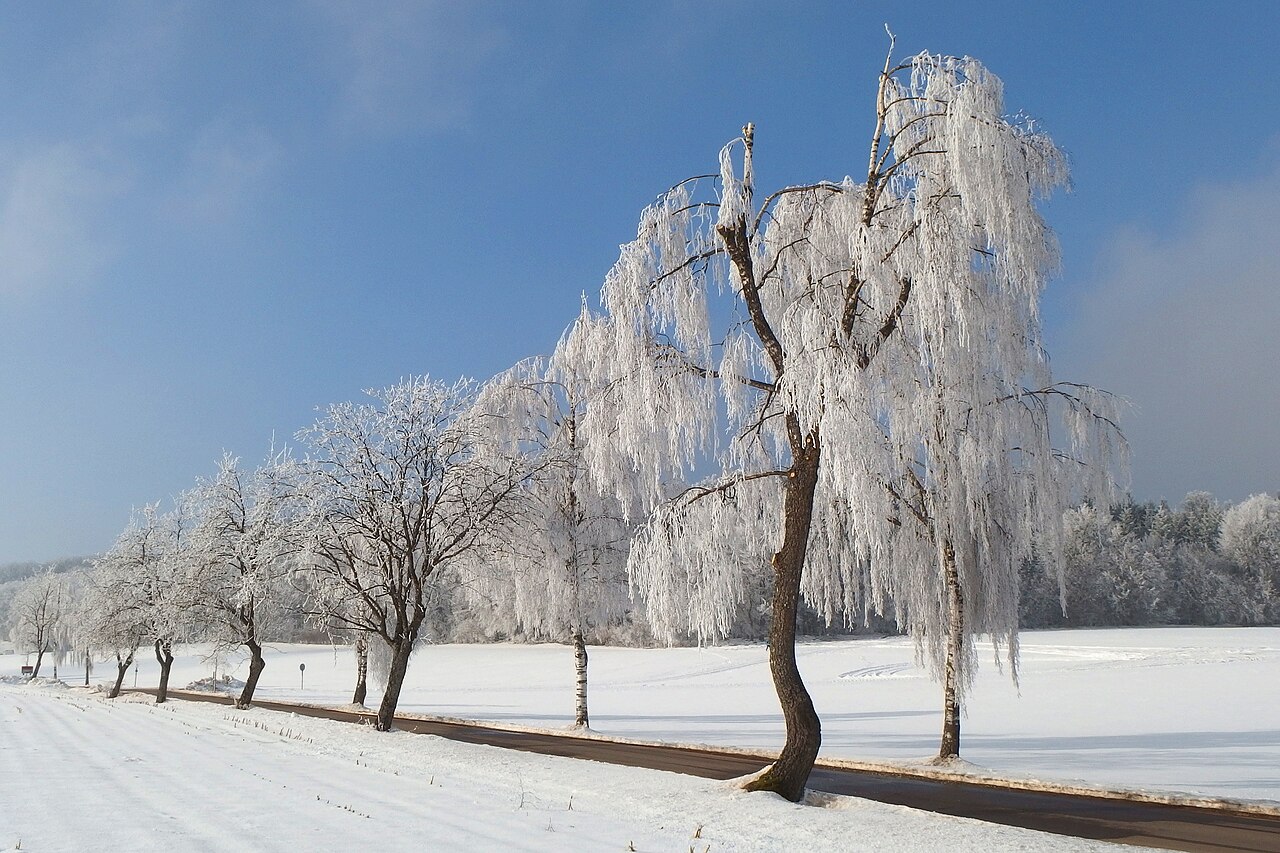
Credit: Kreuzschnabel/WikiMedia Commons
Extreme cold weather is hard on equipment, on vehicles, and on people. Cameras malfunction, batteries go dead, and there is risk of hypothermia and frostbite. Still, the prospect of a clear winter night is difficult to resist. Note: I specifically say “winter,” although I am aware that similar conditions may occur during other seasons if you are observing at high altitude. For such situations, I’ll simply state my law: Preparation is Everything.
Being prepared does not mean owning the right equipment. It means having what you need at hand for what you didn’t expect. If you’re going to be observing in winter at a remote site, please, for your own sake, overpack. I’m aware that it’s highly improbable that you’ll need to use all you bring. But, in that most improbable of situations, having a certain item along could literally be the difference between life and death.
Top and bottom
Experts stress that the most important body parts to keep warm are the head and the feet. Most of the heat loss during cold evenings is through the top of the head. And nothing will chill you faster than heat seeping into the ground through thin shoes.
My personal headgear consists of a pullover head cover made of soft fleece, called a balaclava. Everything but my eyes can be covered, but in all but the worst conditions I usually have the front pulled down so that my nose and mouth are exposed. Over this I wear a felt “Indiana Jones” type hat. I don’t like the down-filled hood of my parka (even though it’s warm) for one reason: When the hood is on, the material rubbing on itself makes so much noise that normal conversation is impossible.
Regarding footwear, I usually change into my cold-weather boots at the observing site because some boots make it difficult to drive. The ones I chose are Baffin Impact. They are comfortable, not very heavy (7.2 pounds [3.3 kilograms] for both), and have a thick insulated lining in the sole to prevent heat transfer downward. Take a look at them here.
More warmth
Bring hand warmers, and bring extras. They’re superb when working but notorious for not lasting the full time specified on the package. Keep an active one in your side pockets. Slip them in and out of your gloves or mittens for a quick warm-up. If you’re using gloves, leave them on but pull your fingers out of the finger slots for more warmth. If your feet get cold, there are also toe warmers which seem to work pretty well, although with my new boots I haven’t tried them out yet. Again, camping outlets will have these in quantity.
The experts say to dress in layers. I generally use fleece long underwear and pants. My upper body is covered with a T-shirt, a thin long-sleeved flannel shirt, a fleece pullover, and a down jacket. My wife, who is affected by the cold to a much greater extent than I am, wears a ski rescue suit as her outer layer. When fully zipped with the hood up and boots and gloves in place, there are few places for the wind to chill her delicate frame.
Ready for bed?
Choose a sleeping bag with the appropriate temperature range for your area. Here in the desert we have different requirements than my friends in Wisconsin and Norway. If possible, don’t sleep directly on the ground. We use a light-weight, fold-out platform on which we place a battery-powered, self-inflating air mattress. This places us about 30 inches (75 centimeters) above ground and, while it may not sound like much, it makes a big difference.
An observing buddy once offered me this sound advice: There’s a general consensus among campers that you should add 15° Fahrenheit to a bag’s rated temperature to get the temperature the outside air can fall to before you’ll feel cold in the bag. For some people who are more sensitive to the cold, that figure can be 20°. In other words, if a sleeping bag is rated for 10°, you’re probably going to start getting chilled when the temperature is 25°.
Above all else, be careful. If you’re heading out to observe alone, let someone know exactly where you’ll be and what time you’ll return. Good luck!