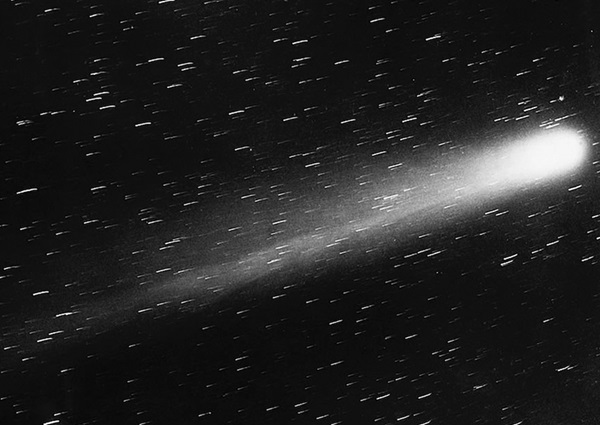
The object that would become known as both the Great January Comet of 1910 and the Daylight Comet was first seen Jan. 12 in the Southern Hemisphere. It’s unclear who precisely discovered it, but some newspapers at the time pointed to observers in South Africa. On Jan. 17, 1910, the comet reached perihelion — its closest approach to the Sun — and could be seen in broad daylight, outshining Venus at its brightest. As it moved away from the Sun, it became visible in the Northern Hemisphere shortly after sunset. By February, a 50°-long tail swept away from the comet’s head.
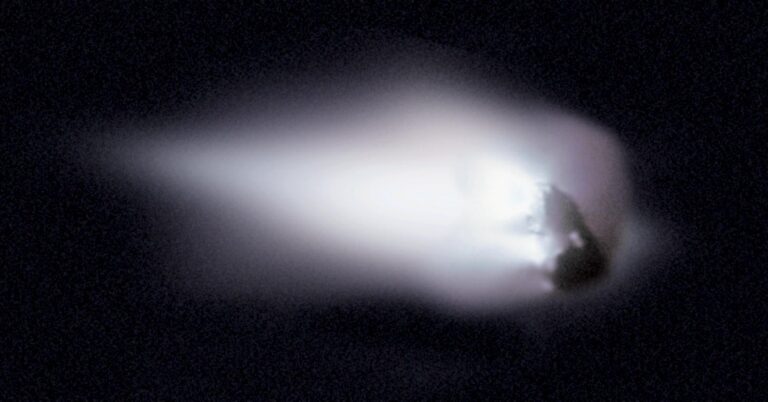
Confusion caused many to mistake the apparition for the more famous Halley’s Comet; that comet’s return in spring of 1910 was highly anticipated, so imagine everyone’s surprise when a brilliant comet unexpectedly appeared months earlier!