
Key Takeaways:
- Launched in 1990, the Hubble Space Telescope initially suffered from spherical aberration in its primary mirror, resulting in the production of blurry images.
- The STS-61 mission, conducted in December 1993 by Space Shuttle *Endeavor*, was deployed to correct this flaw by installing the Corrective Optics Space Telescope Axial Replacement (COSTAR) and implementing various system upgrades.
- The complex repair involved a record five extravehicular activities (EVAs) totaling 35 hours and 28 minutes, performed by four astronauts over several days, alongside robotic arm operations to secure the telescope.
- Following the mission's successful completion, the Hubble Space Telescope's imaging capabilities were fully restored and enhanced, enabling it to capture higher quality astronomical data than its original design specifications.
After the Hubble Space Telescope was launched in 1990, the discovery that the primary mirror suffered from spherical aberration (i.e., it had been ground to the wrong specs) was a scientific – not to mention PR – disaster. An error as big as a $1.5-billion telescope that returned blurry, fuzzy images had to be corrected.
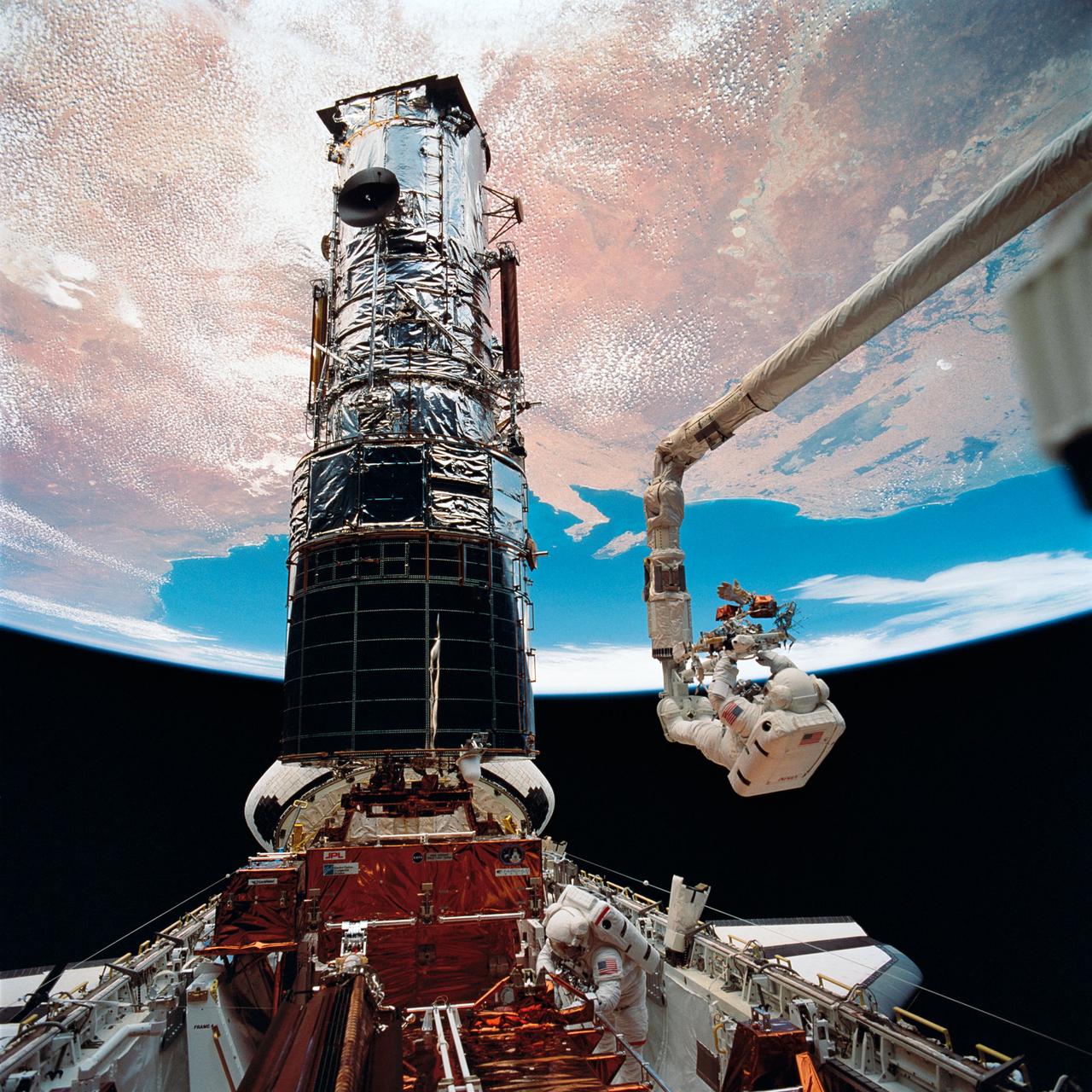
The STS-61 mission to service the Hubble not only successfully repaired the telescope, the engineering and level of skill required also repaired the image of NASA. On Dec. 2, 1993, Space Shuttle Endeavor launched with a crew of seven intensively trained, veteran astronauts. They would need to conduct a record amount of spacewalks to deploy the Corrective Optics Space Telescope Axial Replacement (COSTAR). The flawed mirror could not be repaired in space, so the refrigerator-sized COSTAR connected to the Hubble to correct its vision, like a pair of glasses for a human. The astronauts would also upgrade other features of telescope – replacing its camera with a more advanced version, installing new solar arrays, upgrading its computer, and more.
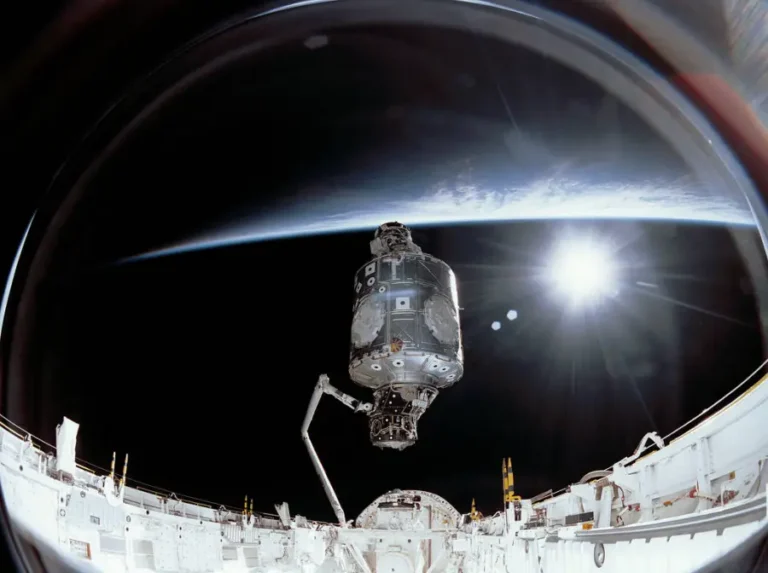
On the third day of the flight, Endeavor rendezvoused with the Hubble, and ESA astronaut Claude Nicollier used a robotic arm to secure the telescope to the shuttle. On Dec. 5, the first two-person team of spacewalkers, Story Musgrave and Jeffrey Hoffman, conducted an EVA that lasted seven hours and 54 minutes. On Dec. 6, the second team – Kathryn Thornton and Thomas Akers – conducted their first EVA, lasting six hours and 36 minutes. The two teams continued daily spacewalks, alternating teams to prevent exhaustion, and on the eighth day of the flight, Musgrave and Hoffman conducted the fifth and final EVA and completed the work. In total, the four astronauts spent a combined 35 hours and 28 minutes outside Endeavor.
The Hubble was redeployed and on Dec. 13, Endeavor returned to Earth. The incredibly complex mission had been an overwhelming success: Photos returned from the Hubble the following month showed that not only was the problem repaired, but thanks to the upgrades, the telescope could now return even better photos than it had originally been designed for.