2026 Astronomy Magazine Astrophotography Contest
See the winners!
Skip to content
Astronomy
  • Login / Register
  • Logout
  • Forums
  • Shop
  • Subscribe

  • News
  • Science
    • Solar System
    • Exoplanets
    • Stars
    • Milky Way
    • Galaxies
    • Exotic Objects
    • Cosmology
  • Observing
    • In The Sky
    • Upcoming Events
    • The Sun
    • The Moon
    • Planets
    • Comets
    • Deep-Sky Objects
    • Observing Basics
    • Telescopes and Equipment
    • Astrophotography
    • Astrotourism
    • Gear Guide
  • Space Exploration
    • What’s Launching This Week
    • Human Spaceflight
    • Robotic Spaceflight
  • The Magazine
  • Ask Astro
  • Star Products
  • Login / Register
  • Logout
  • Forums
  • Shop
  • Subscribe

The Sun

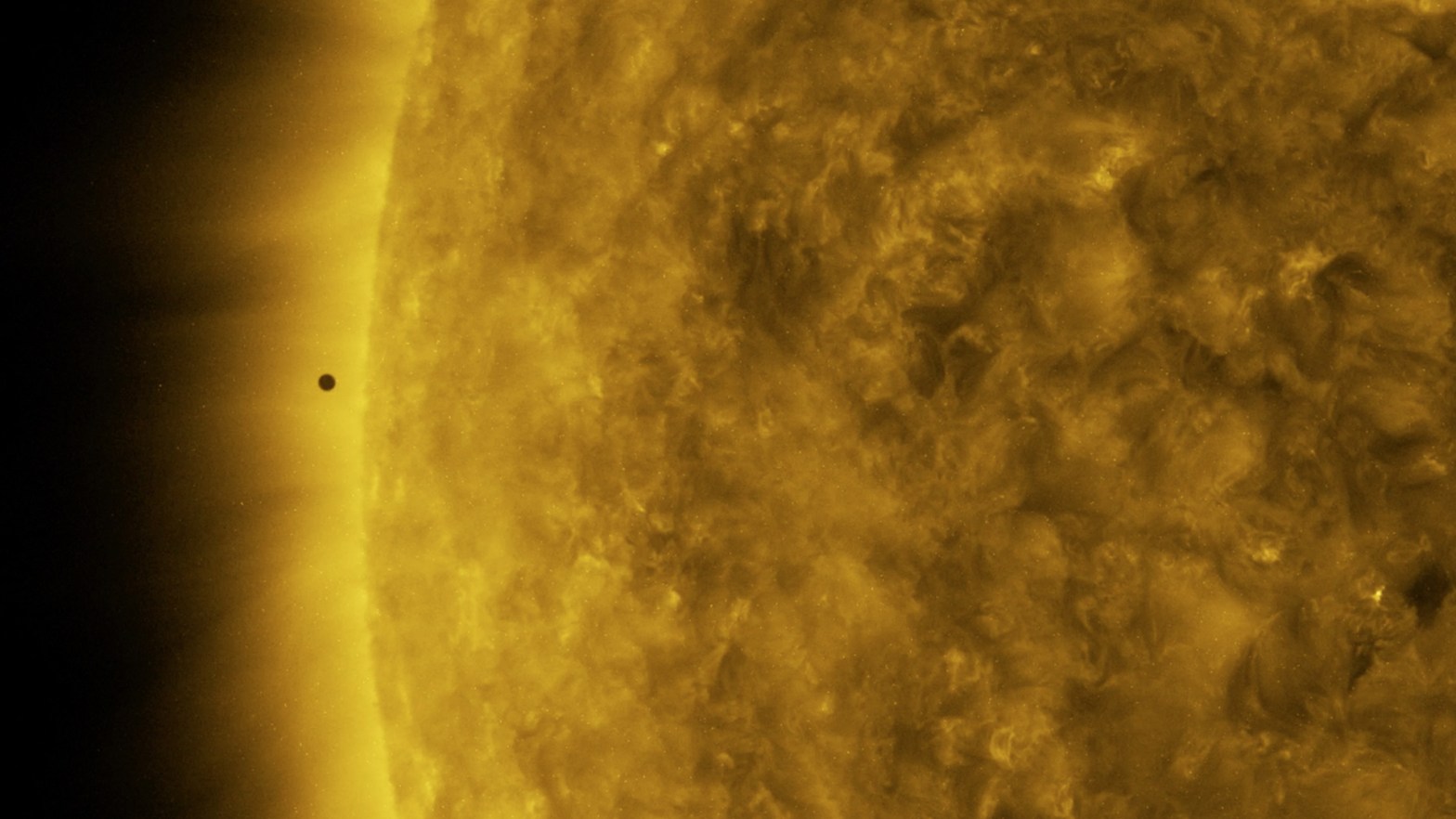
Photograph of the Sun’s limb in golden-yellow false color, with the bright, mottled, swirling solar surface filling the right side of the frame and fading into a dark, hazy edge at left. A small, round, black dot, likely Mercury transiting the Sun, sits just inside the limb at left of center.
Science, Solar System

What would happen if a planet crashed into the Sun?

Solar System, Stars

Case closed on long-standing space weather mystery

A black-and-white photograph shows a man in a suit jacket and tie leaning over a table, adjusting two small, white scale models of satellite dishes mounted on wire scaffolding. He looks down at the models with both hands resting lightly on the rims of the dishes. Behind him, a light-colored painted brick wall serves as the backdrop, flanked by a dark framed star map on the left and technical equipment with dials on the right.
Today in the History of Astronomy

Sept. 27, 1918: The birth of Martin Ryle

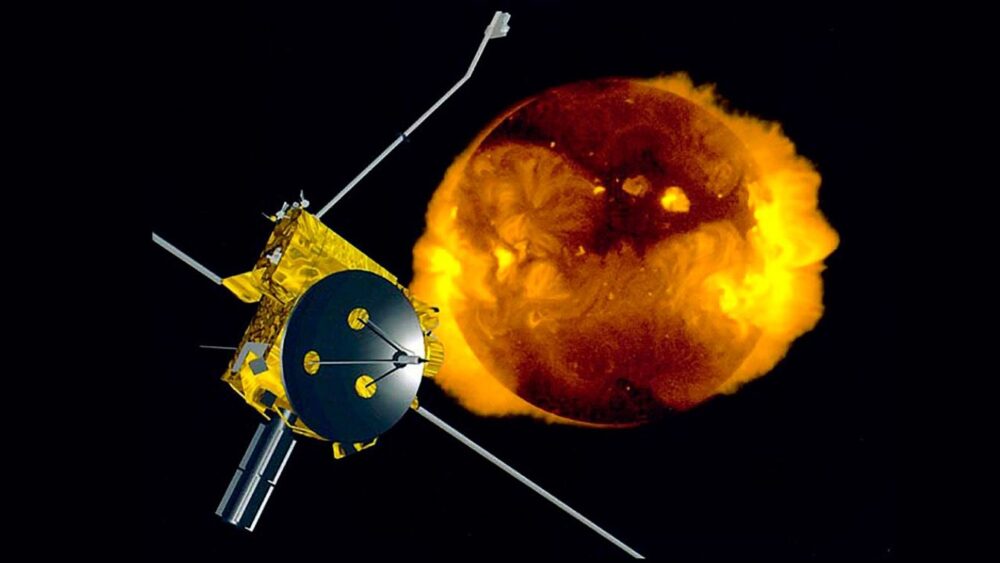
An illustration shows a boxy, gold-foil-wrapped spacecraft with a large black dish antenna on the left, positioned in front of a glowing, fiery sphere on the right against a solid black space background. The central sun-like orb ranges in color from dark, swirling reddish-browns to intense, bright yellow flare-like bursts around its edges. Several thin, metallic booms and antenna rods extend outward diagonally from the main body of the satellite, creating strong geometric contrast with the soft, fiery texture behind it.
Robotic Spaceflight, Today in the History of Astronomy

Sept. 13, 1994: Ulysses at the Sun’s south pole

Solar System

World’s largest solar telescope reveals the Sun’s hidden texture

Astrotourism, Observing, The Sun

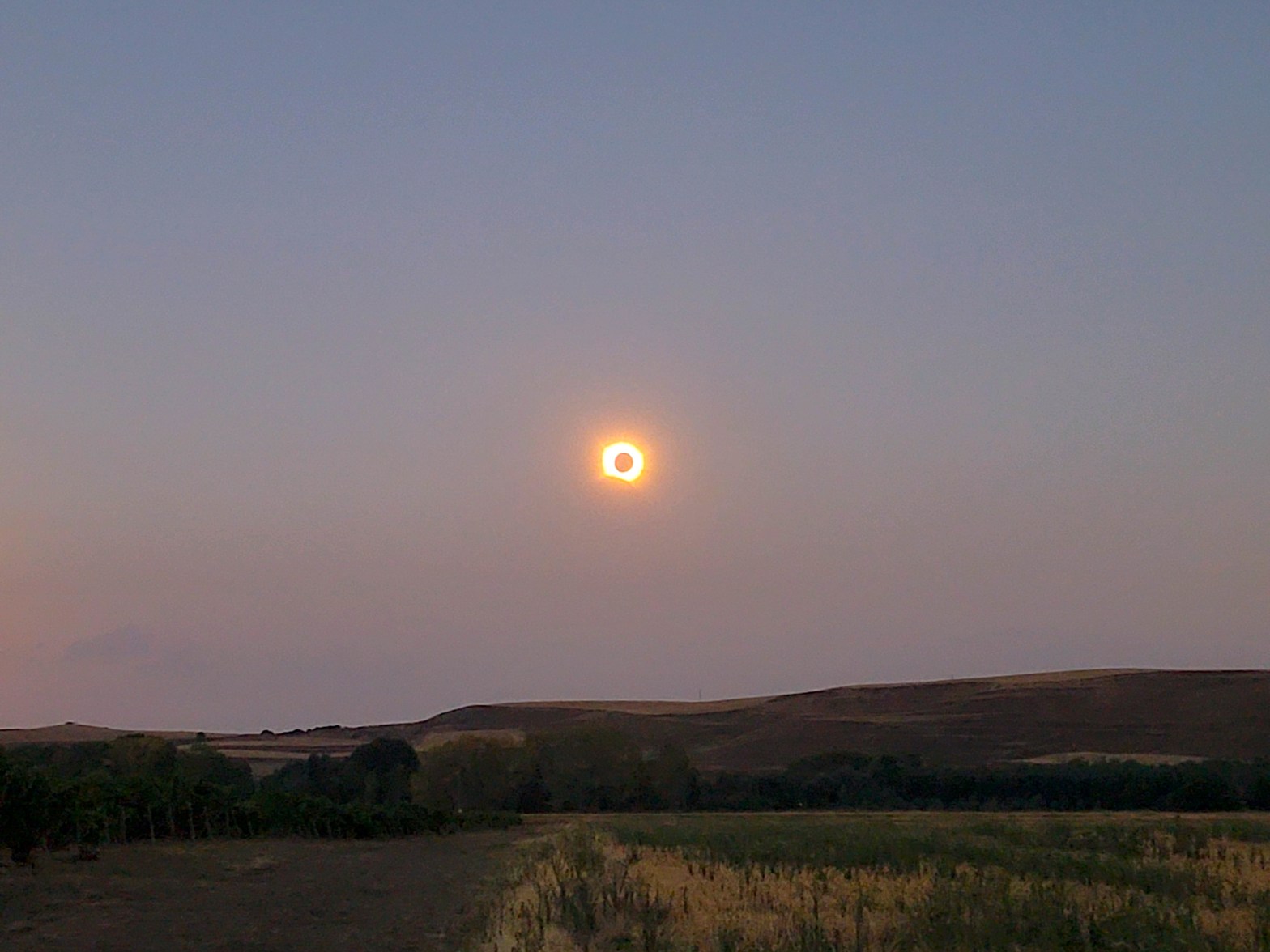
Astronomy readers see a wonderful Spanish eclipse

A high-angle, black-and-white photograph shows a large plume of water bursting upward from an explosion in the upper left section of the open sea. On the right side, a small boat moves away from the splash, leaving a long, bright white wake across the dark, rippling water. The image features strong contrast between the dark grey ocean surface and the pale, frothy water from both the blast and the boat's trail.
Today in the History of Astronomy

Aug. 4, 1972: Extreme space weather detonates mines

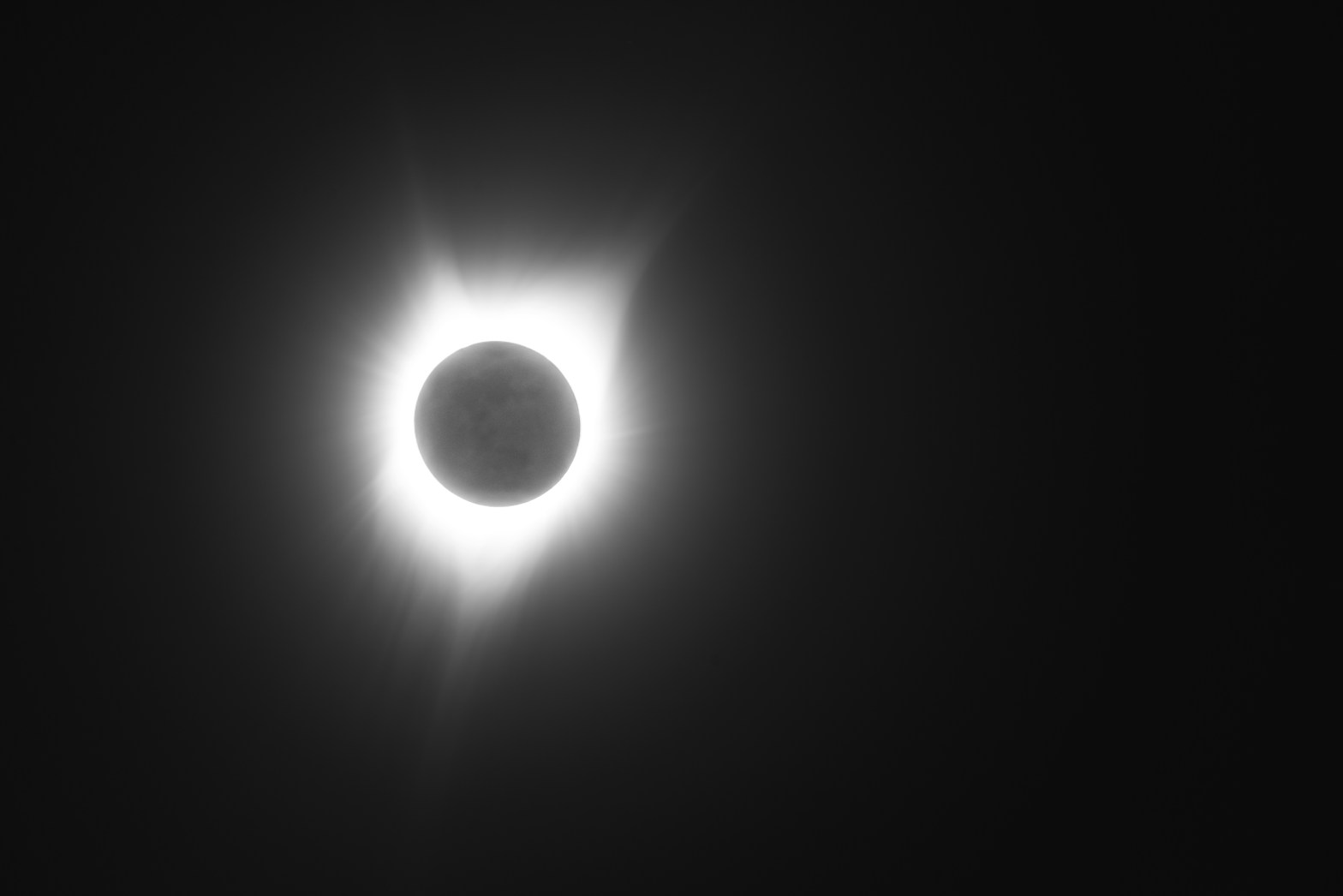
A black and white photograph of a total solar eclipse. The Moon appears as a dark circular disk at center, surrounded by the Sun's glowing white corona extending outward in streaks and rays — most prominently upward and to the lower left. The background is nearly black, emphasizing the dramatic contrast of the corona's light.
Science, Solar System

Why is the Moon exactly the same apparent size from Earth as the Sun?

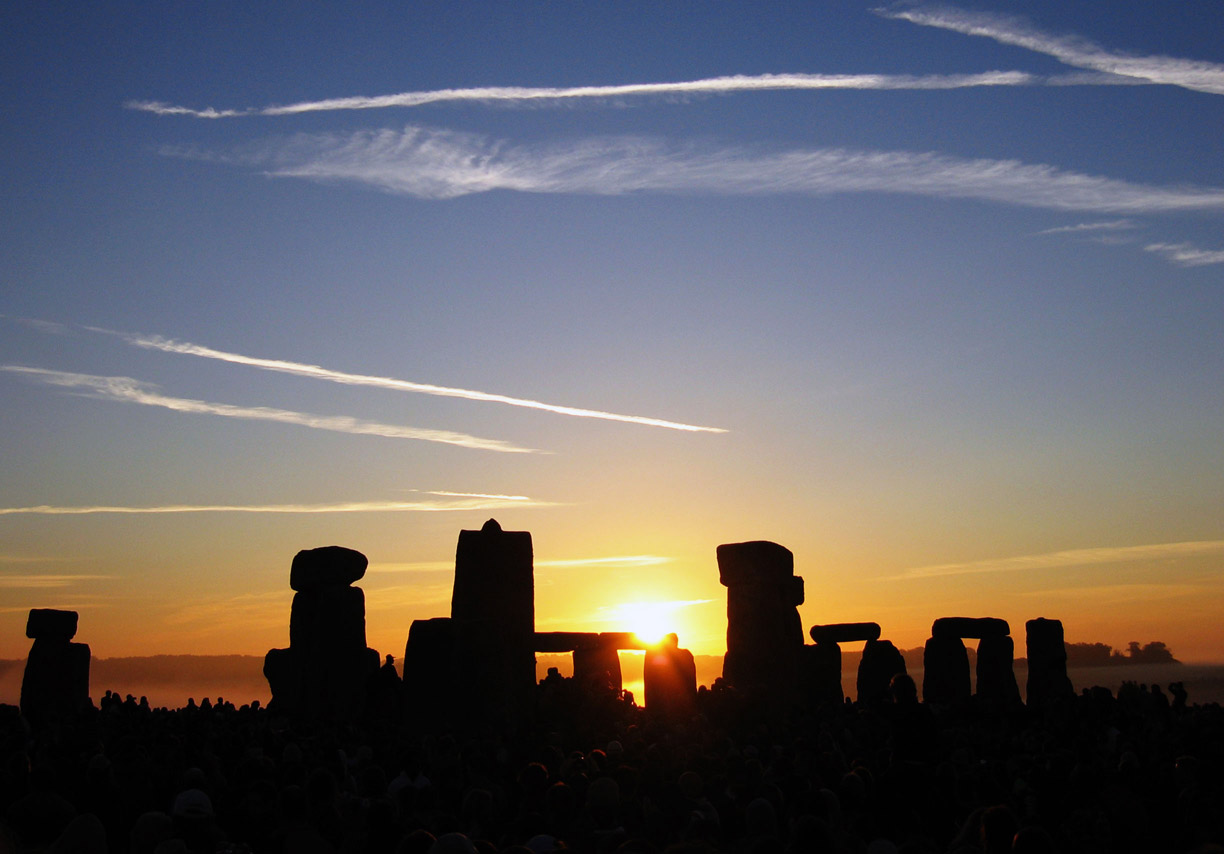
A vibrant sunrise colors the sky with bold streaks of bright pink, purple, and orange behind a silhouette of large stone pillars arranged in a circle. The dark, grass-covered ground in the foreground contrasts sharply with the colorful sky. A crowd of many people stands gathered amongst and around the towering stones, facing toward the bright glow on the horizon.
Today in the History of Astronomy

June 21, ca. 2500 BCE: Summering at Stonehenge

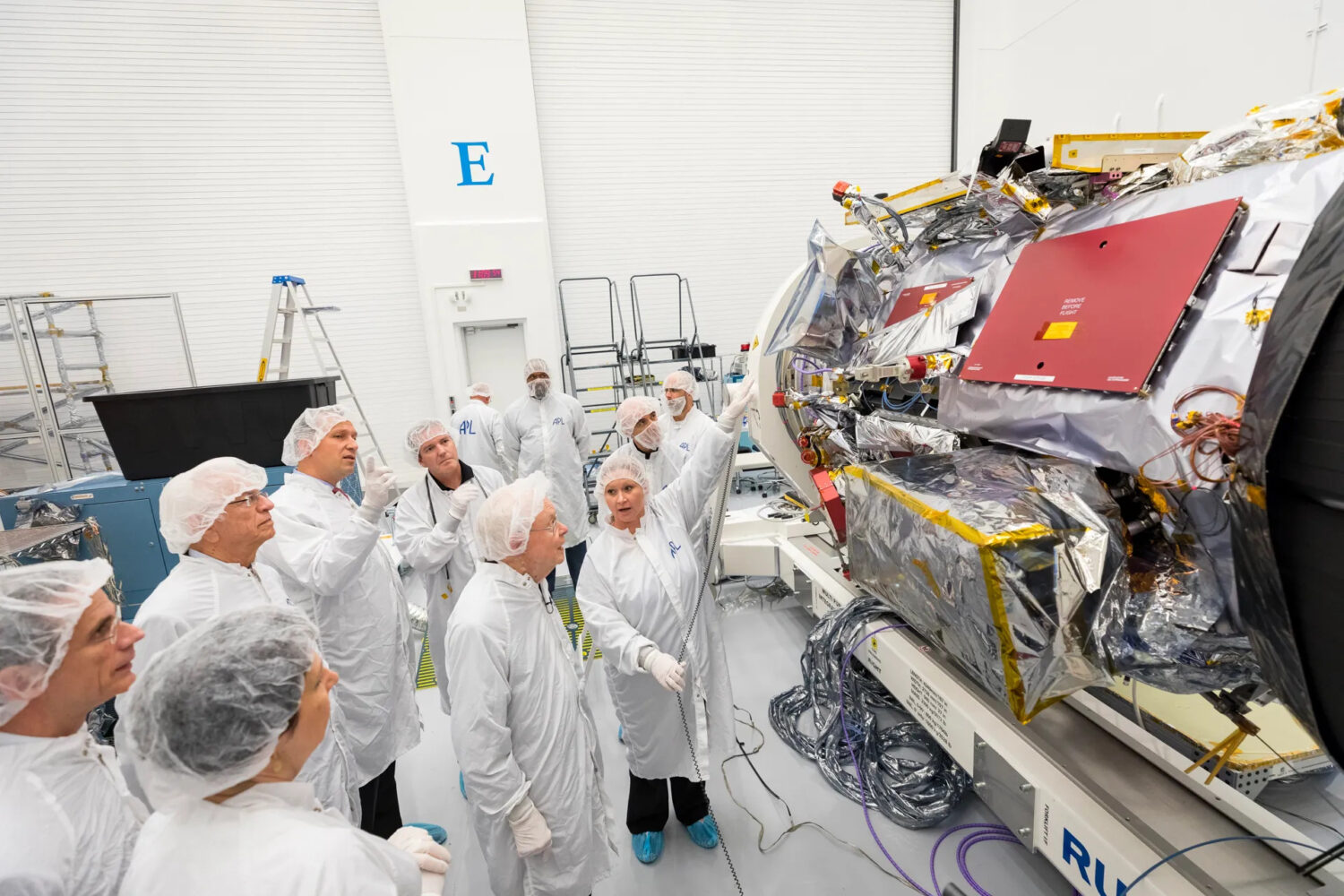
A group of people wearing white protective laboratory suits and hairnets stand in a brightly lit, high-ceilinged room. A woman in the center of the group points toward a large, complex piece of industrial machinery wrapped in shiny silver, gold, and red paneling. The spacious background features white walls, a large blue letter "E," and various ladders and equipment scattered across the gray floor.
Solar System, Today in the History of Astronomy

June 10, 1927: The birth of Eugene Parker

Today in the History of Astronomy

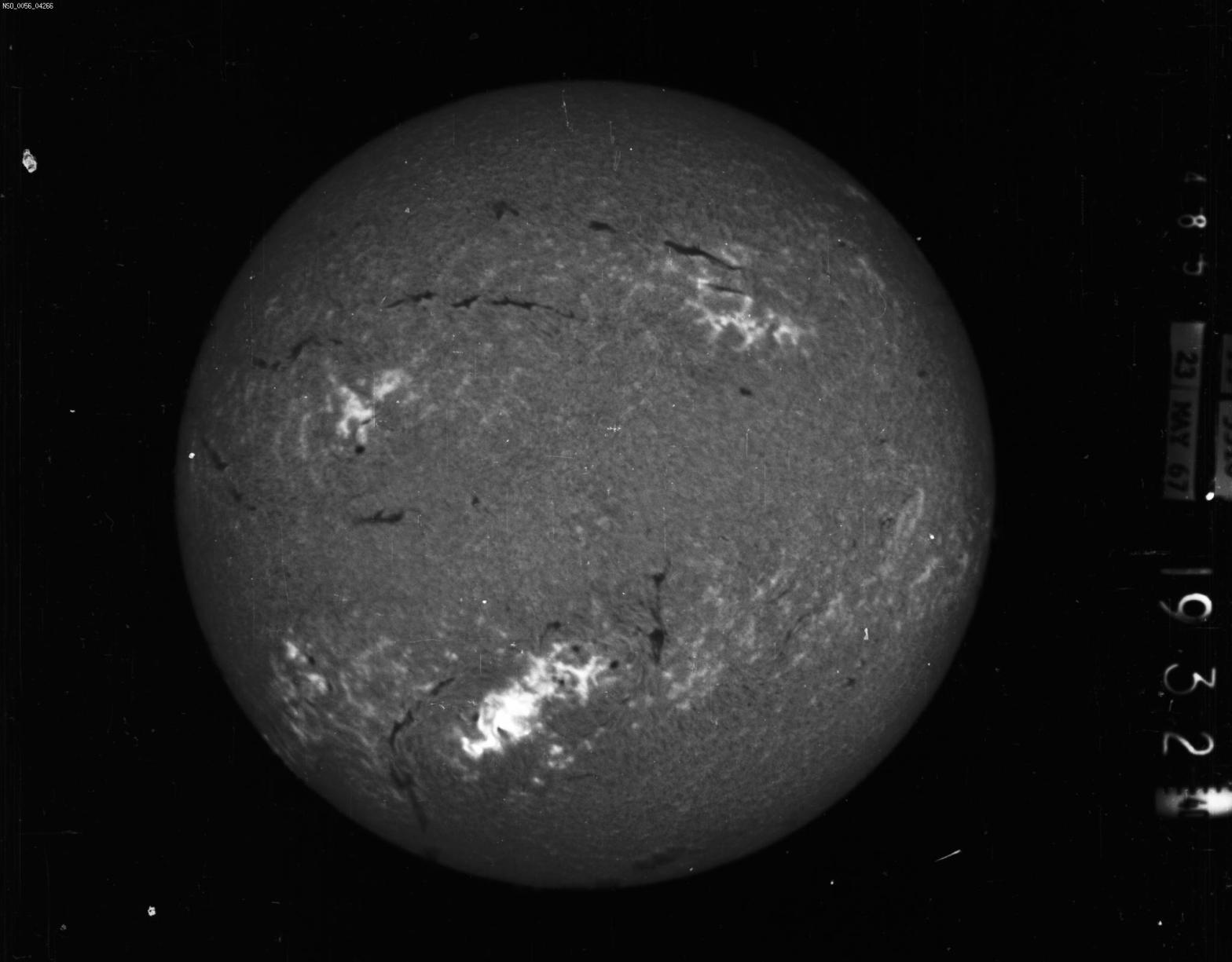
May 23, 1967: A solar flare jams missile detectors

Robotic Spaceflight, Today in the History of Astronomy

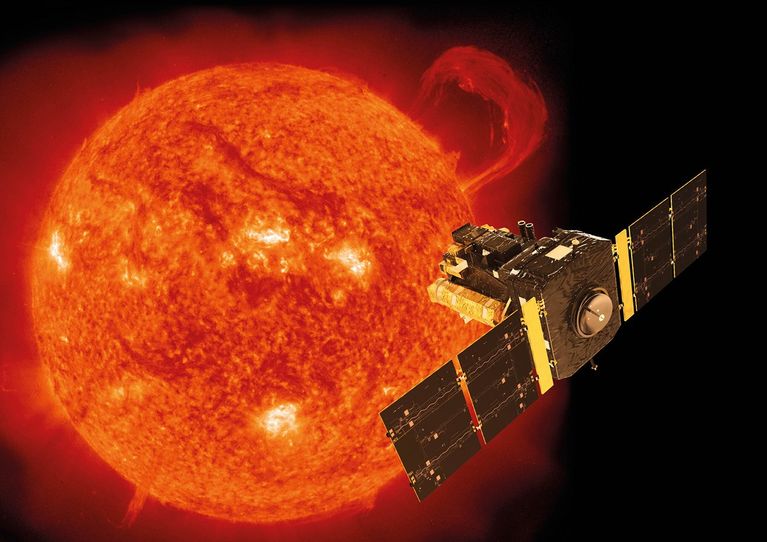
April 27, 2001: SOHO sees the farside of the Sun

Posts pagination

1 2 3 … 19 Older posts

Astronomy Newsletter

Get newsletters, updates and special offers via email from Astronomy.com!

Please enter a valid email address.
Astronomy
  • Facebook
  • LinkedIn
  • YouTube
  • Instagram
  • Twitter
  • About Us
  • Contact Us
  • Subscribe
  • Customer Service
  • Advertising
  • Terms of Use
  • Privacy Policy
  • Do Not Sell

© 2026 Firecrown Media. All Rights Reserved.

More Sites from Firecrown Media Publisher logo
Scroll to Top

Sign In

New User? Create an Account

Why Sign In? Subscribers can access their digital magazine issues, and registered users can participate in our Community forums and galleries.

Please enter your email.
Please enter your password.

Lost your password?

Manage My AccountCustomer Support