The safe return of the Shenzhou-20 crew this past Friday brought an end to the longest single stay in orbit for any Chinese crew. The crew landed at the Dongfeng landing site in north China’s Inner Mongolia Autonomous Region, ending their 204-day mission. Yet, that successful homecoming immediately ushered in a new, albeit temporary, crisis.
While the three taikonauts touched down safely on Friday, they left their replacements — the Shenzhou-21 crew — marooned aboard the Tiangong Space Station, with no ride home in the event of an emergency.
The story of the stranded Shenzhou-21 crew begins with the preceding mission. The Shenzhou-20 crew, consisting of Commander Chen Dong, Chen Zhongrui, and Wang Jie, launched for their six-month stay onboard Tiangong April 24, 2025. Their mission, the ninth crewed flight to the space station, was proceeding normally until late in their rotation.
The pivotal event occurred just before the scheduled handover. The Shenzhou-21 crew — Commander Zhang Lu, Zhang Hongzhang, and Wu Fei — docked at the Tiangong space station Oct. 31, beginning their own six-month mission and a brief week-long overlap of the two crews.
During predeparture checks, the Shenzhou-20 return capsule was discovered to have sustained damage: a small crack was found in the return capsule’s window glass. The Chinese Manned Space Agency (CMSA) reported that the damage was likely the result of an impact from a piece of space debris.
The CMSA analyzed the damage, and concluded that the Shenzhou-20 return capsule did not meet the safety requirements for a manned return home. The CMSA made the decision to repurpose the newly arrived Shenzhou-21 spacecraft as the transport vehicle for the outgoing crew.
On Nov. 14, the Shenzhou-20 taikonauts returned safely in the Shenzhou-21 capsule. Their stay on the Tiangong space station was extended an extra nine days before their return home.
“The path of human space exploration is not smooth. It’s filled with difficulties and challenges. But that is exactly why we choose to walk this path,” Chen Dong, the Shenzhou-20 mission commander, told reporters after the successful landing, according to the Associated Press.
While Xinhua celebrated the safe arrival of the crew as “the first successful implementation of an alternative return procedure in the country’s space station program history,” the consequence of the decision is that the Shenzhou-21 crew is now left aboard Tiangong without a Shenzhou capsule to serve as a lifeboat in case of an emergency.
This leaves some observers uneasy. “I’m very glad that they got home, but it is a bit disconcerting that the replacement crew apparently does not have a vehicle to come back to Earth,” Victoria Samson, chief director of space security and stability at the Secure World Foundation (a nonprofit that works with governments and international organizations to ensure the peaceful use of space for all Earth’s people), told Scientific American over the weekend.
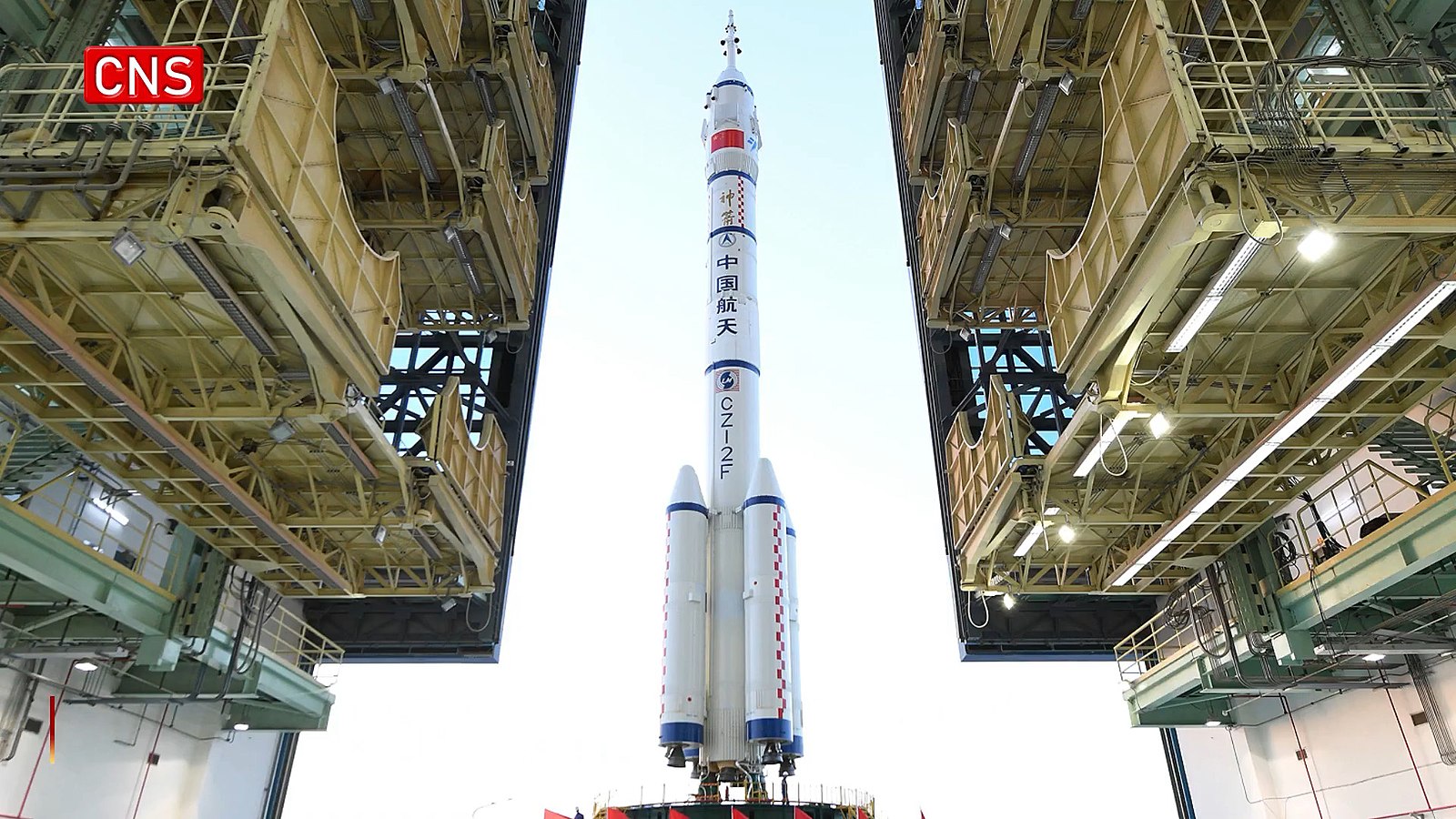
To address the situation, China is accelerating the launch of the Shenzhou-22 spacecraft, which will fly to Tiangong uncrewed to serve as the lifeboat for the current crew.
While CMSA has only stated that the launch will happen “at an appropriate time in the future,” external reporting from Andrew Jones of SpaceNews based on airspace closures suggests the launch could be as early as Nov. 25, 2025. This rapid response, as Jones noted, is possible due to the Chinese space program’s protocol of keeping a Long March 2F rocket and Shenzhou capsule at the ready at all times for emergencies.
It’s unclear what will happen to the damaged Shenzhou-20 spacecraft. If it can be repaired in orbit, then it may be returned to Earth as planned. But, as Igor Marinin, academician at the Russian Academy of Cosmonautics, explained to Reuters, if the damage is not repairable, the craft may be decommissioned and sent out of orbit over the Pacific Ocean. Regardless of the capsule’s fate, it will need to be undocked to make room for the Shenzhou-22 spacecraft’s arrival.
The predicament of Zhang Lu, Zhang Hongzhang, and Wu Fei recalls the saga of NASA astronauts Butch Wilmore and Suni Williams, whose Boeing Starliner mission extended from a planned 10 days to nearly nine months in 2024 due to spacecraft issues.
However, the Tiangong situation is momentarily more precarious. Unlike the Starliner crew, who always had other safe, working spacecraft docked to the ISS that they could have used in an emergency, the Shenzhou-21 crew currently has no viable alternative craft at hand. They are fully reliant on the rapid, successful deployment of the uncrewed Shenzhou-22 mission to restore their safety margin.