From the September 2008 issue

Why do colliding spiral galaxies make an elliptical galaxy instead of a larger spiral?

Kyle H. Wilkins, Durham, North Carolina
By | Published: September 22, 2008 | Last updated on May 18, 2023

Gemini Sparkle

Key Takeaways:

  • Spiral galaxies form from massive, spinning gas clouds that cool, contract into a thin disk, and subsequently form stars within this disk.
  • When spiral galaxies collide, their stars are scattered from their original circular orbits, forming a puffed-up, roughly elliptical galaxy.
  • The collision of gas-rich spiral galaxies triggers rapid star formation, consuming most of the gas and leaving insufficient material for the merged galaxy to develop into a new spiral.
  • The resulting elliptical galaxies possess hot, puffed-up gas that cannot cool and re-assemble into a galactic disk, while the mixed-up stellar orbits remain stable indefinitely.
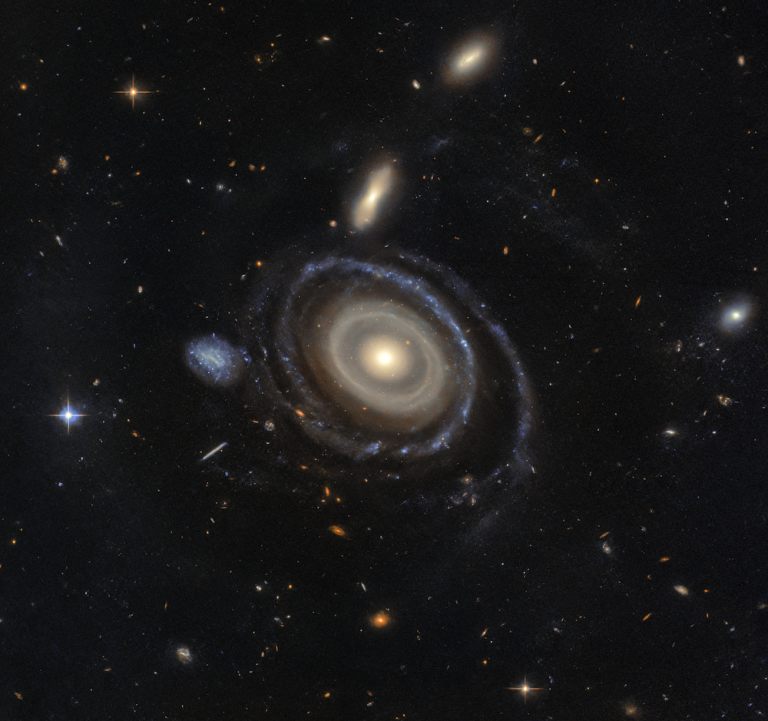
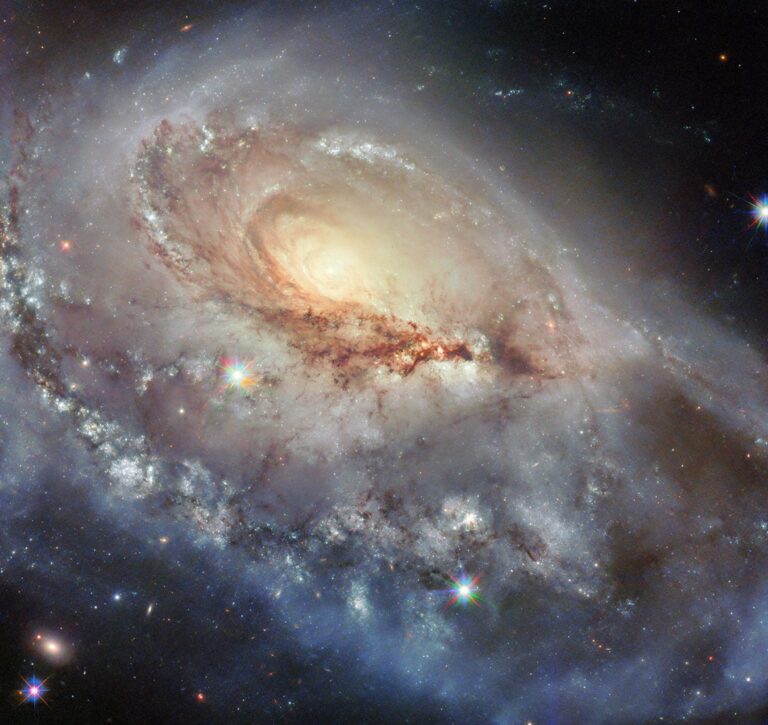
NGC 2207 and IC 2163
When spiral galaxies collide at some angle, their stars get mixed up. The stars that previously followed circular orbits within two relatively thin disks get scattered in all directions and form a puffed-up, roughly football-shaped (elliptical) galaxy.

In contrast, a spiral galaxy starts as a massive, spinning gas cloud. As the gas atoms emit light and cool, the cloud contracts until its spin halts the collapse and forms a thin disk. Eventually, gas clumps within the disk begin to form stars. The new stars lie within the same thin disk in which the gas resided.

The collision of two gas-rich spiral galaxies triggers star formation, which consumes most of the gas quickly. By the time the merger is complete, the merged galaxy lacks sufficient gas to develop into a new spiral. Most of the remaining gas is hot and puffed-up.

Unlike the dense, cool gas clouds that form spiral galaxies, the hot gas in elliptical galaxies can never cool enough to re-assemble into a massive galactic disk. Also, the stars in the new elliptical never collide. The elliptical shape of their mixed-up orbits stays the same for the entire age of the universe. — Abraham Loeb, Harvard University, Cambridge, Massachusetts