Astronomy forum Connect with fellow astronomy enthusiasts!
Get started
Skip to content
Astronomy Magazine logo
  • Login / Register
  • Logout
  • Shop
  • Subscribe

  • News
  • Science
    • Solar System
    • Exoplanets
    • Stars
    • Milky Way
    • Galaxies
    • Exotic Objects
    • Cosmology
  • Observing
    • In The Sky
    • Upcoming Events
    • The Sun
    • The Moon
    • Planets
    • Comets
    • Deep-Sky Objects
    • Observing Basics
    • Telescopes and Equipment
    • Astrophotography
    • Gear Guide
    • This Week in Astronomy
  • Space Exploration
    • What’s Launching This Week
    • Human Spaceflight
    • Robotic Spaceflight
  • The Magazine
  • Ask Astro
  • Star Products
  • Login / Register
  • Logout
  • Shop
  • Subscribe

The Real Reality Show: Is Interstellar Travel Really Possible?

Take into consideration the cosmic distance scale, and practicality gets thrown out the spaceship window.
By Astronomy Staff | Published: April 14, 2015 | Last updated on May 18, 2023

Up Next

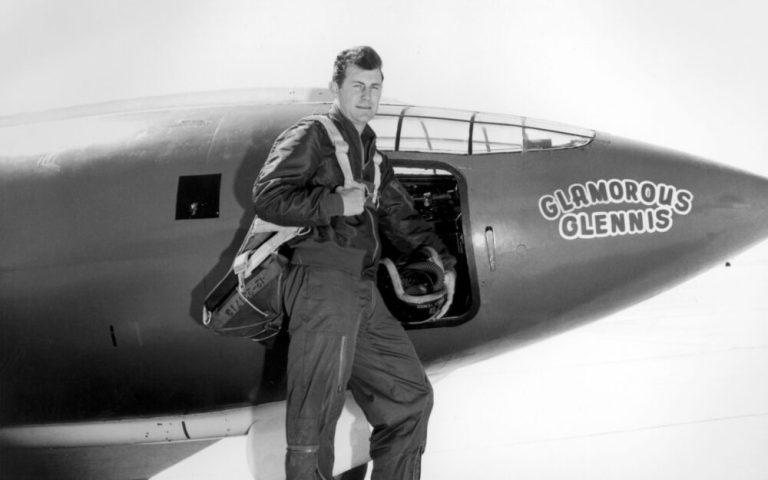
  • A black-and-white photograph shows a pilot standing proudly next to the nose of an airplane, holding a helmet in his left hand and a parachute pack slung over his shoulder. The text "GLAMOROUS GLENNIS" is painted in large letters on the aircraft's curved nose just ahead of the open cockpit door. Bright daylight illuminates the scene, creating a sharp contrast between the dark flight suit and the light background.
    Human Spaceflight, Today in the History of Astronomy

    Oct. 14, 1947: Flying faster than sound

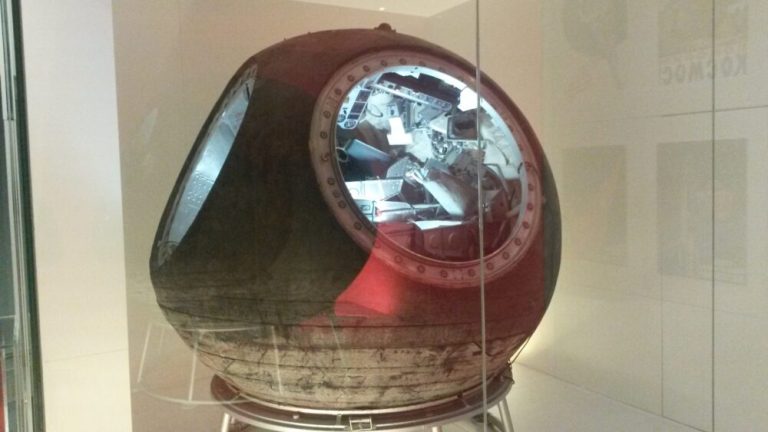
  • A large, spherical space capsule rests on a low ring stand inside a glass display case against plain white museum walls. The capsule’s charred exterior features patches of dark reddish-brown paint and weathered metal, with a circular portal opening that reveals a brightly illuminated, detailed interior packed with instruments, panels, and seating. Light reflects off the surrounding glass enclosure, highlighting the rounded contour and heavy textures of the craft.
    Human Spaceflight, Today in the History of Astronomy

    Oct. 12, 1964: Voshkod 1 sends the first crew to space

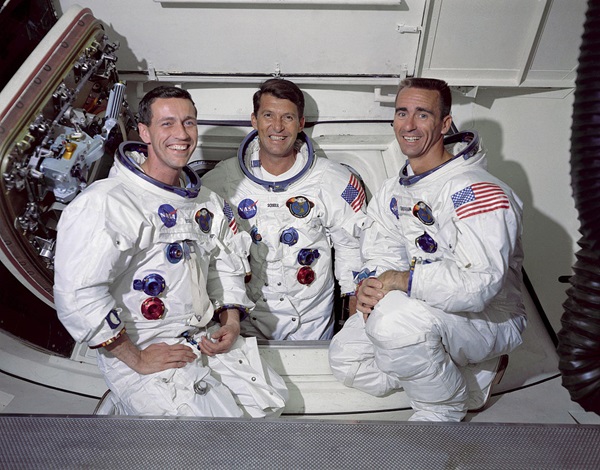
  • A color photograph shows three smiling men wearing white spacesuits adorned with patches and American flag emblems, posing closely together inside a white spacecraft interior. The suit details, including blue and red metallic connectors, stand out brightly under clear, even indoor lighting. An open hatch door with metallic mechanical components frames the left side of the background.
    Human Spaceflight, Today in the History of Astronomy

    Oct. 11, 1968: Apollo 7 launches

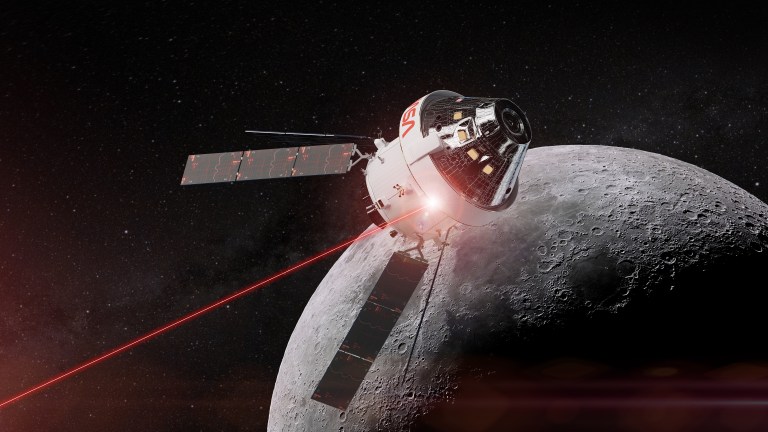
  • Illustration of NASA’s Orion spacecraft in orbit around the Moon, with a white crew module bearing a red NASA logo atop a service module with extended solar arrays. A thin red laser beam shoots from the spacecraft toward the lower left, representing optical communications. The cratered, partly shadowed Moon fills the lower right against a dark, starry sky.
    Human Spaceflight

    How Artemis 2’s tech will improve life on Earth

  • Robotic Spaceflight, Solar System

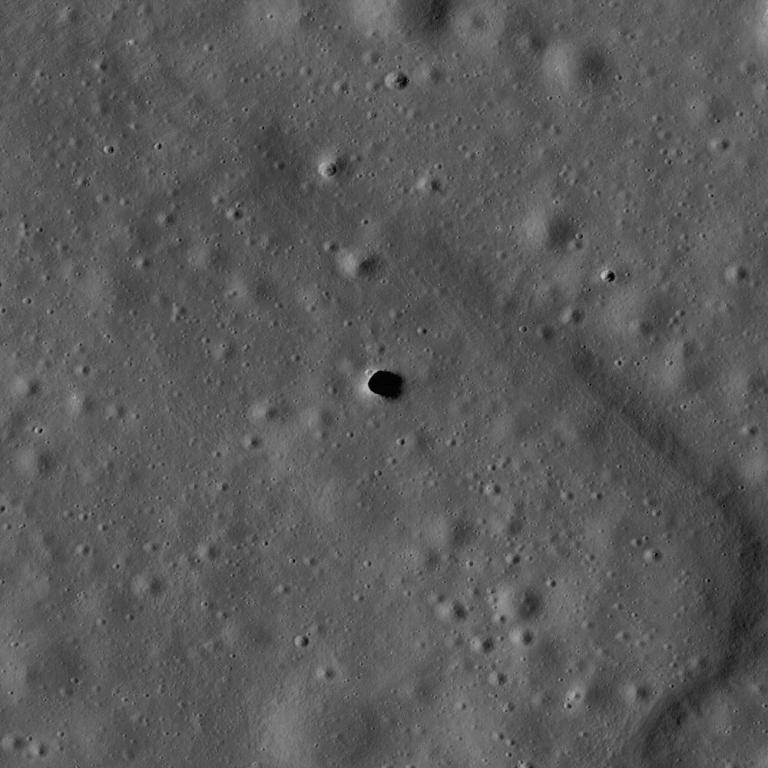
    Newly selected NASA mission will hunt for caves on the Moon

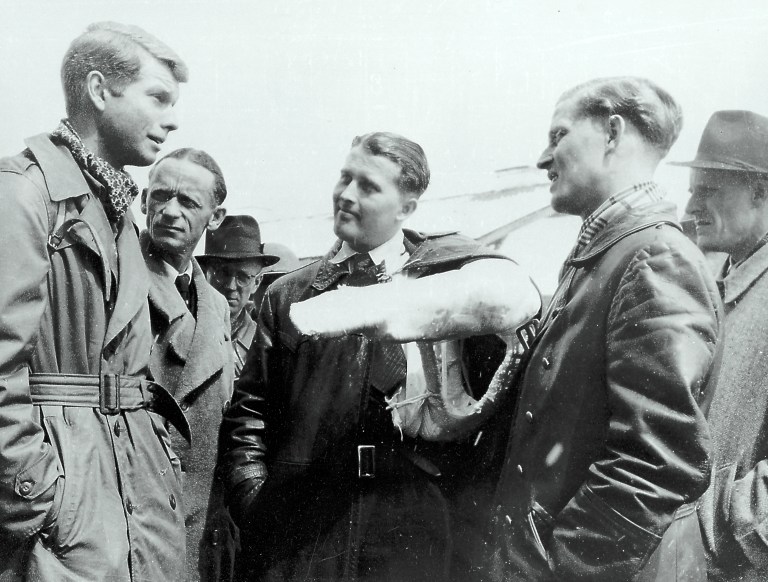
  • A black-and-white photograph shows a group of men standing outdoors, engaged in conversation. The central figure wears a dark leather jacket and has his left arm held horizontally in a large, white cast. To his left and right, other men in trench coats, leather jackets, and fedoras look toward him under bright, high-contrast outdoor lighting.
    Human Spaceflight, Today in the History of Astronomy

    Oct. 3, 1942: The V-2 successfully launches

  • Solar System, Stars

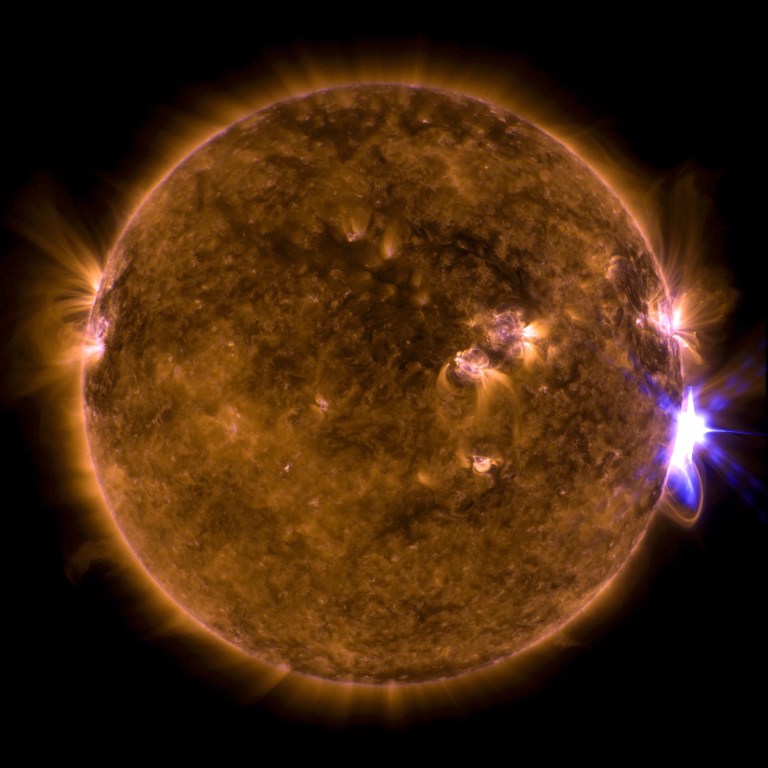
    Case closed on long-standing space weather mystery

  • Robotic Spaceflight, What's Launching This Week

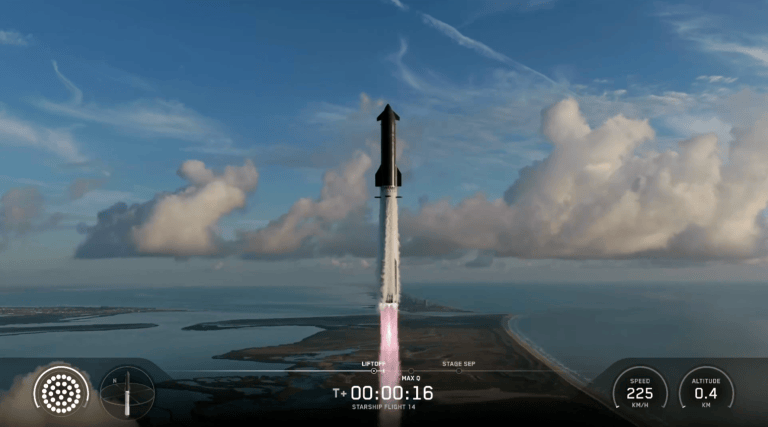
    Starship reaches orbit on 14th test flight

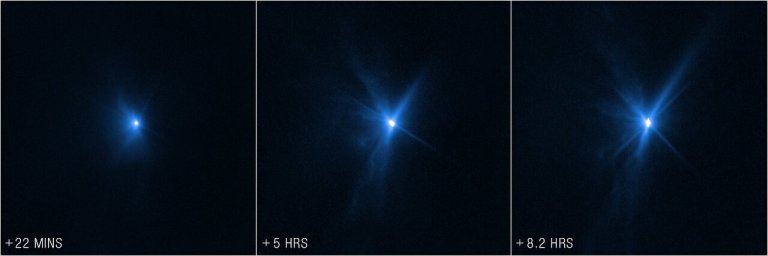
  • A side-by-side sequence of three square panels shows a glowing blue point of light expanding against a black background over time. In the first panel labeled "+ 22 MINS," a small, bright white core is enveloped by a soft blue haze. In the middle and right panels, labeled "+ 5 HRS" and "+ 8.2 HRS," the central bright spot intensifies while spiky blue rays and fan-like plumes spread further outward across space.
    Robotic Spaceflight, Today in the History of Astronomy

    Sept. 29, 2022: Seeing the DART impact

Astronomy Newsletter

Get newsletters, updates and special offers via email from Astronomy.com!

Please enter a valid email address.

Astronomy magazine: 50 years and counting

Astronomy leads the astronomy hobby as the most popular magazine of its kind in the world. Get information about subscriptions, digital editions, renewals, advertising and much, much more.

Count me in

FREE DOWNLOAD

All About the Apollo Mission

Get it now
Astronomy Magazine logo
  • Facebook
  • LinkedIn
  • YouTube
  • Instagram
  • Twitter
  • About Us
  • Contact Us
  • Subscribe
  • Customer Service
  • Advertising
  • Terms of Use
  • Privacy Policy
  • Do Not Sell

@ 2025 Firecrown Media. All Rights Reserved.

More Sites from Firecrown Media Publisher logo
Scroll to Top

Sign In

New User? Create an Account

Why Sign In? Subscribers can access their digital magazine issues, and registered users can participate in our Community forums and galleries.

Please enter your email.
Please enter your password.

Lost your password?

Manage My AccountCustomer Support