
Key Takeaways:
- The study presents the first in-situ evidence of electrical activity in the Martian atmosphere, identifying 55 distinct triboelectric discharge events.
- These electrical discharges, unlike terrestrial thunderstorm lightning, are attributed to friction between dry dust particles and were observed primarily in correlation with local dust storms and dust devils.
- Analysis of sound data from the Perseverance rover's SuperCam microphone indicates that this electrical activity is driven by local dust lifting and associated atmospheric turbulence, not global atmospheric dust levels.
- The confirmed triboelectric activity has significant implications for understanding Martian climate dynamics, surface chemistry, including oxidant production, and potential hazards for future exploration missions.
In a study published Nov. 26 in Nature, Baptiste Chide, a postdoctoral fellow in planetary acoustics at Los Alamos National Laboratory, and his team report what they believe to be the first evidence of electrical activity in the martian atmosphere. The team found 55 separate events, most of which aligned with dust storms and dust devils.
The lightning the team identified on Mars is distinct from the lightning we think of during thunderstorms at home on Earth. Thunderstorm lightning is generated by the collision of ascending water droplets and descending ice in clouds. The collision pulls electrons off the water, resulting in a negative charge at the top of the cloud and a positive charge at the bottom of the cloud. This difference in charges generates an electric field. When the charge of the field overwhelms the insulation provided by the atmosphere, lightning is discharged as a result. The discharges discovered on Mars, however, are triboelectric — caused not by water and ice, but by friction between dry dust particles.
On Earth, deserts generate electricity through friction when particles of sand and dust become electrified as they rub against one another — a process called “triboelectric charging.” Scientists have long theorized that Mars’ atmosphere should contain similar electric activity, due to the role that wind and dust play in the Red Planet’s climate. However, no evidence of electric activity has been found. The results of this new study alter our understanding of the martian atmosphere, while also offering implications for habitability and future exploration.
“This study opens a notable field of investigation for the atmosphere of Mars, as its electrical activity was largely confined to hypotheses in the absence of any in situ evidence,” the authors state in the paper.
Listening in
Since the Perseverance rover’s landing at Jezero Crater in February 2021, its SuperCam instrument has been recording the sounds of the martian atmosphere and the rover’s operation with its onboard microphone. The microphone doesn’t run nonstop. Ten atmospheric recordings of up to 167 seconds are captured each month at varying times. The instrument also periodically records the rover’s own mechanical sounds to monitor the performance of subsystems.
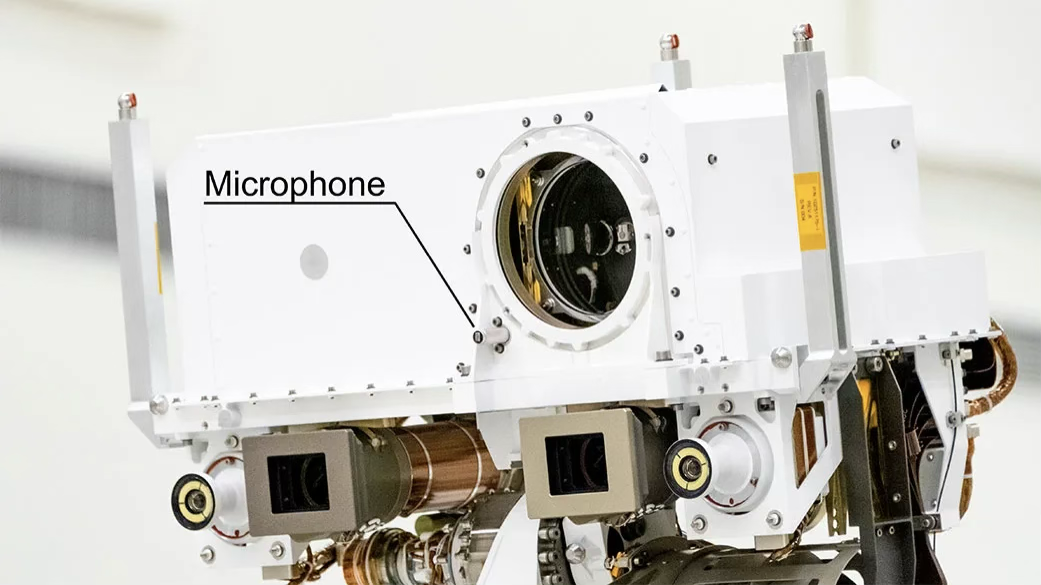
Chide’s team analyzed 28 hours and 50 minutes of this captured sound data. Over 22 hours came from atmospheric recordings, while the remainder came from recordings of the rover’s operations. To identify electrical activity in the recordings, the team looked for a signature consisting of three pieces: an overshoot, a spike caused by the discharge interfering directly with the microphone’s electronics; a drop, or relaxation of the signal as the electronics recover; and a second peak, representing the actual sound of the discharge, a snap or crack arriving at the microphone after traveling through the air.
From dust to discharge
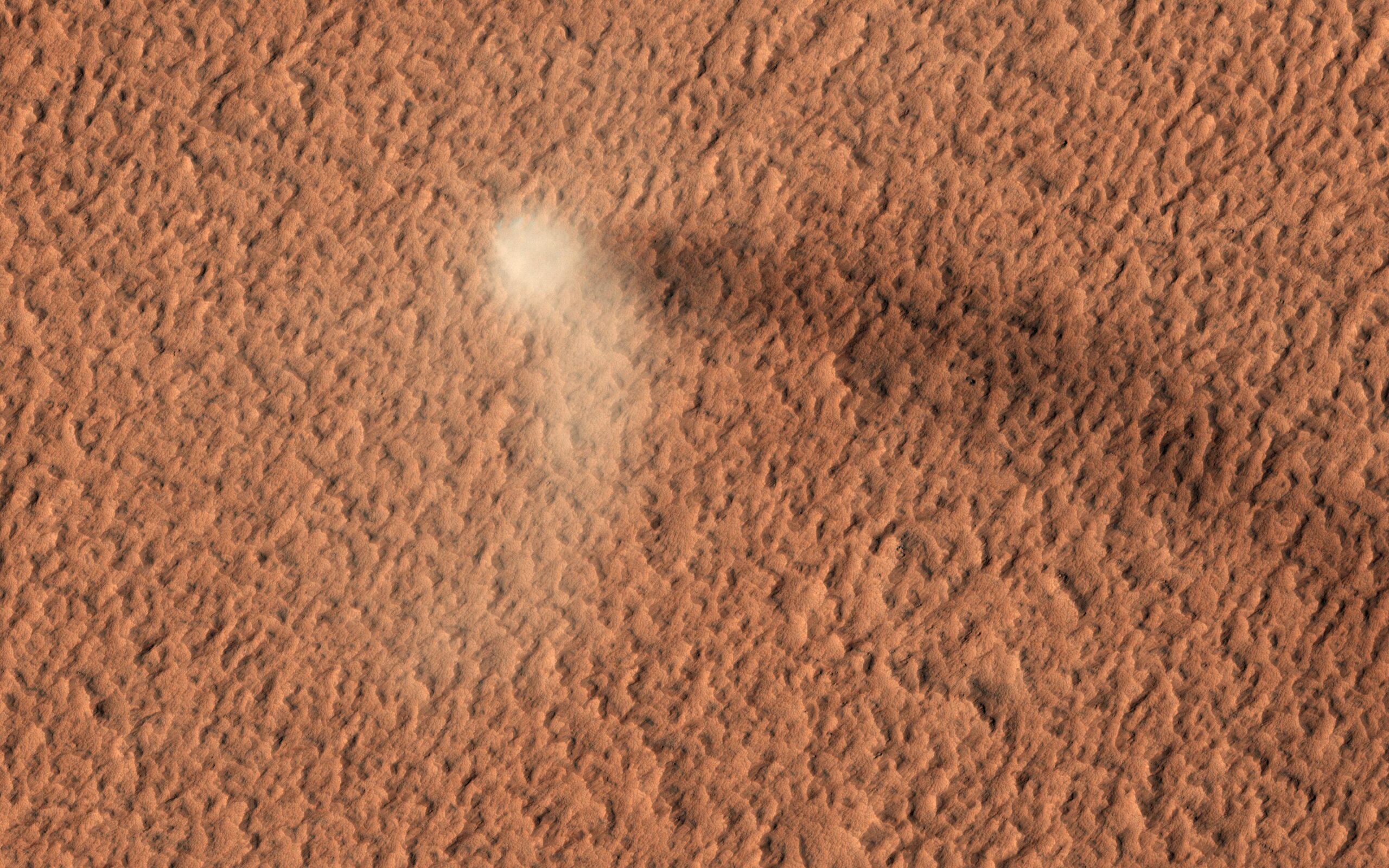
Applying this method, the team found 55 separate instances of what they believe to be electrical activity in the recordings. The data revealed a strong correlation between these discharges and atmospheric turbulence. Fifty-four of the 55 events occurred during periods of high wind activity — specifically within the top 30 percent of wind speeds recorded. Notably, 16 events were captured during the only two direct encounters with dust devils passing over the rover while SuperCam was recording. Thirty-five other instances were correlated with the convective fronts of dust storms — the turbulent leading edges of storms that bring large swings in temperature and pressure, along with strong winds that actively lift dust from the surface.
Not all martian dust is created equal. Dust devils and dust storms regularly lift dust into the air locally, near the planet’s surface, but during certain seasons, the overall atmosphere experiences higher global dust levels. Interestingly, the data showed no increase in electrical discharges during times of the martian year when the atmosphere is globally dustiest. The authors argue that during these periods, high-altitude suspended dust blocks sunlight, preventing the surface from warming. This lack of surface heat suppresses the turbulence necessary for triboelectric charging. This finding is useful for understanding the martian climate, as it suggests that electrical activity is driven by local dust lifting, rather than the simple presence of dust in the atmosphere.
Implications for climate and exploration
These findings improve our understanding of the Red Planet’s climate. Electrostatic forces, the authors argue, generated by dust storms, can actually aid in lifting more dust from the surface, creating a feedback loop that could intensify or sustain storms. Chemically, these discharges could drive the production of oxidants like hydrogen peroxide. Understanding this highly oxidizing atmosphere is critical because these chemicals can rapidly degrade organic molecules — the very targets of current life-detection missions.
RELATED: A thousand martian dust devils help chart the Red Planet’s winds
Furthermore, this electrical activity poses a potential hazard for future exploration. The authors note that electrostatic discharges could interfere with equipment or pose risks to astronauts. They even speculate that such a discharge might offer a plausible explanation for the sudden failure of the Soviet Mars 3 lander, which ceased transmission seconds after landing during a dust storm in 1971.
This study provides the first in-situ evidence that the martian atmosphere is electrically active. By confirming that wind-driven dust can generate triboelectric activity, the findings open a new avenue for researching Mars’ dynamic climate, its surface chemistry, and the environmental challenges that await future human explorers.