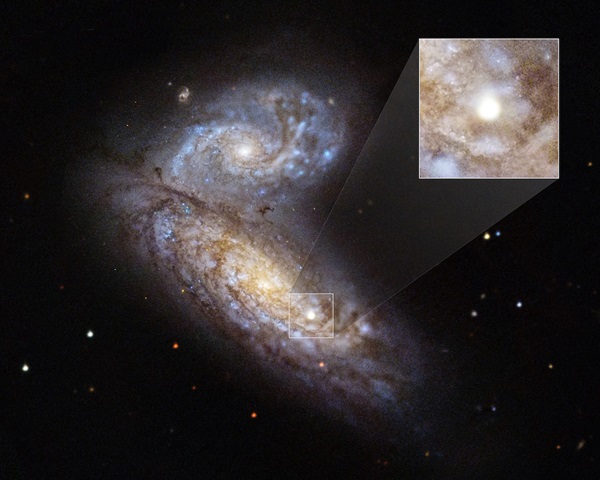
In Latin, nova means “new.” In astronomy, that refers to a temporary bright “star” in the night sky. But the causes of these brief but brilliant stars are varied.
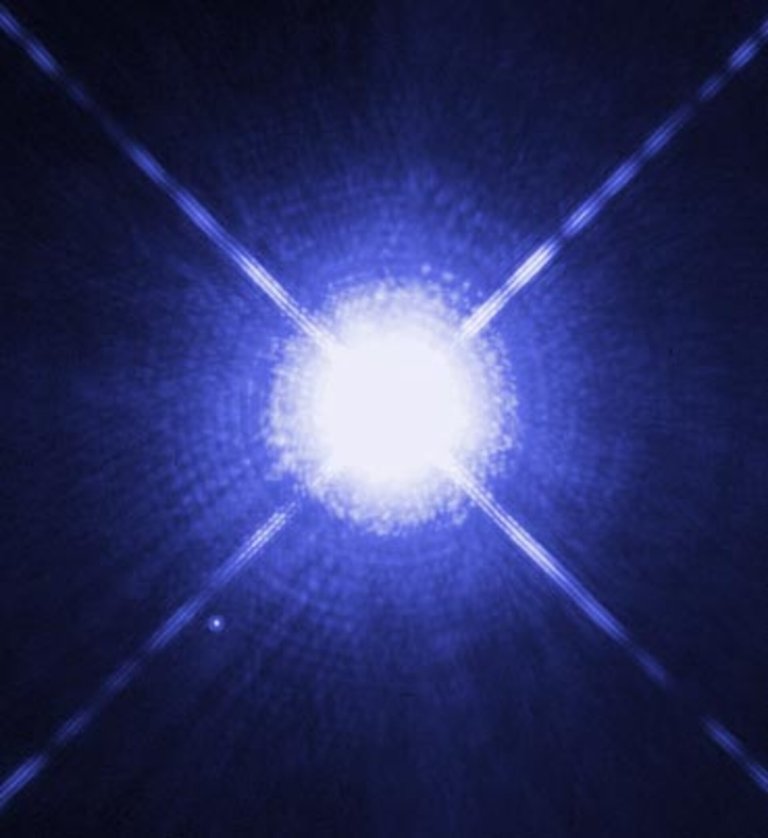
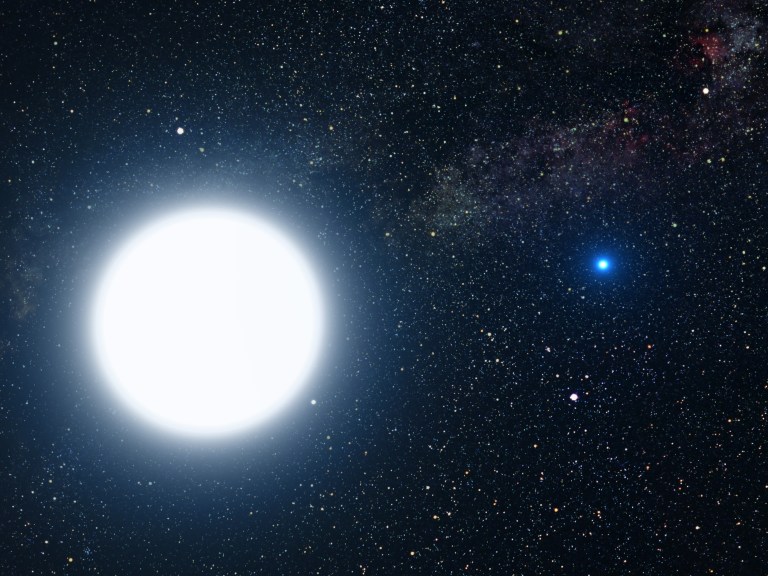
Classical novae occur in a binary star system with a white dwarf and a star close enough together that the white dwarf pulls, or accretes, material from its companion. The material — mostly hydrogen — sits on the surface of the white dwarf until enough has been gathered to kick-start a nuclear fusion reaction, the same process that powers the Sun. As the hydrogen is converted into heavier elements, the temperature increases, which in turn increases the rate of hydrogen burning. At this point, the white dwarf experiences a runaway thermonuclear reaction, ejecting the unburnt hydrogen, which releases 10,000 to 100,000 times the energy our Sun emits in a year. Because the white dwarf remains intact after blowing away this excess, a stellar system can experience multiple classical novae.
Kilonovae occur when two compact objects, like binary neutron stars or a neutron star and a black hole, collide. These mergers, as their name suggest, are about 1,000 times brighter than a classical nova, but not as bright as a supernova, which is 10 to 100 times brighter than a kilonova.
There are two basic ways to get a supernova. The type of supernova most people think of is a dying star’s last hurrah, known as a type II or core-collapse supernova. At the end of a massive star’s life, it no longer has the energy to support itself against gravity and collapses, the core squeezing itself into as tight a ball as possible. The implosion reverberates outward, exploding the leftover material into space. In this case a new stellar remnant — either a neutron star or a black hole — is born. The other type of supernova, a type Ia supernova, occurs when a white dwarf in a binary star system gobbles up too much material from its companion. Unlike with a classical novae, this white dwarf experiences a thermonuclear reaction in its core. Once it crosses a critical mass threshold, it collapses and violently expels its outer layer, tearing itself apart. In this scenario, the white dwarf is typically obliterated.
A hypernova — sometimes called a collapsar — is a particularly energetic core-collapse supernova. Scientists think a hypernova occurs when stars more than 30 times the mass of the Sun quickly collapse into a black hole. The resulting explosion is 10 to 100 times more powerful than a supernova.