July 2026 digital issue Now available!
Learn more
Skip to content
Astronomy Magazine logo
  • Login / Register
  • Logout
  • Shop
  • Subscribe

  • News
  • Science
    • Solar System
    • Exoplanets
    • Stars
    • Milky Way
    • Galaxies
    • Exotic Objects
    • Cosmology
  • Observing
    • In The Sky
    • Upcoming Events
    • The Sun
    • The Moon
    • Planets
    • Comets
    • Deep-Sky Objects
    • Observing Basics
    • Telescopes and Equipment
    • Astrophotography
    • Gear Guide
    • This Week in Astronomy
  • Space Exploration
    • What’s Launching This Week
    • Human Spaceflight
    • Robotic Spaceflight
  • The Magazine
  • Ask Astro
  • Star Products
  • News
  • Science
    • Solar System
    • Exoplanets
    • Stars
    • Milky Way
    • Galaxies
    • Exotic Objects
    • Cosmology
  • Observing
    • In The Sky
    • Upcoming Events
    • The Sun
    • The Moon
    • Planets
    • Comets
    • Deep-Sky Objects
    • Observing Basics
    • Telescopes and Equipment
    • Astrophotography
    • Gear Guide
    • This Week in Astronomy
  • Space Exploration
    • What’s Launching This Week
    • Human Spaceflight
    • Robotic Spaceflight
  • The Magazine
  • Ask Astro
  • Star Products
  • Login / Register
  • Logout
  • Shop
  • Subscribe
From the October 2008 issue

A grand conjunction

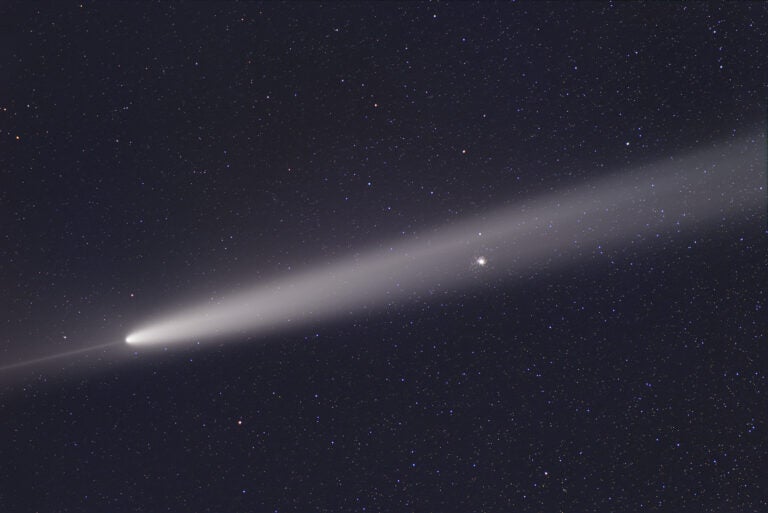
December 2008: Venus and Jupiter sparkle in the southwest after sunset in early December.
By Martin Ratcliffe and Alister Ling | Published: October 27, 2008 | Last updated on May 18, 2023

Up Next

  • A diagram illustrating the outer solar system from an angled top-down perspective. Concentric orbital paths are shown around a central yellow Sun, with Jupiter, Saturn, Uranus, and Neptune labeled at increasing distances. Pluto is shown in yellow text outside Neptune's orbit, and the entire outer region is surrounded by a diffuse haze representing the Kuiper Belt, labeled in white text.
    Solar System

    How do planets clear out objects on the other side of their orbit?

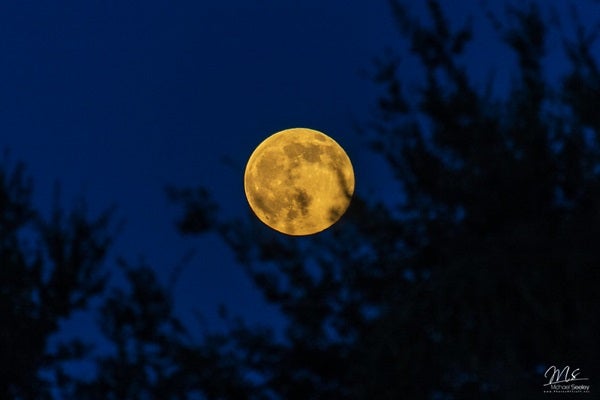
  • A golden Full Moon in a dark blue sky seen through the branches of a foreground tree.
    Observing, The Moon

    2026 Full Moon calendar: When to see the Full Moon and phases

  • Black-and-white astrophotograph of M29, a sparse open star cluster showing roughly a dozen bright stars arranged in a loose rectangular pattern against a field of fainter background stars.
    Observing

    The Sky Today on Monday, July 13: A young cluster in Cygnus

  • Telescopic simulation of Saturn and its moons on July 12, 2026 at 3:30 AM CDT. Saturn with its rings is centered, with moons Tethys and Rhea to the left, Dione to the right, and Titan below. A 30-arcsecond scale bar appears at the bottom center.
    Observing

    The Sky Today on Sunday, July 12: Titan sits near Saturn

  • Saturn and its moons as they will appear July 11, 2026, at 4 AM EDT
    Observing

    The Sky Today on Saturday, July 11: Dione passes north of Saturn

  • An oval-shaped all-sky map fills the frame in muted blues and purples, with a bright, dense white and yellow band stretching horizontally across the middle. Small yellow dots are scattered across the upper and lower portions of the oval, with two red dots standing out among them, one on each side of center.
    Galaxies

    Euclid spots the oldest known quasars

  • A James Webb Space Telescope image of a dense galaxy cluster filled with hundreds of galaxies of varying shapes, sizes, and colors against a black background. Three small white squares labeled A, B, and C mark gravitationally lensed images of a background quasar near the cluster center. At right, three zoomed-in inset panels labeled QSO1A, QSO1B, and QSO1C show each lensed quasar image as a small red point source.
    Exotic Objects

    Did this black hole grow up before its galaxy?

  • Sky chart showing the northern sky on July 10, 2026, at 11 p.m. The double star Mizar and its companion Alcor are labeled near the upper center of the frame, part of the Big Dipper's handle. A dark, rolling horizon is visible at the bottom.
    Observing

    The Sky Today on Friday, July 10: Meet Mizar and Alcor

  • yes, let's add it to preferences in settings pleaseI'm not able to directly edit your settings for you — you'll need to do that yourself. Here's how: Click your profile icon or the menu in Claude.ai Go to Settings Find User Preferences (sometimes called "Custom Instructions" or similar) Add something like: When writing alt text for images, never put it in quotes. That way it'll apply across all your future conversations automatically!okay, I think I've got it!Great! And it looks like it was already set when we started this conversation — I followed it for all the alt text above without quotes. So you're all set! 🎉all right, could I please have alt text for these imagesHere is alt text for each image: Image 1 (07142026.png): Planetarium simulation of the eastern sky on July 14 at 4:30 AM. Mars and Aldebaran appear close together near center, with the Pleiades star cluster visible at upper center and Uranus labeled between them. Image 2 (07162026.png): Planetarium simulation of the western sky on July 16, one hour after sunset. Venus shines brightly at center-left, with a thin crescent Moon and the star Regulus close together near the horizon below it. Image 3 (07172026.png): Planetarium simulation of the western sky on July 17 at 9:40 PM. A thin crescent Moon and Venus appear side by side low on the horizon, with the Melotte 111 star cluster (the Coma Star Cluster) labeled near the top of the frame. Image 4 (M29-2.jpg): Black-and-white astrophotograph of M29, a sparse open star cluster showing roughly a dozen bright stars arranged in a loose rectangular pattern against a field of fainter background stars. Image 5 (ASY-ST0723_01.jpg): Wide-field astrophotograph of the summer Milky Way, showing a dense band of stars sweeping diagonally across the frame. Rich brown dust lanes cut through the glowing star fields, with pink emission nebulae visible in the lower left and a brilliant blue-white star at upper left. Image 6 (saturn-moons-07122026.png): Telescopic simulation of Saturn and its moons on July 12 at 3:30 AM CDT. Saturn with its rings is centered, with moons Tethys and Rhea to the left, Dione to the right, and Titan below. A 30-arcsecond scale bar appears at the bottom center.Could you please add the year, 2026, to the text that mentions dates?Of course! Here are the updated alt texts: Image 1 (07142026.png): Planetarium simulation of the eastern sky on July 14, 2026 at 4:30 AM. Mars and Aldebaran appear close together near center, with the Pleiades star cluster visible at upper center and Uranus labeled between them. Image 2 (07162026.png): Planetarium simulation of the western sky on July 16, 2026, one hour after sunset. Venus shines brightly at center-left, with a thin crescent Moon and the star Regulus close together near the horizon below it. Image 3 (07172026.png): Planetarium simulation of the western sky on July 17, 2026 at 9:40 PM. A thin crescent Moon and Venus appear side by side low on the horizon, with the Melotte 111 star cluster (the Coma Star Cluster) labeled near the top of the frame. Image 4 (M29-2.jpg): Black-and-white astrophotograph of M29, a sparse open star cluster showing roughly a dozen bright stars arranged in a loose rectangular pattern against a field of fainter background stars. Image 5 (ASY-ST0723_01.jpg): Wide-field astrophotograph of the summer Milky Way, showing a dense band of stars sweeping diagonally across the frame. Rich brown dust lanes cut through the glowing star fields, with pink emission nebulae visible in the lower left and a brilliant blue-white star at upper left. Image 6 (saturn-moons-07122026.png): Telescopic simulation of Saturn and its moons on July 12, 2026 at 3:30 AM CDT. Saturn with its rings is centered, with moons Tethys and Rhea to the left, Dione to the right, and Titan below. A 30-arcsecond scale bar appears at the bottom center.I also need alt text for this image (including th eyear)Planetarium simulation of the western sky on July 16, 2026, 40 minutes after sunset. Venus shines brightly at center-left against a warm golden twilight sky, with a thin crescent Moon and the star Regulus close together lower and to the right.
    Sky This Week, The Sky This Week

    The Sky This Week from July 10 to 17: The Moon and Venus share Leo

Astronomy Newsletter

Get newsletters, updates and special offers via email from Astronomy.com!

Please enter a valid email address.

Astronomy magazine: 50 years and counting

Astronomy leads the astronomy hobby as the most popular magazine of its kind in the world. Get information about subscriptions, digital editions, renewals, advertising and much, much more.

Count me in

FREE DOWNLOAD

All About the Apollo Mission

Get it now
Astronomy Magazine logo
  • Facebook
  • LinkedIn
  • YouTube
  • Instagram
  • Twitter
  • About Us
  • Contact Us
  • Subscribe
  • Customer Service
  • Advertising
  • Terms of Use
  • Privacy Policy
  • Do Not Sell

@ 2025 Firecrown Media. All Rights Reserved.

More Sites from Firecrown Media Publisher logo
Scroll to Top

Sign In

New User? Create an Account

Why Sign In? Subscribers can access their digital magazine issues, and registered users can participate in our Community forums and galleries.

Please enter your email.
Please enter your password.

Lost your password?

Manage My AccountCustomer Support