Astronomy Magazine Astrophotography Contest Now accepting entries!
Learn more
Skip to content
Astronomy Magazine logo
  • Login / Register
  • Logout
  • Shop
  • Subscribe

  • News
  • Science
    • Solar System
    • Exoplanets
    • Stars
    • Milky Way
    • Galaxies
    • Exotic Objects
    • Cosmology
  • Observing
    • In The Sky
    • Upcoming Events
    • The Sun
    • The Moon
    • Planets
    • Comets
    • Deep-Sky Objects
    • Observing Basics
    • Telescopes and Equipment
    • Astrophotography
    • Gear Guide
    • This Week in Astronomy
  • Space Exploration
    • What’s Launching This Week
    • Human Spaceflight
    • Robotic Spaceflight
  • The Magazine
  • Ask Astro
  • Star Products
  • News
  • Science
    • Solar System
    • Exoplanets
    • Stars
    • Milky Way
    • Galaxies
    • Exotic Objects
    • Cosmology
  • Observing
    • In The Sky
    • Upcoming Events
    • The Sun
    • The Moon
    • Planets
    • Comets
    • Deep-Sky Objects
    • Observing Basics
    • Telescopes and Equipment
    • Astrophotography
    • Gear Guide
    • This Week in Astronomy
  • Space Exploration
    • What’s Launching This Week
    • Human Spaceflight
    • Robotic Spaceflight
  • The Magazine
  • Ask Astro
  • Star Products
  • Login / Register
  • Logout
  • Shop
  • Subscribe
From the August 2018 issue

The Coathanger

Check out one of the sky’s best asterisms.
By Phil Harrington | Published: August 28, 2018 | Last updated on May 18, 2023

Up Next

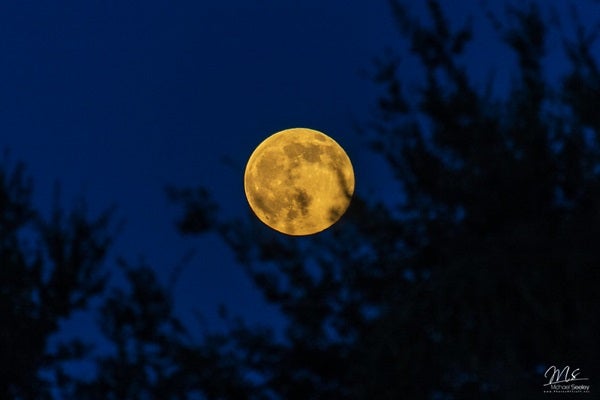
  • A golden Full Moon in a dark blue sky seen through the branches of a foreground tree.
    Observing, The Moon

    2026 Full Moon calendar: When to see the Full Moon and phases

  • A simulated night sky looking west on June 8, 2026, one hour after sunset. Jupiter and Venus appear close together in the upper left, with the twin stars Pollux and Castor visible above them. Mercury sits low on the horizon to the right.
    Observing

    The Sky Today on Monday, June 8: Venus and Jupiter close in

  • A deep-sky telescope image of M63, the Sunflower Galaxy, a spiral galaxy in Canes Venatici. The galaxy shows a bright golden core surrounded by blue spiral arms, set against a star-filled black background. Several other distant galaxies are faintly visible in the field.
    Observing

    The Sky Today on Sunday, June 7: The sky’s sunflower

  • A simulated night sky looking east on June 6, 2026, at 11 P.M. The Summer Triangle stars Vega, Deneb, and Altair are visible, along with the double star Albireo at the head of Cygnus. The faint band of the Milky Way stretches across the scene.
    Observing

    The Sky Today on Saturday, June 6: Albireo returns

  • A simulated dawn sky looking east on June 5, 2026, 30 minutes before sunrise. Mars is visible as a small dot in the lower center against the orange-glowing predawn horizon, while Saturn appears higher and to the upper right, labeled clearly against the darker upper sky.
    Observing

    The Sky Today on Friday, June 5: Check in on Mars

  • A twilight photograph taken over a calm body of water, with a vivid orange and red sunset glow along the horizon. The silhouettes of hills and a prominent volcanic peak stretch across the skyline. Jupiter and Venus appear as two bright points of light close together in the deep blue upper sky above the scene.
    Sky This Week, The Sky This Week

    The Sky This Week from June 5 to 12: Jupiter and Venus meet

  • A simulated night sky looking west on June 4, 2026, one hour after sunset. Jupiter and Venus are prominent in the upper center, with Venus appearing brighter. The twin stars Castor and Pollux are visible in the upper portion. Mercury appears near the horizon to the lower right, and Procyon is visible to the lower left. The horizon shows a dark silhouette of trees against a warm twilight glow.
    Observing

    The Sky Today on Thursday, June 4: Jupiter passes south of Pollux

  • A simulated night sky looking southeast on June 3, 2026, at 3 A.M. The bright Moon glows prominently at center right. To the upper left, the star Altair is labeled, and a red asterisk-like symbol marks the position of the asteroid Juno. The Milky Way is faintly visible as a dark cloud-like region in the upper portion.
    Observing

    The Sky Today on Wednesday, June 3: Juno stands still

  • A telescopic simulation of Saturn as seen on June 2, 2026, at 4 A.M. CDT. Saturn is centered with its rings clearly visible, tilted slightly. Four moons are labeled around it: Titan to the upper left, Rhea and Dione to the left, and Enceladus to the right. A scale bar indicates 36 arcseconds. North and East compass directions are marked in the upper left corner.
    Observing

    The Sky Today on Tuesday, June 2: Titan stands close to Saturn

Astronomy Newsletter

Get newsletters, updates and special offers via email from Astronomy.com!

Please enter a valid email address.

Astronomy magazine: 50 years and counting

Astronomy leads the astronomy hobby as the most popular magazine of its kind in the world. Get information about subscriptions, digital editions, renewals, advertising and much, much more.

Count me in

FREE DOWNLOAD

All About the Apollo Mission

Get it now
Astronomy Magazine logo
  • Facebook
  • LinkedIn
  • YouTube
  • Instagram
  • Twitter
  • About Us
  • Contact Us
  • Subscribe
  • Customer Service
  • Advertising
  • Terms of Use
  • Privacy Policy
  • Do Not Sell

@ 2025 Firecrown Media. All Rights Reserved.

More Sites from Firecrown Media Publisher logo
Scroll to Top

Sign In

New User? Create an Account

Why Sign In? Subscribers can access their digital magazine issues, and registered users can participate in our Community forums and galleries.

Please enter your email.
Please enter your password.

Lost your password?

Manage My AccountCustomer Support