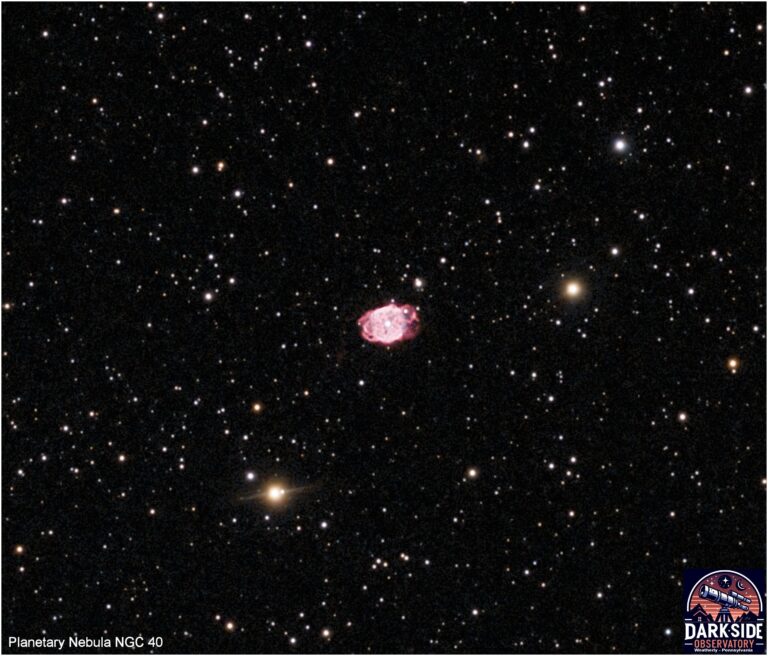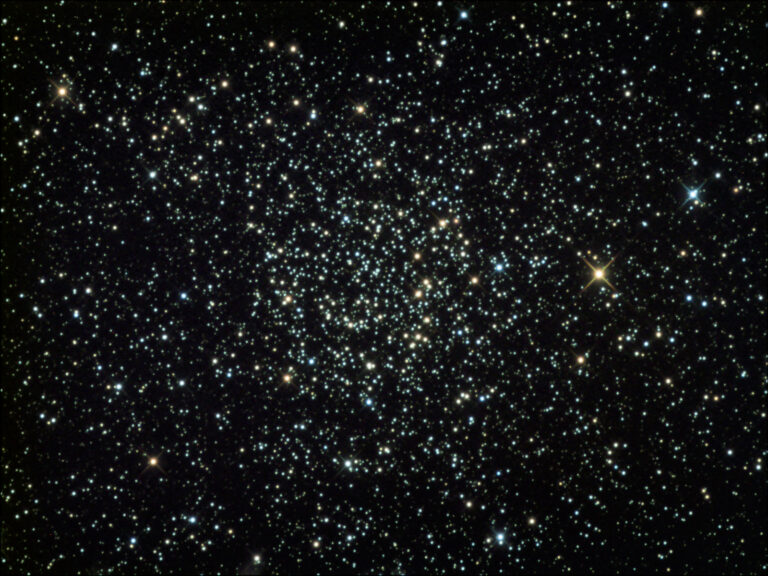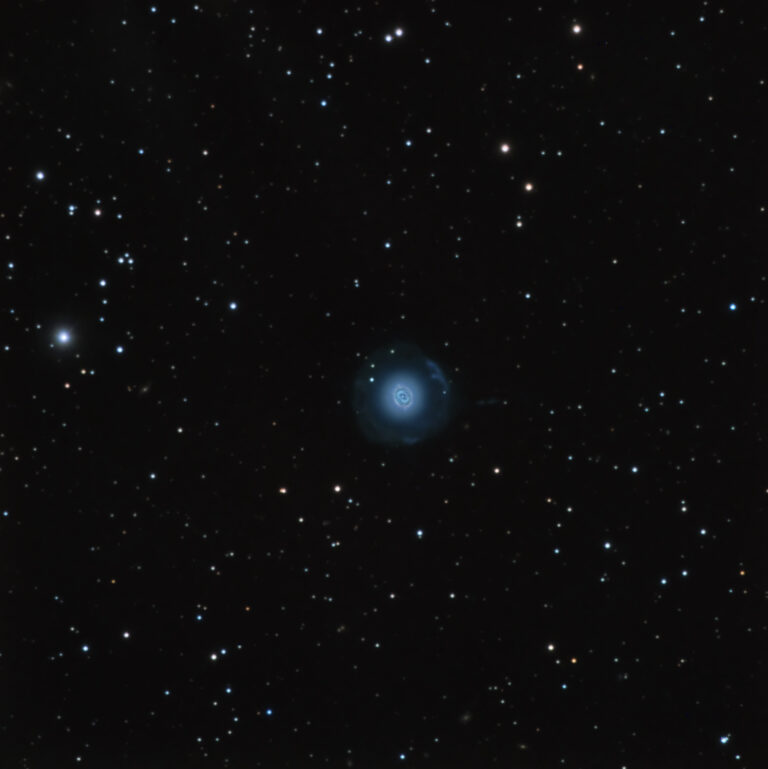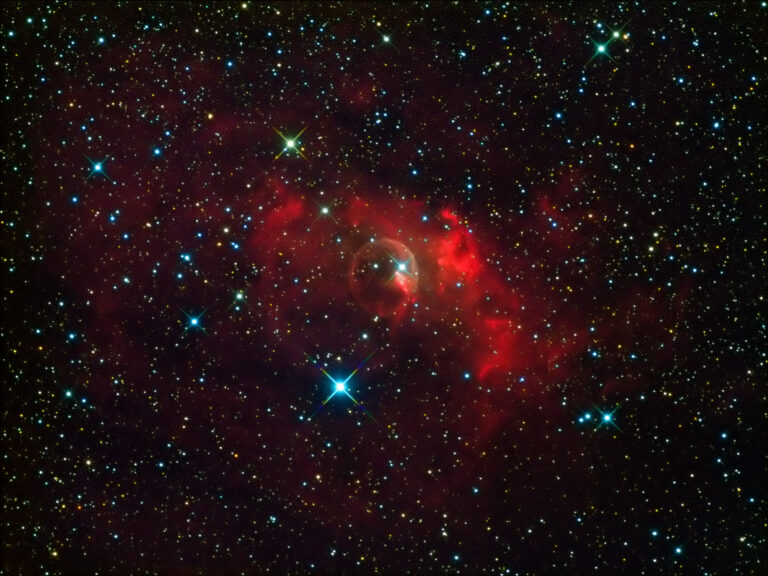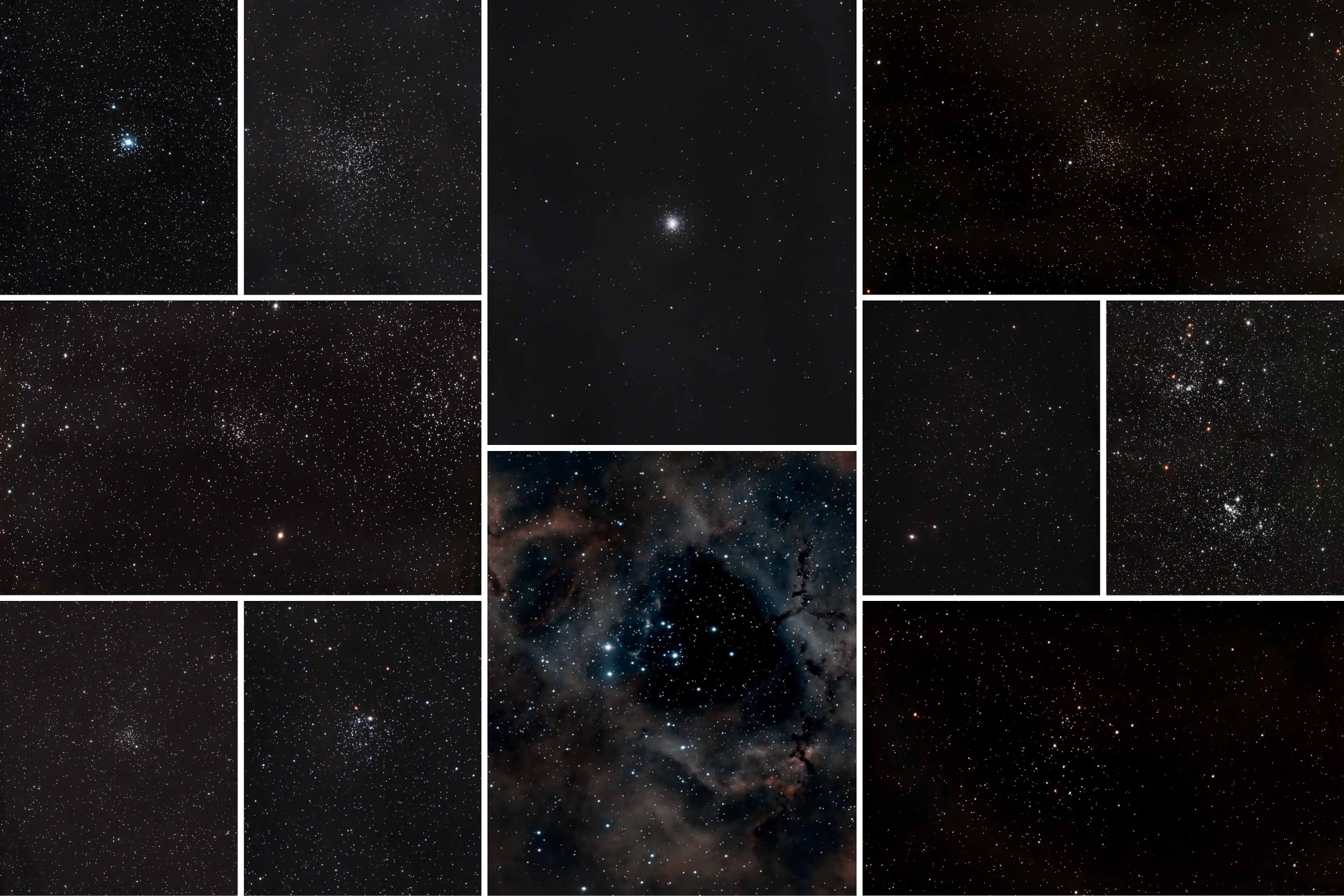
The winter sky is dominated by sparkling bright stars dotting the Milky Way. Among the myriad star clusters, many that stand out in the eyepiece steal visual observers’ hearts. The popular Messier catalog gets the lion’s share of attention along the starry highway in the sky, but there is a bounty of amazing objects in the New General Catalogue (NGC) that rival their Messier cousins and deserve our attention.
Like the summer sky, the winter Milky Way is peppered with star clusters listed in the NGC. To the novice amateur astronomer, these objects are cloaked in mystery — faraway places whispered in numeric code among elite observers as they huddle and seemingly merge with their eyepieces to pierce the darkness. Every large star party has one such gathering, its members communicating among themselves with obscure four-digit numbers that sound like secret agent code-talk.
And while the warm summer skies are inviting, often mosquitoes and humidity take their toll on our observing comfort. The cool, crisp winter skies offer a view free from summer’s haze, and it’s easier to bundle up against Jack Frost’s chilly presence than it is to keep cool on a muggy night. The cosmic sweep through Perseus, Auriga, Gemini, Orion, Canis Major, and Puppis richly reward those who brave the winter elements. But appreciating an eyepiece view of the celestial jewel boxes within the NGC is much like appreciating art, subjective and dependent on the eye of the observer. Indeed, the same star cluster that appeals when rising in the east may present an unappealing pattern when seen “upside-down” in the west.
The novice often sees the NGC catalog as a collection of ultra-faint galaxies. But there are also hundreds of star clusters well worth our viewing effort. Indeed, some NGC clusters out-marvel their Messier counterparts and gain special reverence among experienced observers. I view the NGC catalog as a ticket to travel the universe, even through a modest telescope.
A winter cluster tour
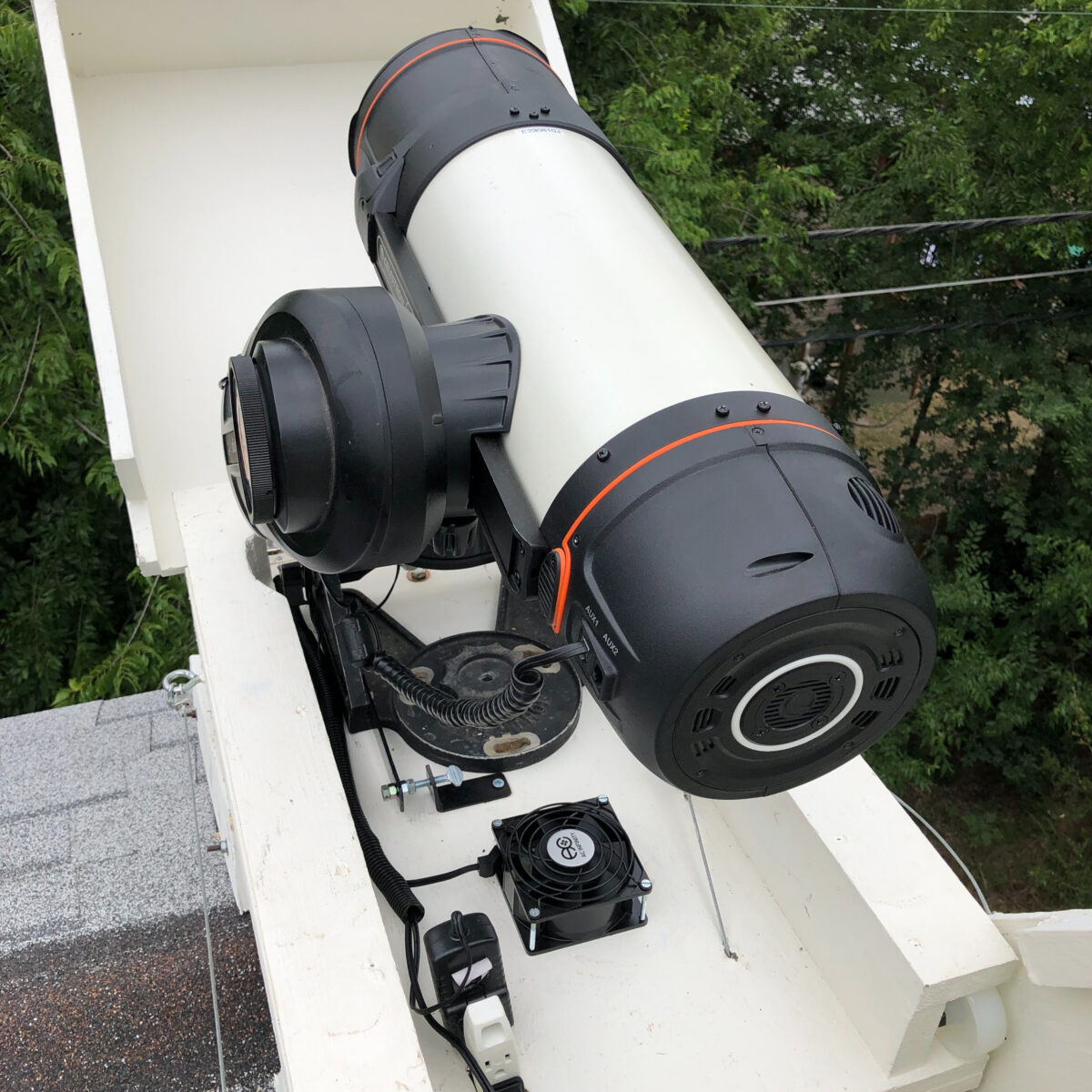
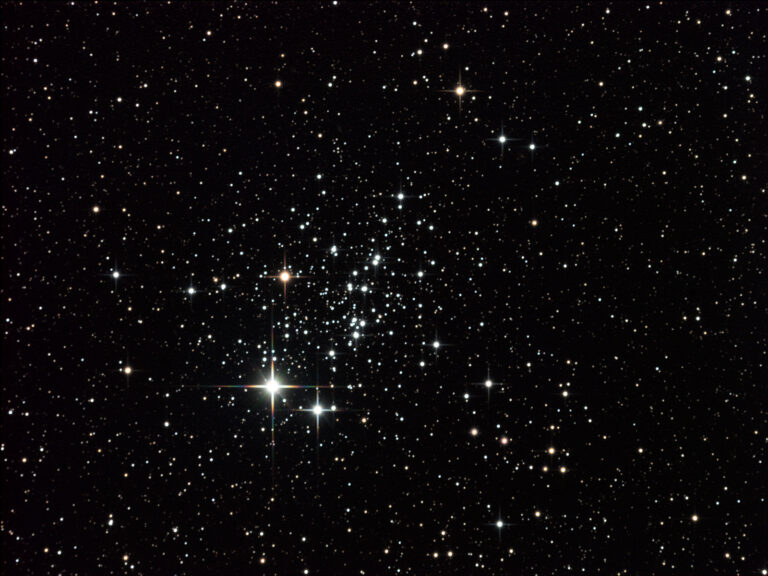
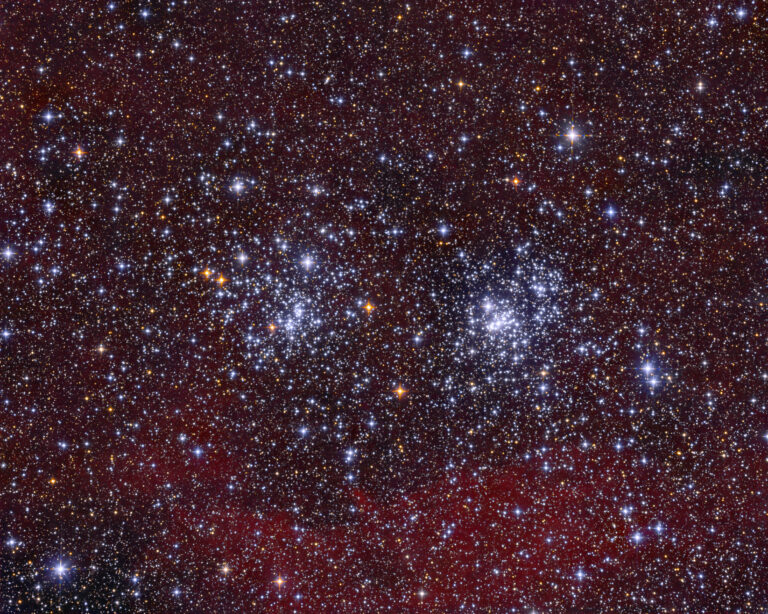
In the July 2025 issue of Astronomy, I led a tour of 14 star clusters visible in the Northern Hemisphere’s summer sky. This story is the follow-up. The 17 clusters I list here are best seen in the winter sky north of the equator. Most can be observed through a 4-inch telescope. The faintest, NGC 2192 at magnitude 10.9, will require an 8-inch instrument.
As before, I took all the images through my equatorially-mounted Celestron Origin telescope in a mini-observatory in my backyard, from the middle of San Antonio, Texas. Under such a light-polluted sky, the images this scope captures are nothing less than amazing. My only modification is to install Celestron’s nebula filter, which the company made specifically for this telescope. I capture twenty 30-second exposures at ISO 200, and the Origin’s AI then stacks and processes the images.
It is humbling to realize that all the sparkling snowflake-like star clusters are in our galactic neighborhood. Thousands of similar clusters are spread across the opposite side of the Milky Way, either obscured by the mass of the galaxy or beyond our telescopic reach. The Milky Way is vast, and observing star clusters brings scale and depth to the seemingly infinite reaches of space. As you enjoy the appealing winter NGC star clusters — whether you choose to look at them or image them — take some time to think about and fathom the depths of our galaxy.