It’s Christmas morning. Snow is gently falling outside, cinnamon rolls are baking in the kitchen, and you just opened the present you’ve been dreaming of — a telescope! But after the initial excitement wears off, you begin to wonder: How the heck do I use this thing?
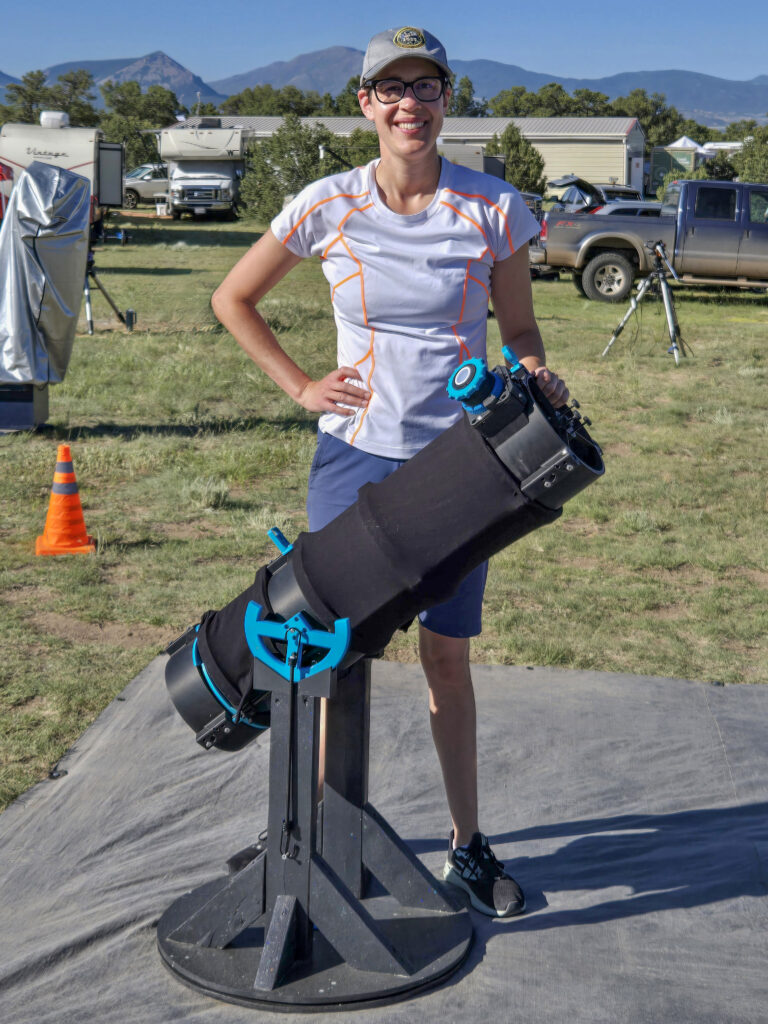
The first night with your shiny new telescope should actually start during the day. There are several aspects you should familiarize yourself with. First, determine how the telescope moves, how it locks into place, and how to insert and remove the star diagonal and the eyepiece.
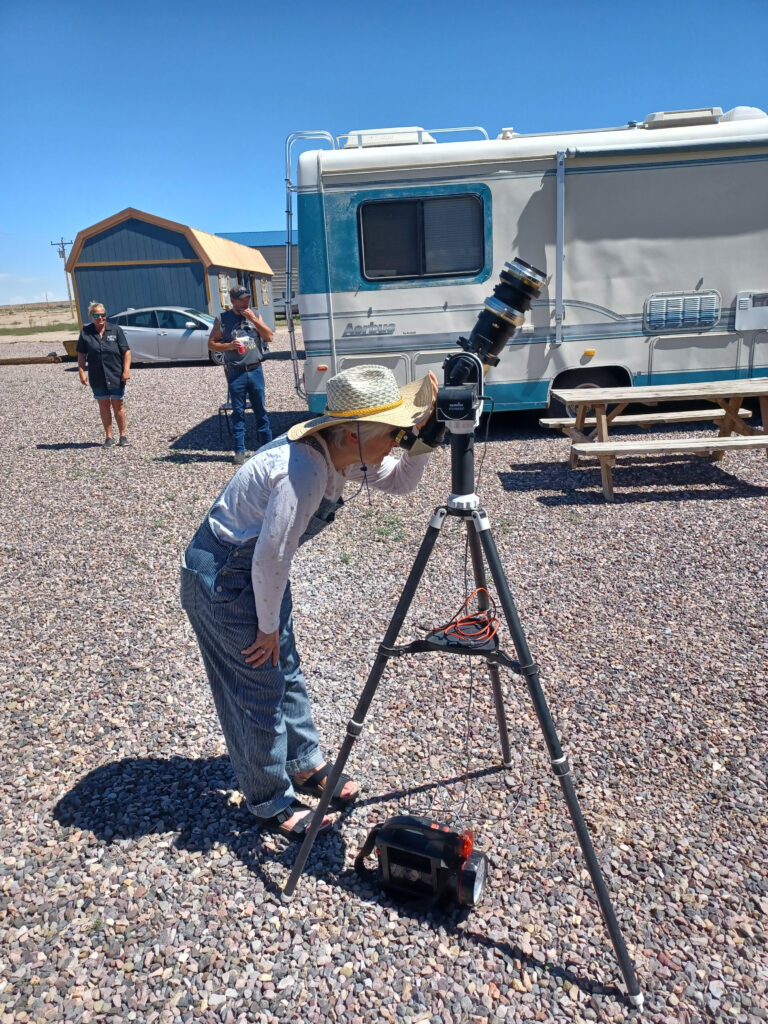
Next, take it outside and point at a distant object. Move the focuser in and out with the eyepiece in place to find focus. If you can’t get it to focus, try a target farther away. If you’re lucky and received multiple eyepieces, try each of them and notice how the field of view is different and how much you need to move the focuser to find focus.
This is also a good opportunity to align the finder scope, red dot finder, or Telrad. Aim your main scope at a treetop, radio tower, flagpole, streetlight, or other faraway object. Now look through the finder. It will have adjustment knobs or screws. Turn them until the crosshairs, red dot, or bull’s-eye are centered on the same target as the main telescope view. This will make finding objects at night much easier. Also take note during the daytime of whether the image in the eyepiece is inverted and/or reversed, and in which direction(s).
First night
You finally have a clear night and decide to brave the cold to do some stargazing with your new scope. First, you’ll need to focus it again. The Moon makes a good focusing target if it is up because it’s easy to find. Otherwise, just use a star anywhere in the sky. Next, using the finder, seek out a bright star or planet, and then see how moving the scope makes it move in the eyepiece. If the image is inverted, you’ll need to get used to thinking about which direction to move the telescope to move an object in the field of view. Then, let the telescope sit still and notice which direction the object moves through the eyepiece as Earth turns. Remember that objects rise in the east and set in the west.
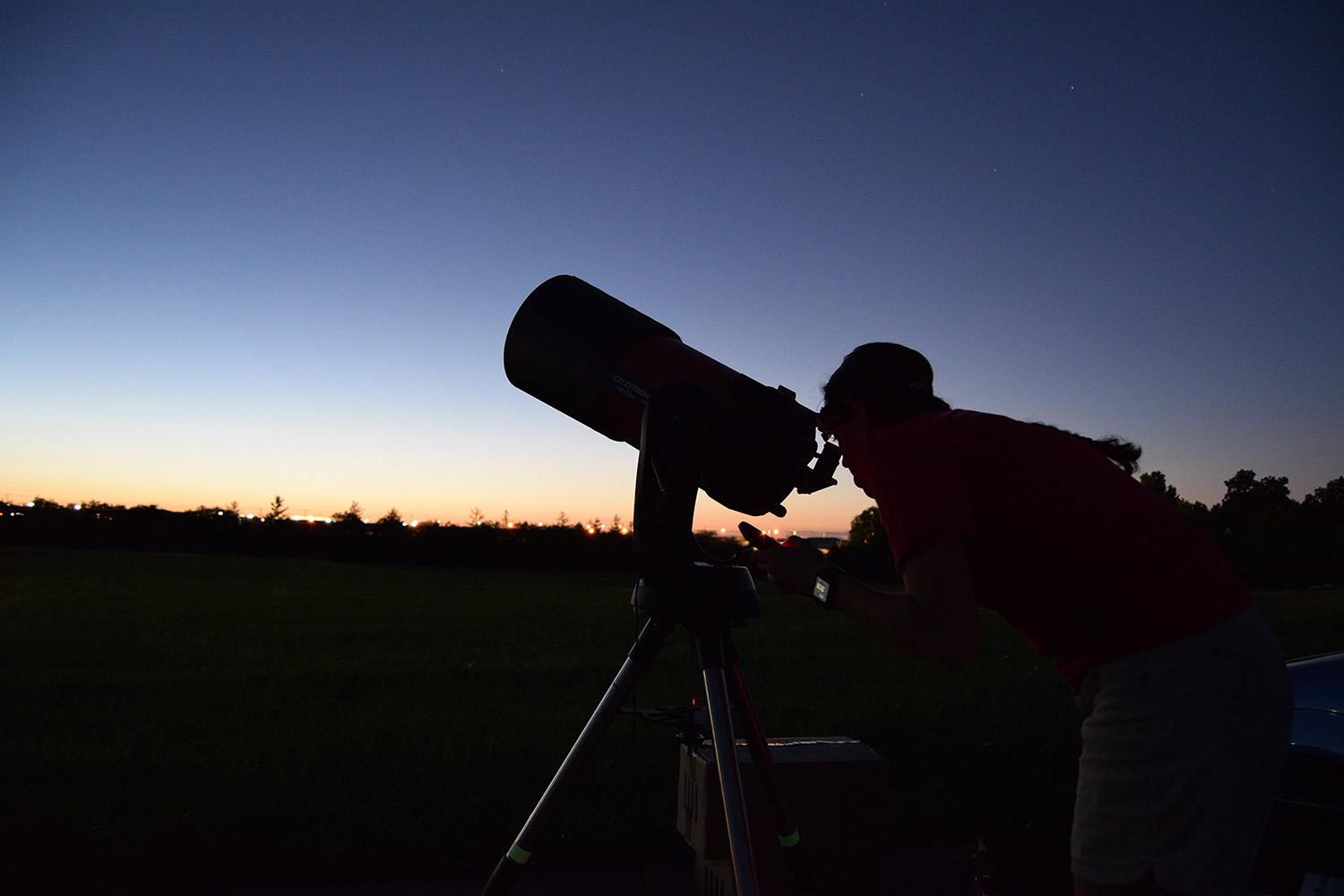
Now you can start exploring. Head to a constellation you’re familiar with, or even just an interesting pattern of bright stars. Try moving between the stars, sketching out a path on the sky. This is known as “star-hopping,” an essential practice for locating fainter targets you want to observe. Familiarize yourself with what the stars look like in the main telescope versus the finder scope. If you do, you’ll find it easier to tell where you’re pointing.
Finally, consult a planetarium app or star chart (like the one in the center of this magazine) to hunt down some bright objects. Great places to start in the wintertime are the Orion Nebula (M42), the Pleiades (M45), and the Double Cluster (NGC 869 and NGC 884) between Cassiopeia and Perseus. Also take some time to slowly cruise around and see what you just happen across. There are many star clusters scattered all over the sky. As your skill improves, you might even encounter some galaxies and bright nebulae. Take notes on what you see in a notebook. Someday when you’re an old pro, it will be fun to look back and see where you started.
The first night with a new telescope can be frustrating, but take your time and get to know your gear. Keep trying, hang out with your local astronomy club, and soon you’ll be chasing faint fuzzies all over the sky.