
Key Takeaways:
- NASA Administrator Jared Isaacman outlined a vision for the agency focused on fostering commercial partnerships, establishing a permanent human presence on the Moon, and transitioning towards a commercially self-sustaining space economy.
- His address detailed plans to streamline agency operations, reduce "bureaucratic drag," and accelerate decision-making to meet aggressive White House deadlines, aligning with a recent executive order.
- Isaacman clarified that his "force multiplier for science" strategy encompasses the entire scientific program, including astrophysics and Earth observation, aiming to leverage industry partnerships for more efficient data gathering and to integrate advanced technologies like AI for future deep-space missions.
- The Administrator emphasized a firm stance on contractor accountability and underscored the urgency of accelerating lunar missions, such as Artemis, to achieve a sustained presence on the Moon, viewing it as a critical step towards future Mars exploration.
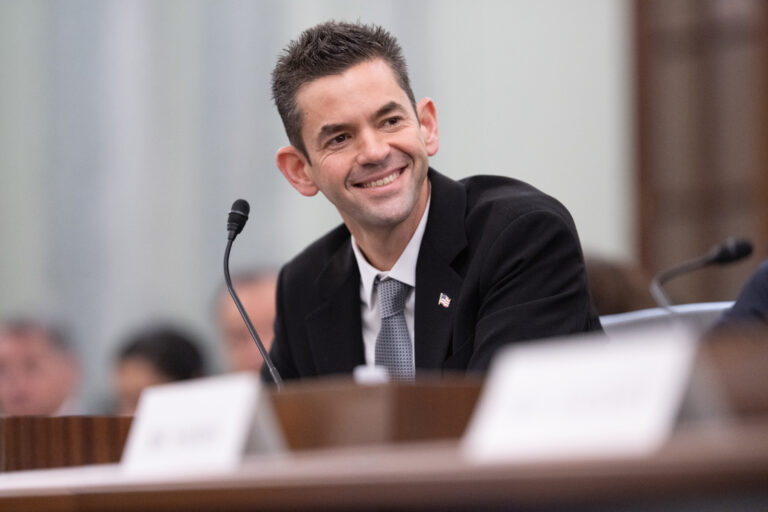
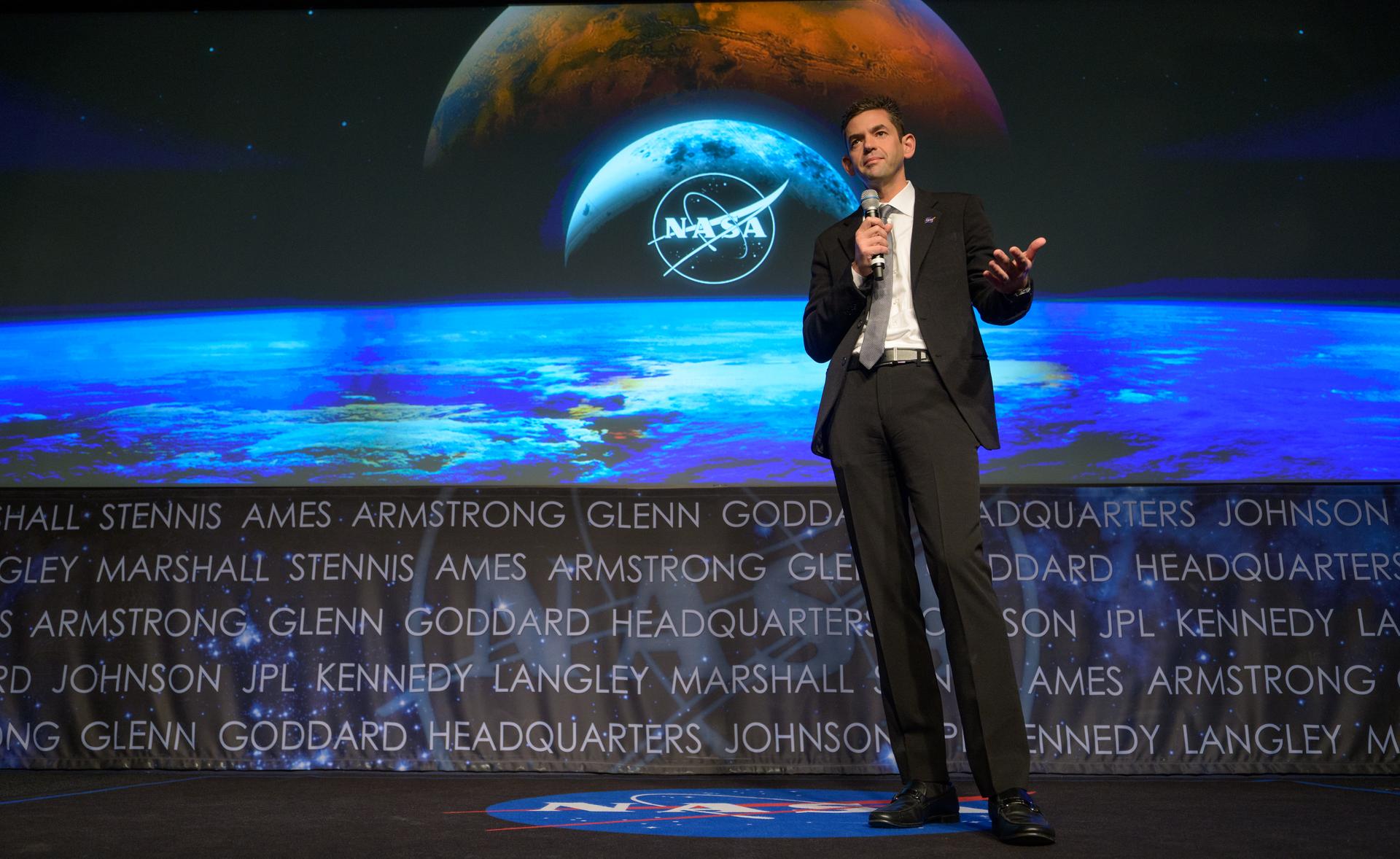
Newly confirmed NASA Administrator Jared Isaacman spoke to agency employees on Friday, Dec. 19 in an agencywide town hall. In his first public address since being sworn in, the billionaire and private astronaut described a future for NASA defined by commercial partnerships and a permanent presence on the Moon.
Isaacman won a 67–30 Senate confirmation vote earlier this week. In his opening remarks, he noted that his views should be clear following two confirmation hearings, several podcast appearances, and the leak of a 62-page document known as “Project Athena.” His address laid out a roadmap for the agency that closely follows the timelines set by a recent executive order from President Donald Trump.
“America will lead in the peaceful exploration of space,” Isaacman said. “We will bring extreme focus to the mission and realize our near-term objectives of returning American astronauts to the Moon and establishing an enduring presence to unlock the scientific, economic, and national security potential on the lunar surface.”
A commercial space economy
Isaacman wants to move NASA away from what he calls the “taxpayer-dependent model.” He envisions a new space economy where commercial activities eventually generate enough value to pay for the cost of operating in space. For more than 50 years, the space economy has relied on governments as the primary customers for launch and observation. Trump’s Dec. 18 executive order aims to change this by attracting $50 billion in private investment by 2028. As part of this shift, the administration plans to replace the International Space Station with private outposts after its planned 2030 deorbit. Isaacman said the goal is to find breakthroughs in fields like pharmaceuticals and biotech that can generate value in excess of operational costs, stating, “NASA will become a force multiplier for science.”
While Isaacman did not mention “Project Athena” by name during the town hall, his speech echoed many of its foundational themes. He previously described the proposal — which advocates for a commercial-first strategy and the potential elimination of legacy programs like the Space Launch System — as a “living draft” after it surfaced. The document has faced criticism and skepticism within the space community; one former NASA official described the proposal as “bizarre and careless” in a report by Politico.
On Friday, Isaacman addressed the need to cut “bureaucratic drag” and improve the flow of information to meet aggressive White House deadlines. He stated he plans to “flatten the organizational structure to improve information flow and accelerate sound decision making, and push responsibility down to the talent that is more than capable of getting the job done.” These changes are intended to fix what some view as long-standing issues with schedule delays and cost overruns within the agency.
Future of NASA science
The administration’s emphasis on commercial viability and exploration has created anxiety regarding the future of NASA science. These concerns were fueled earlier in 2025 by former interim chief Sean Duffy, who suggested Earth science programs might be deprioritized, and by the president’s initial budget request, which signaled potential funding shifts. Against this backdrop of a “commercial-first” vision and fiscal uncertainty, Goddard researcher Rita Sambruna asked Isaacman to clarify what he meant by being a “force multiplier for science.” She specifically asked if his definition included traditional astrophysics and Earth observation, even if those programs did not directly support the “Moon to Mars” objective.
Isaacman replied that his vision includes the entire science program and its technological initiatives. He argued that the agency’s role is to solve “the mysteries in air and space,” answering the questions children ask when they look at the stars. He suggested that by partnering with industry to gather data more cheaply, NASA could “reduce the time to science” and maximize the value of its budget without sacrificing its broader research goals.
Further Q&A
Beyond the scientific mission, workforce members raised questions about daily operations, jobs, and the use of emerging technologies. One employee asked about the potential integration of AI and holographic technology, citing a recent presentation at Mission Control Center featuring state-of-the-art holographic AI. Isaacman noted that while he was only hours into the job, such technology “sounds like the right direction.” He suggested that onboard AI decision-making would be critical for deep-space missions to Mars to account for transmission delays, calling the prospect “a fun thing to imagine at some point in the near future.”
The administrator also addressed concerns regarding contractor accountability. When asked about projects delayed by poor contractor performance and reports from the Office of the Inspector General that NASA has limited leverage to incentivize improvements, Isaacman took a firm stance. He stated that commercial and international partners must be held to the same standard as the agency itself. “They work for us, not the other way around,” Isaacman said, promising that NASA will be a “demanding” partner, making sure promises from partners are followed through on promptly and on budget.
Regarding the current hiring freeze, Isaacman said he is still reviewing the details but expects NASA will need to hire more people to meet its goals. On the topic of remote work, he said he prefers having teams in the same room to solve hard engineering problems, though he admitted some exceptions would remain.
To the Moon
Isaacman emphasized the urgency of the Artemis 2 mission, which is expected to launch early next year. The agency is currently working toward a 2028 deadline to land humans on the Moon. Isaacman said he wants to move flight schedules up as much as physics and safety allow. The new executive order also calls for faster investment in technologies like nuclear propulsion and a lunar surface reactor by 2030. Isaacman described these as the necessary steps for an eventual mission to Mars.
Isaacman ended his opening remarks by saying this era of Moon missions is different from the 1960s. He noted that the goal now is a sustained presence rather than a brief visit. He thanked the Senate and the astronaut community for their support as the agency moves toward its next milestones.
“I don’t think there are many NASA employees standing next to you who served during the Apollo era. They have retired. In many cases, they’ve passed on, leaving their extraordinary accomplishments behind for us to celebrate. But now, you will be the ones in the room when we return. You will be part of the next chapter of this history. And this time, when we make the grand return, we stay,” Isaacman said.