From the June 2011 issue

How do astronomers know that the universe is 13.7 billion years old?

Jose Eduardo Machado, Rio de Janeiro, Brazil
By | Published: June 27, 2011 | Last updated on May 18, 2023

Gemini Sparkle

Key Takeaways:

  • The Cosmic Microwave Background (CMB) radiation, a remnant from the early universe, has been mapped using sensitive instruments.
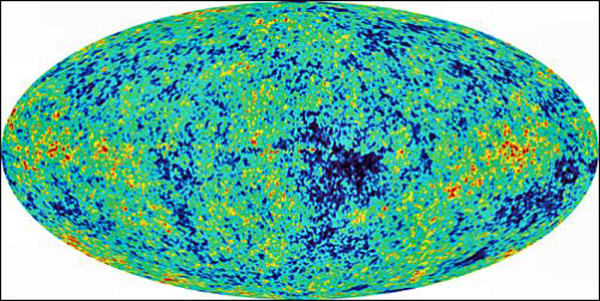
  • Fluctuations in the CMB's temperature, exhibiting variations in hot and cold spots, have been precisely measured.
  • The size and distribution of these temperature fluctuations within the CMB are directly related to the universe's age.
  • Mapping these CMB fluctuations has significantly advanced our understanding of the universe's age.
wmap_cmb_600
WMAP view of the cosmic microwave background.

What revolutionized our knowledge of the age of the universe was mapping the fluctuations in the cosmic microwave background (CMB) — leftover radiation from the early universe observed using sensitive instruments. It turns out that the precise size and distribution of tiny hot and cold temperature fluctuations in the CMB are sensitive to the age of the universe.