Why does the same side of the Moon always face Earth? I know this is called tidal locking, but what is the underlying mechanism for this?
Bill Carroll
Chicago, Illinois
When the Moon first formed, it was a sea of molten lava. The immense gravity of Earth stretched this molten sea, raising tides on both the near and far sides.
But the Moon was spinning, and that rotation carried the tides away from a direct line pointing toward Earth. So, from Earth’s perspective, there was an extra lump of material sitting slightly on either side of a line connecting the center of Earth with the center of the Moon. The gravity of Earth tugged on these lumps, trying to bring them back into alignment (i.e., so that the nearer bulge pointed directly at Earth, rather than slightly away). This produced torque, or an additional rotational force, that slowed down the Moon’s rotation.
At first this tugging wasn’t successful because the Moon had more than enough rotational energy to overcome the torque from Earth’s pull and keep spinning. But over time, Earth slowly won and the Moon’s rotation slowed down.
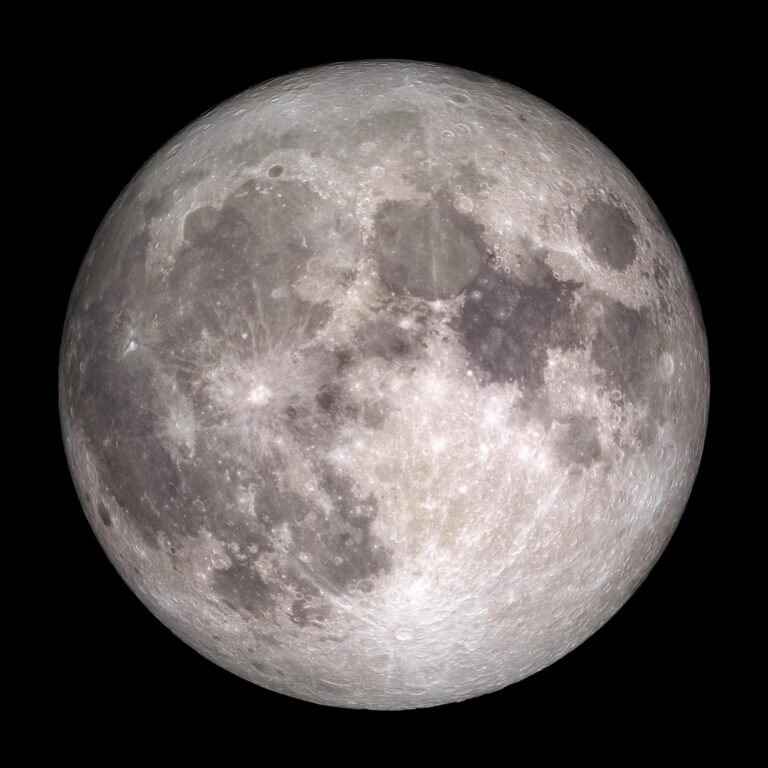
This process continued for millions of years until the lumps — the tides raised by Earth’s gravity — sat permanently on a direct line facing Earth. To achieve this, the rotation of the Moon had to synchronize with its orbit, so that it always presents the same face to Earth.
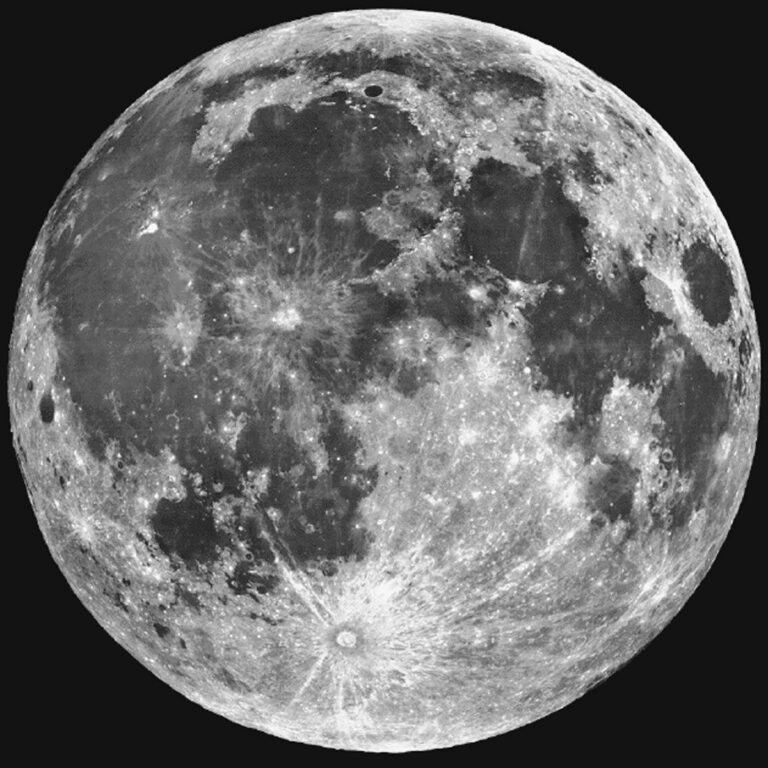
It wasn’t until Oct. 7, 1959, that the Soviet Luna 3 spacecraft gave humanity its first-ever look at the farside of the Moon.
Paul Sutter
Cosmologist, Johns Hopkins University, Baltimore