
Key Takeaways:
- The collection documents various transient solar system events, including a dynamically tailed Comet Lemmon, a seven-planet alignment, and two distinct total lunar eclipses, one of which was composited with an ancient Roman landmark.
- Featured observations include the Tiangong space station transiting a partially shadowed Moon and a partial solar eclipse creating a distinct crescent "horns of fire" effect at sunrise.
- Deep-sky astrophotography encompasses a panoramic summer Milky Way over Yosemite, a wide-field vista of emission nebulae in Carina, and a detailed narrowband image of the Wizard Nebula.
- A dedicated hydrogen-alpha portrait of the Sun's chromosphere is presented, revealing its turbulent surface and prominent features such as large prominences.
2025 was a fantastic year for astrophotography. Our readers sent in hundreds of images, capturing everything from the activity of the Sun and distant nebulae to Comet Lemmon and the Blood Moon. It was tough to choose, but we’ve narrowed it down to 10 of the best. In no particular order, here are the top reader-submitted images of the year.
Catching Lemmon’s tail
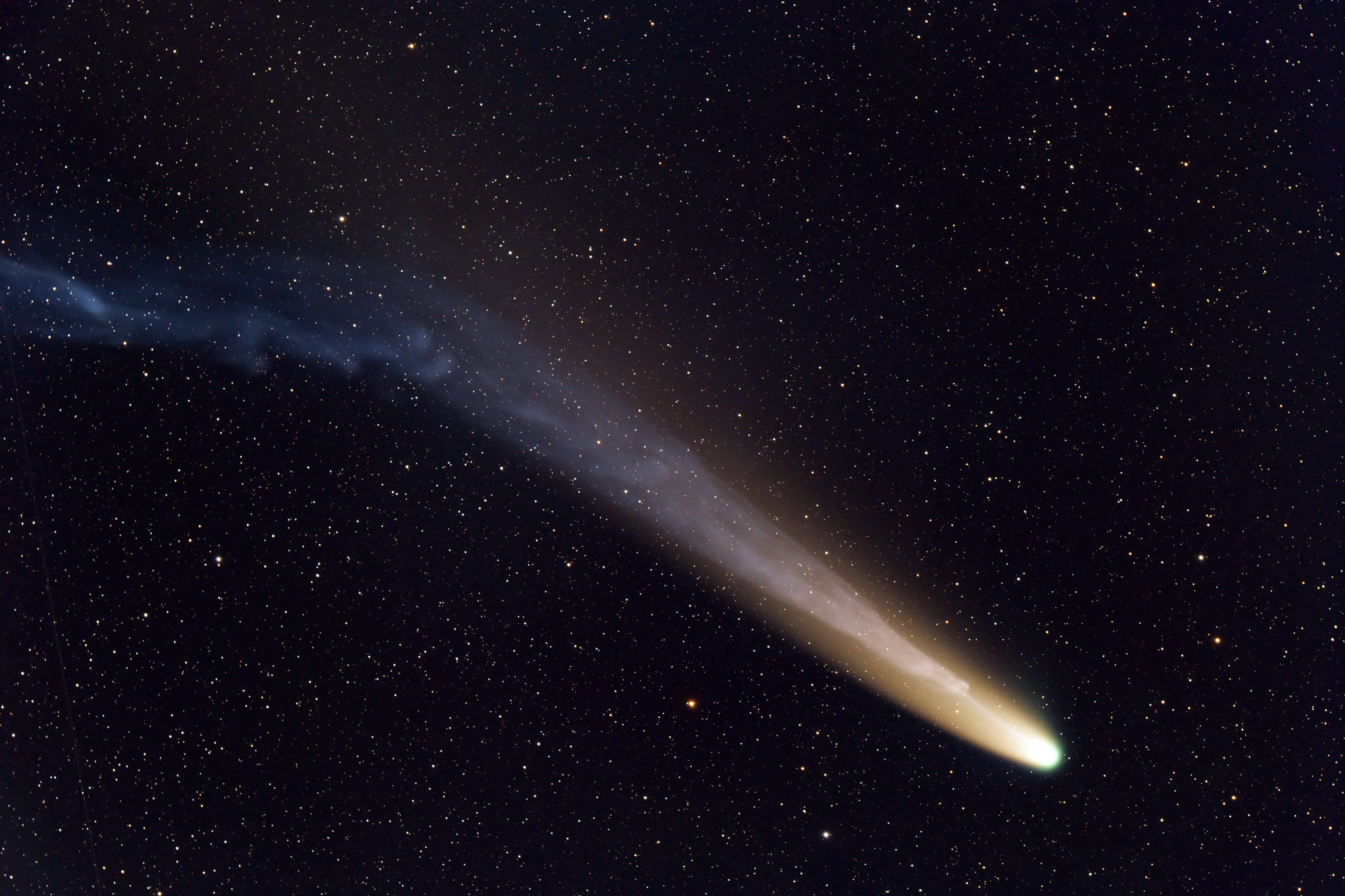
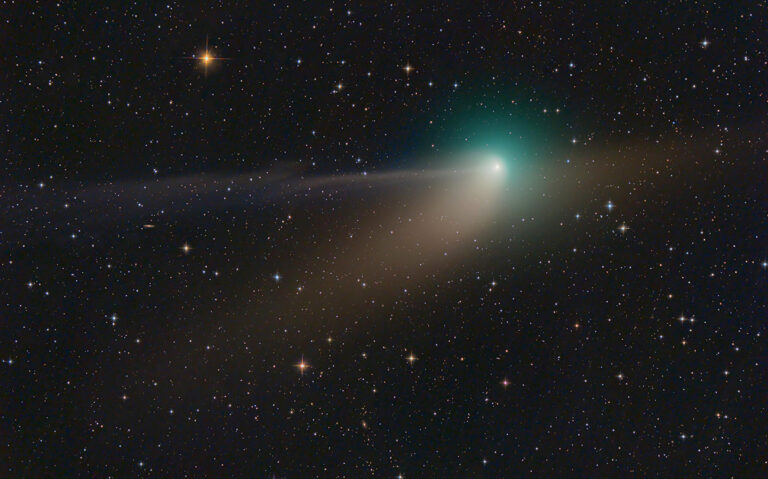
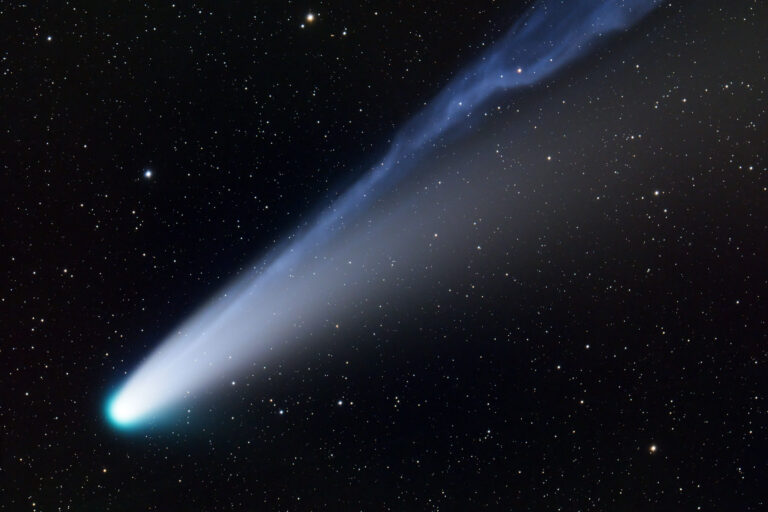
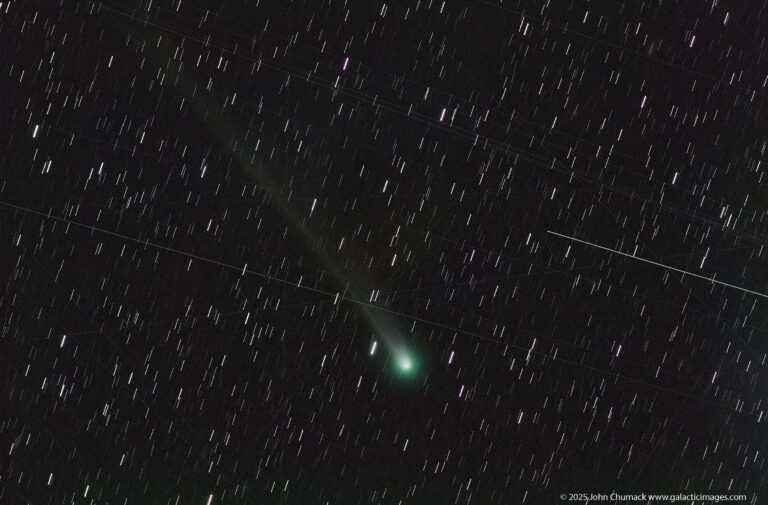
Comet C/2025 A6 (Lemmon) was easily one of the most photographed events of the year — so much so that we compiled a dedicated gallery to showcase the variety of submissions. However, this Halloween image stands out for capturing a specific, volatile moment in the comet’s behavior. “The comet’s tail was very dynamic tonight for a short period of time,” says Hwang. “It looked like billowing smoke for about an hour before returning to a more normal appearance.”
(Equipment: RASA 11 f/2.2, ZWO ASI6200; Exposure: 4 x 60-second subs)
Galaxyrise over Yosemite
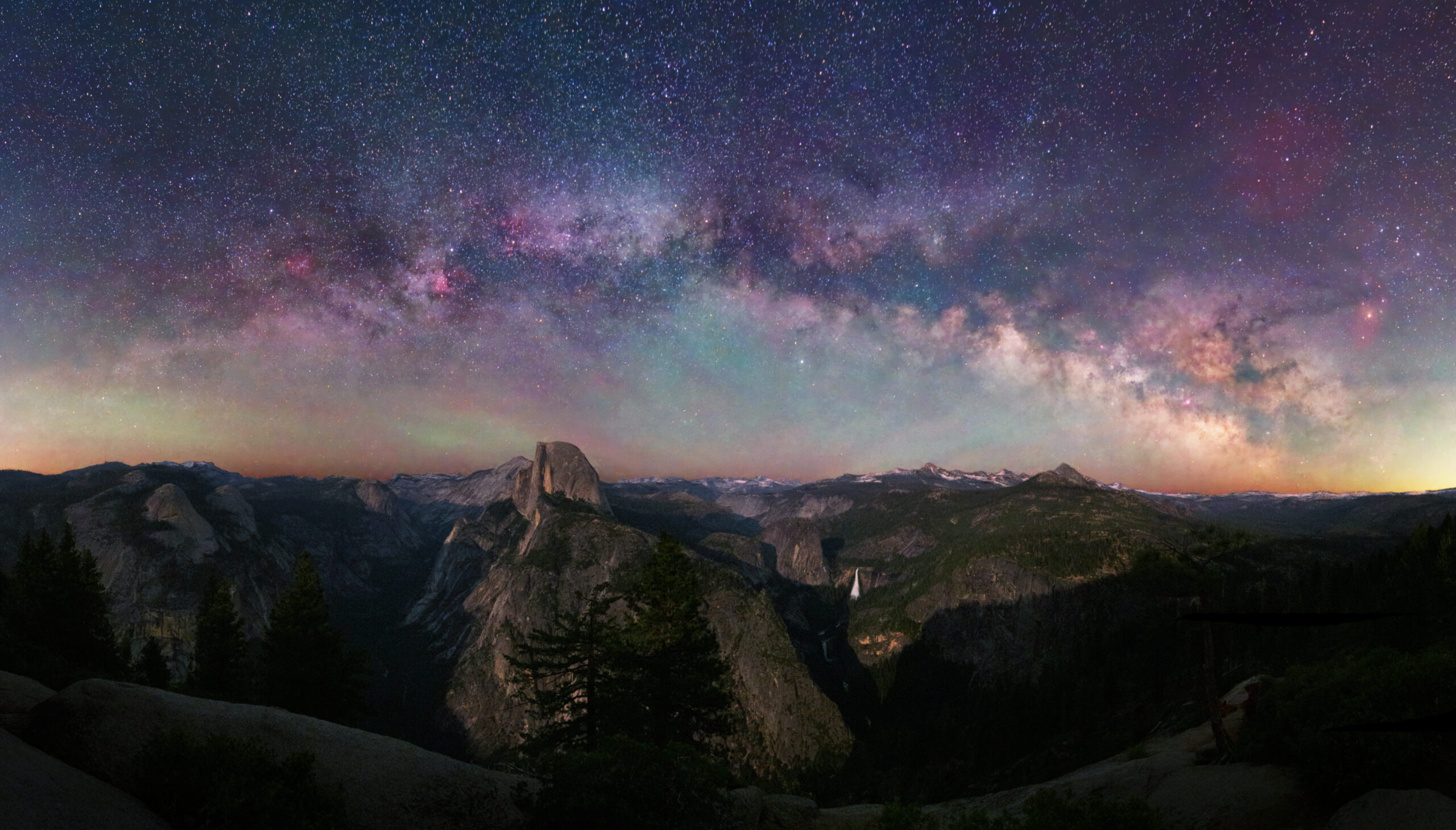
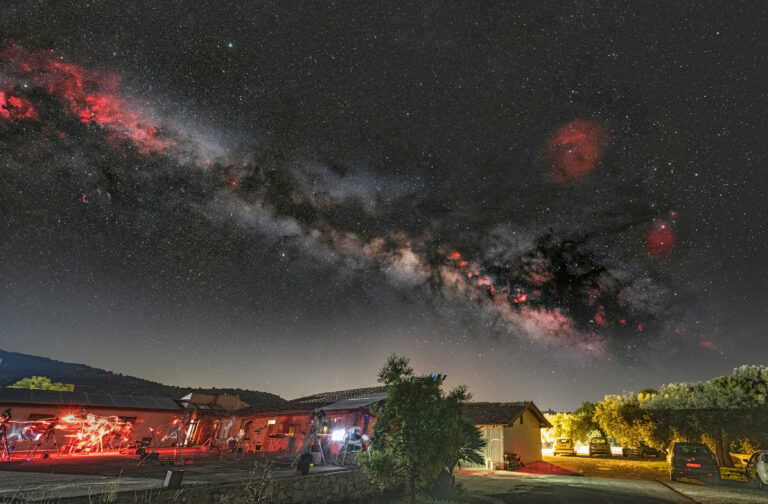
Captured from Glacier Point in late May, this image features the summer Milky Way rising over the snow-capped Sierra, including iconic landmarks like Half Dome and Nevada Falls. The photographer notes that a thin crescent Moon provided the illumination for the landscape, revealing a band of green airglow stretching across the horizon.
(Equipment: Modified Canon EOS 6D with Baader BCF-2 filter, Tamron SP 15-30mm f/2.8 lens; Exposure: 6 x 25-second exposures at ISO 6400)
A palace on the Moon
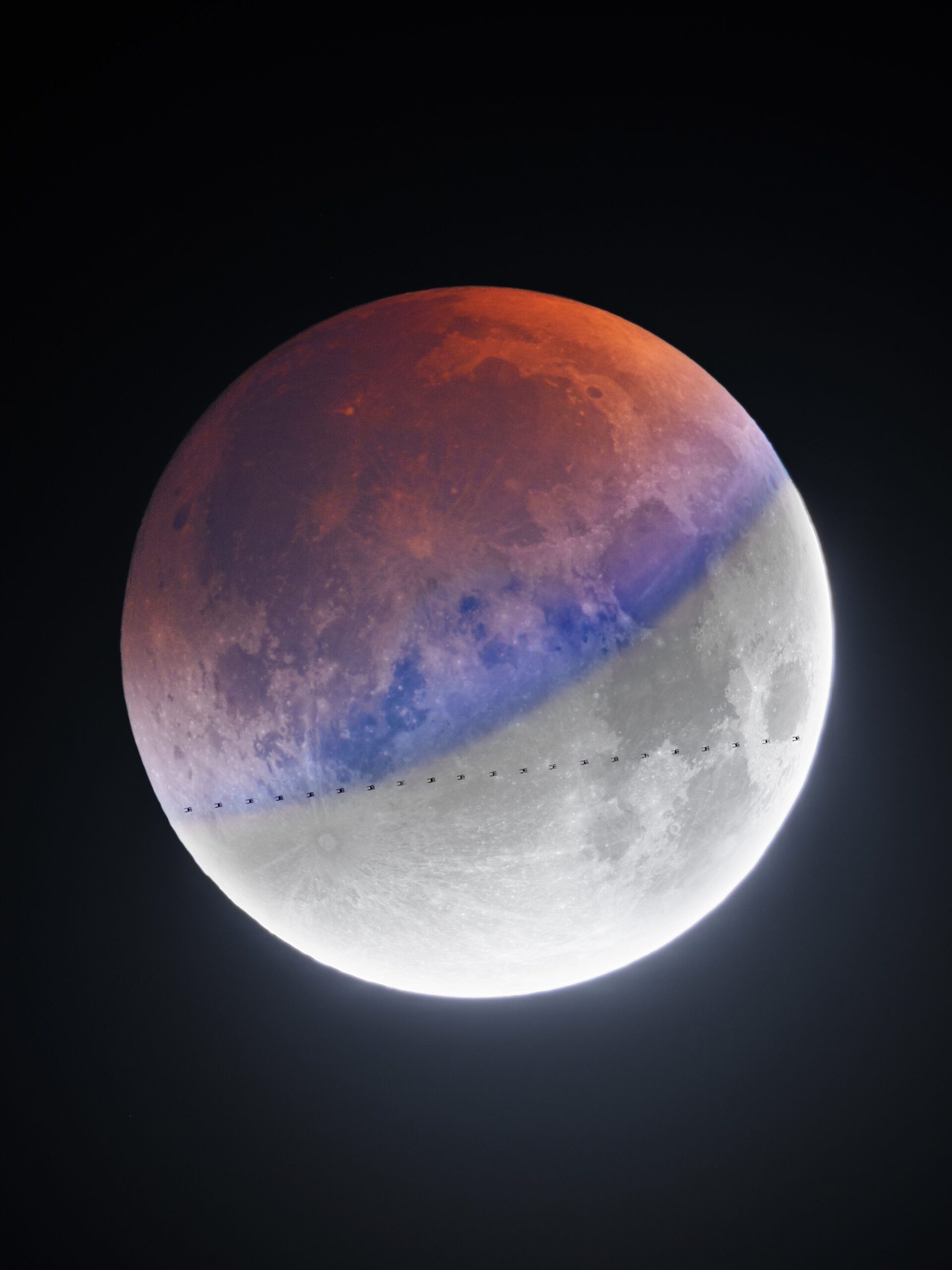
Tianyao Yang captured the Chinese space station Tiangong dashing across the face of the Moon while it was deep within Earth’s shadow. This HDR composite required careful planning to align with the station’s path, as the crossing itself lasted less than a second. The resulting image reveals the station’s distinct shape silhouetted against the Moon, orbiting roughly 372 miles (599 km) overhead. According to Yang, this is likely the first time such an event has been captured using HDR techniques during an eclipse.
(Equipment: Sony A1, 600mm f/4 lens with 2x teleconverter, iOptron HST harmonic mount; Exposure: Composite of 1/2000-second exposures for transit and 0.5-second bracketed exposures for eclipse)
Nebulous quartet
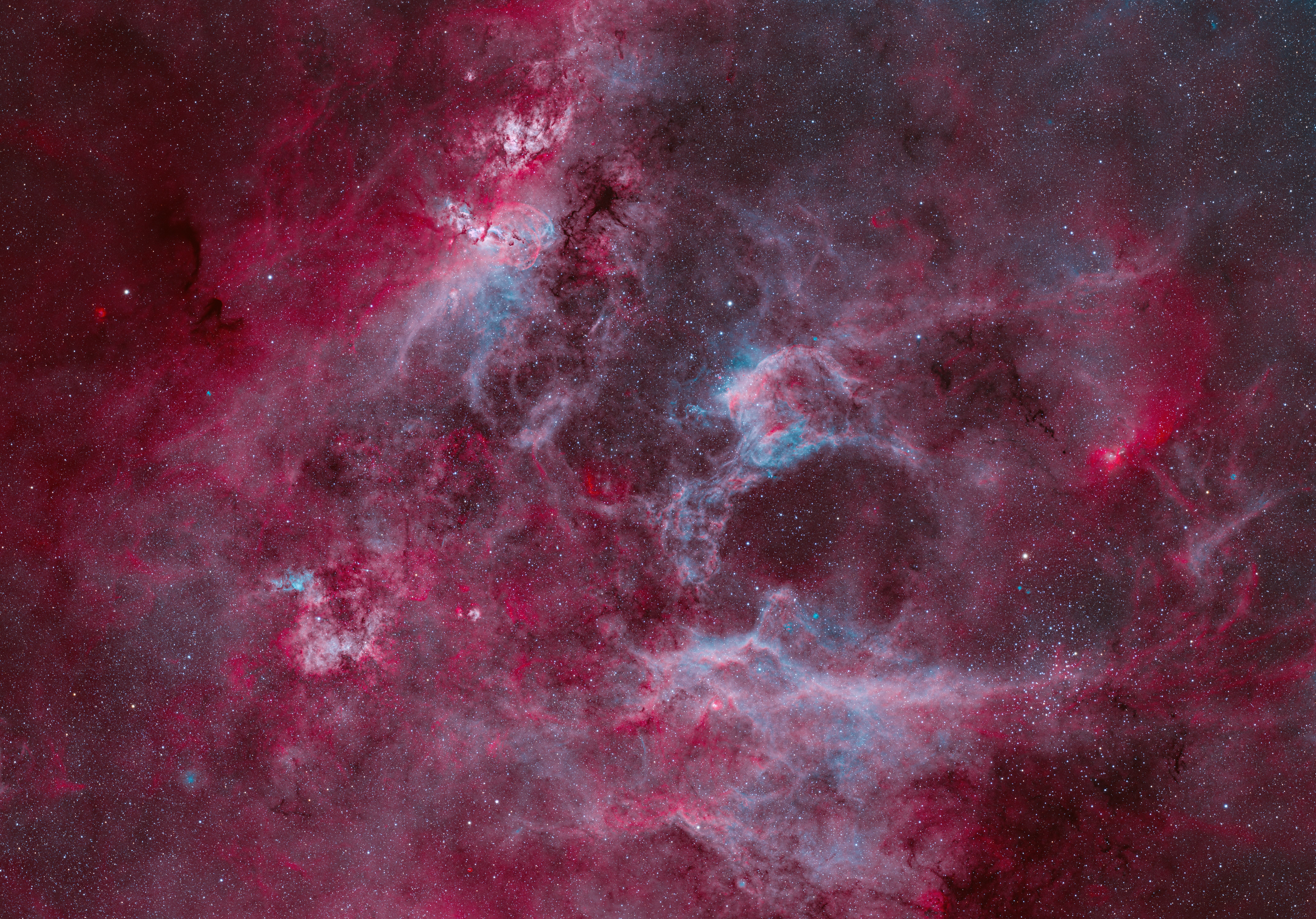
This collaborative effort captures a stunning wide-field vista in the constellation Carina. The image features a complex of emission nebulae, including the Statue of Liberty Nebula (NGC 3576), NGC 3603, NGC 3572, and NGC 3503. The trio of imagers combined forces to gather extensive narrowband and broadband data, revealing the delicate interplay of gas and dust in this southern sky region.
(Equipment: 4.2-inch telescope; Exposure: Hα/OIII/RGB composite with 380, 380, 100, 100, and 100 minutes, respectively)
A planetary parade
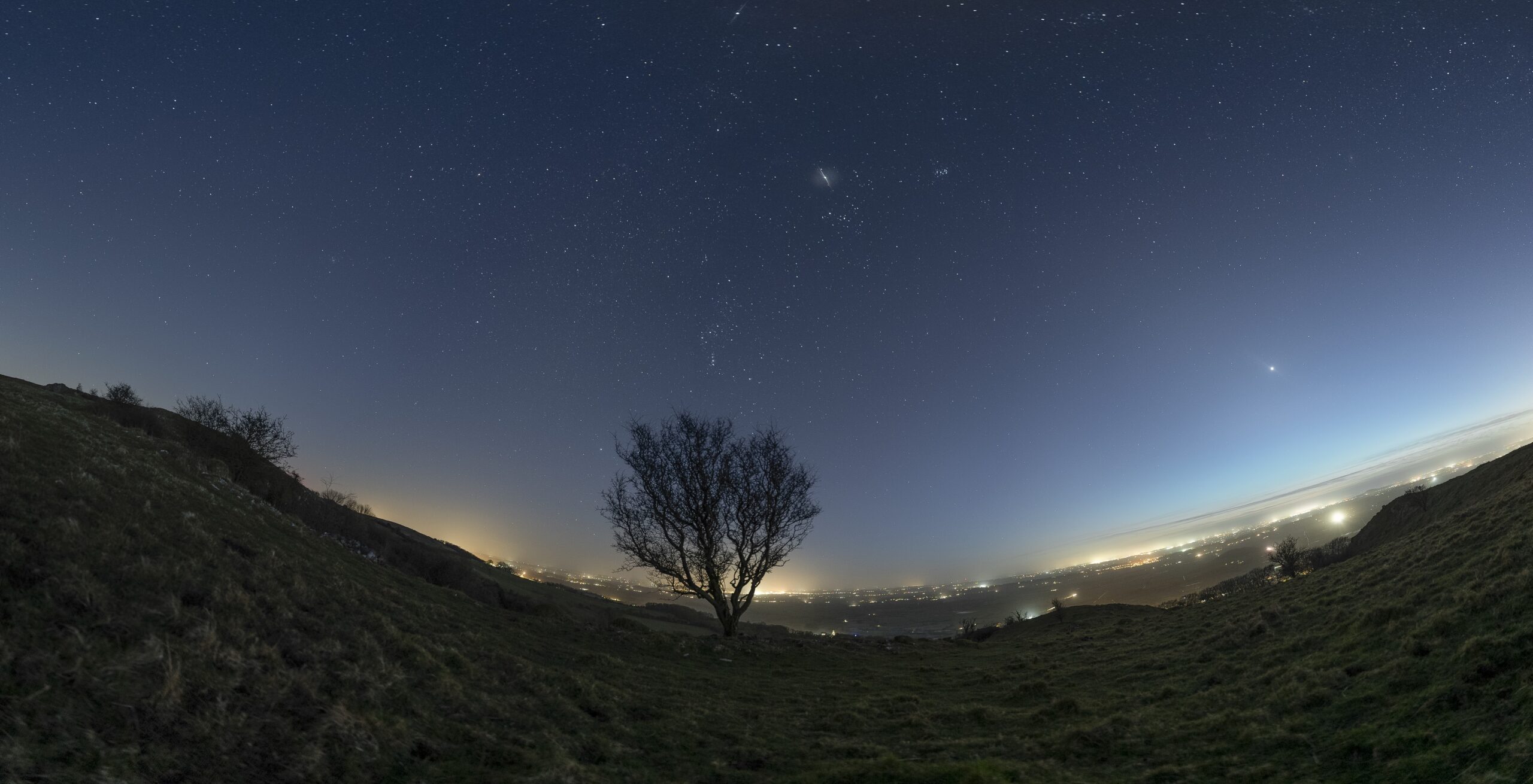
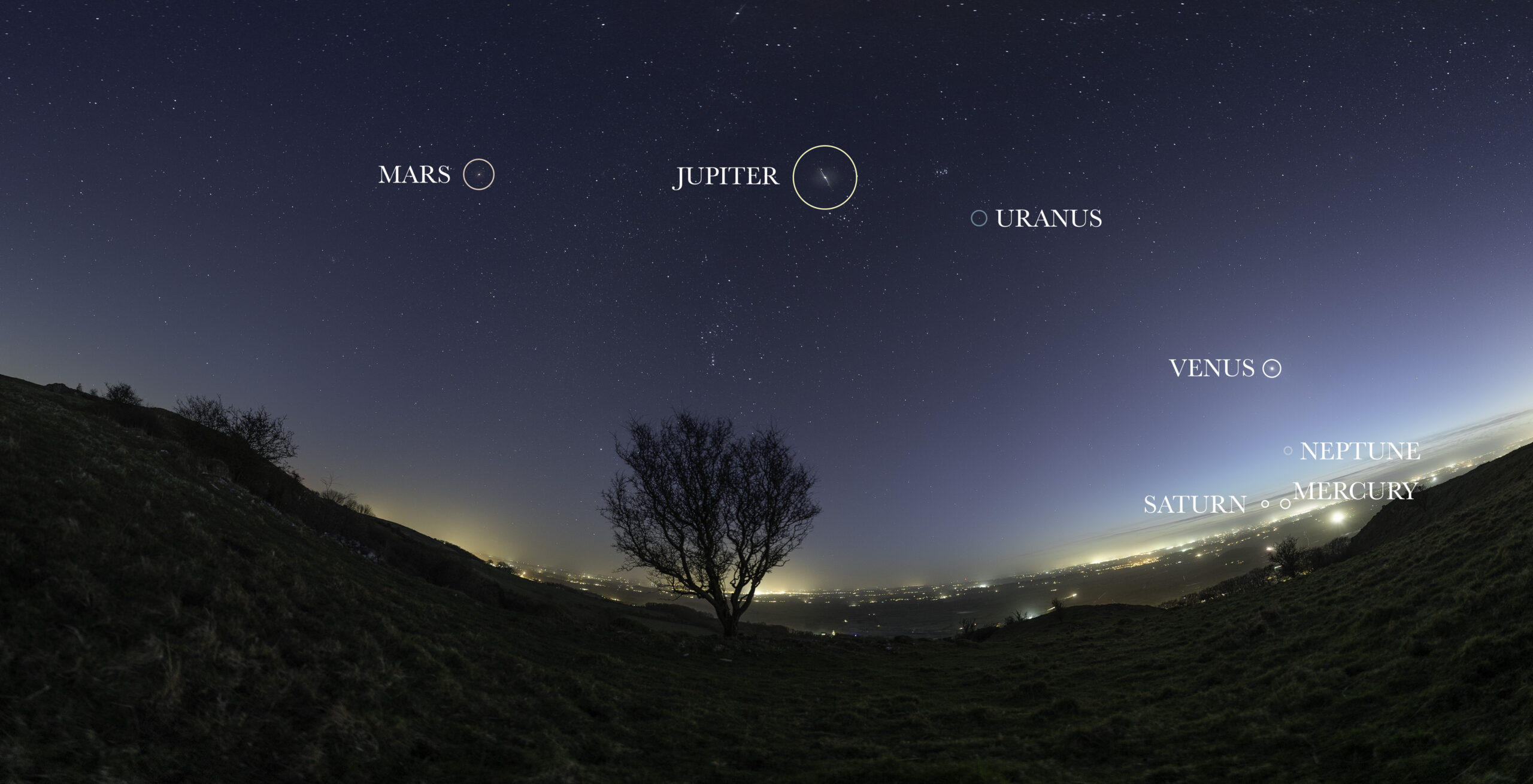
On February 22, 2025, the solar system put on a show with a “planetary parade” of seven planets. Josh Dury captured this sweeping view from the Mendip Hills in Somerset, United Kingdom. The final composition is a nine-image panorama blended to handle the extreme dynamic range of the twilight sky. He notes that while the brighter planets were obvious, revealing the fainter members — Saturn, Mercury, and Neptune — required careful analysis to distinguish them in the fading light.
(Equipment: 9-image panorama, HDR blend; Date: February 22, 2025)
Total lunar eclipse
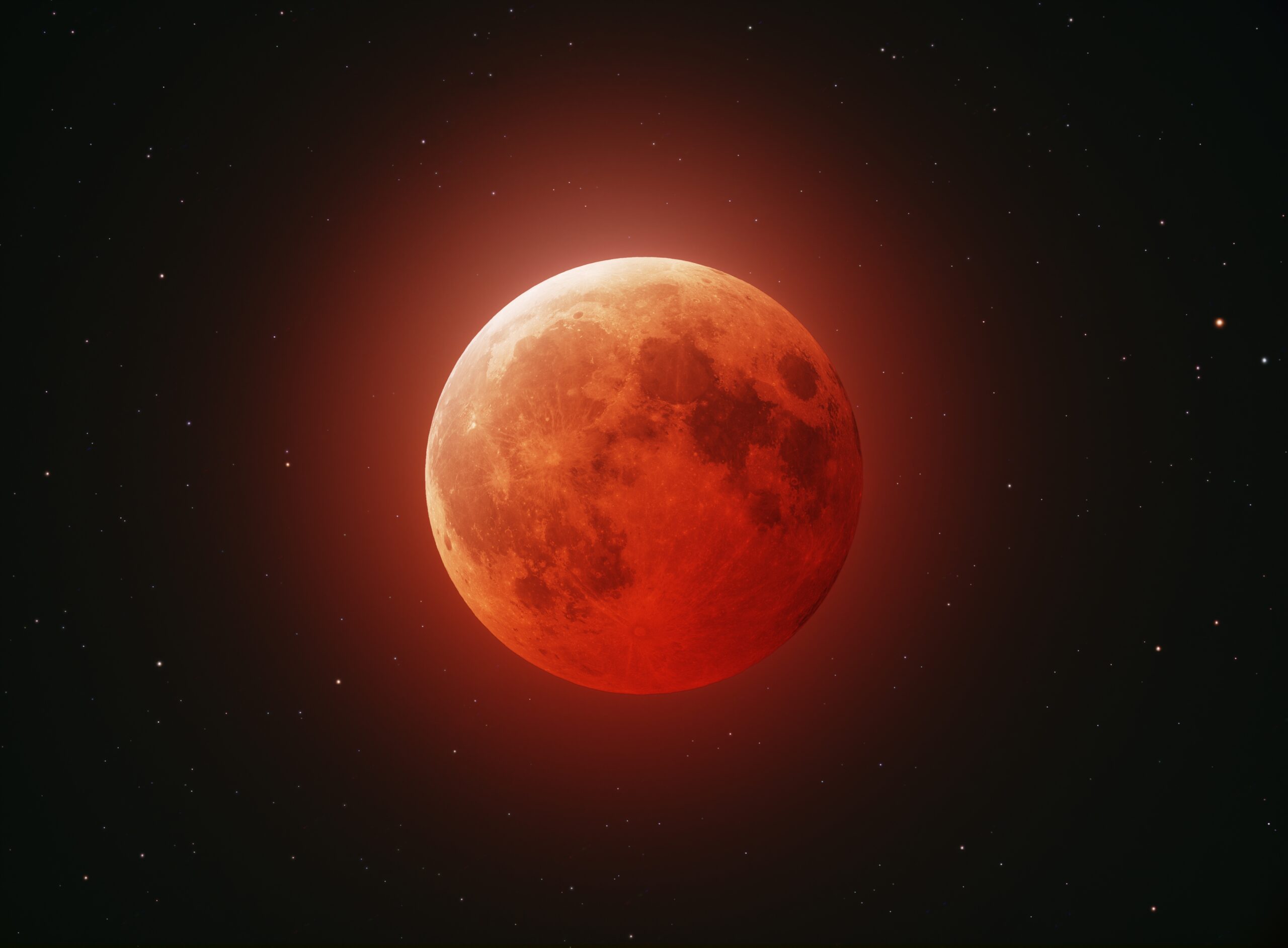
Clear skies finally arrived in Markham, Ontario, allowing Steve Leonard to capture the March 14 total lunar eclipse in stunning detail. The final result is a blend of three distinct layers: a sharp view of the lunar surface, a long exposure to reveal the delicate outer glow, and a separate star field. To ensure the color was true to life, Leonard calibrated the white balance using data he captured of a Full Moon prior to the event, creating what he calls a “reconstruction of what it felt like to witness the eclipse.”
(Equipment: Astro-Tech AT115EDT refractor, ZWO ASI 1600MM Pro, Astrodon RGB filters; Exposure: Composite of multiple exposures per channel)
Horns of the Sun
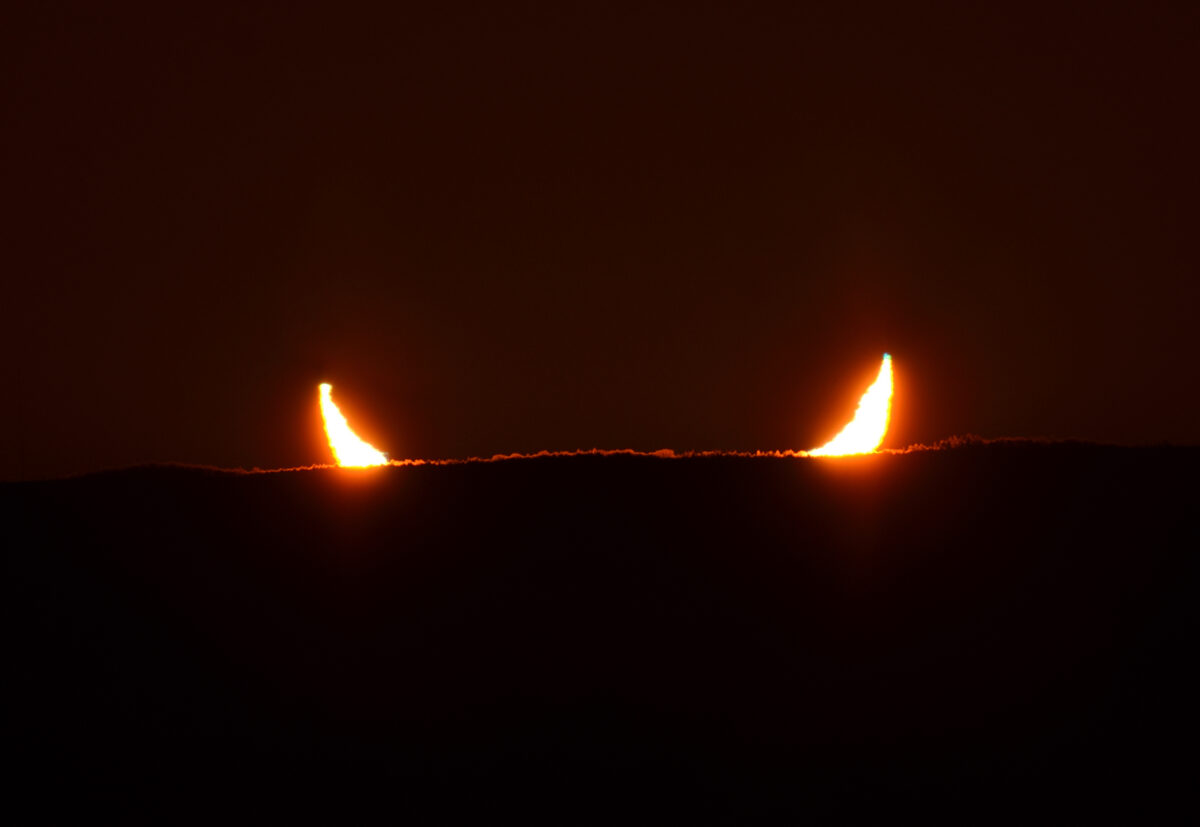
The sunrise on March 29, 2025, was particularly special for observers on the East Coast. Fabrizio Melandri observed this partial solar eclipse from Monticello, Maine, where the Moon blocked 85 percent of the solar disk. He describes the sight of the crescent Sun lifting above the horizon as “amazing ‘horns of fire,'” a dramatic phenomenon captured here in sharp detail.
(Equipment: Svbony SV503 102mm refractor f/7, Nikon D7000; Exposure: 1/1000-second at ISO 100)
This light shall pass
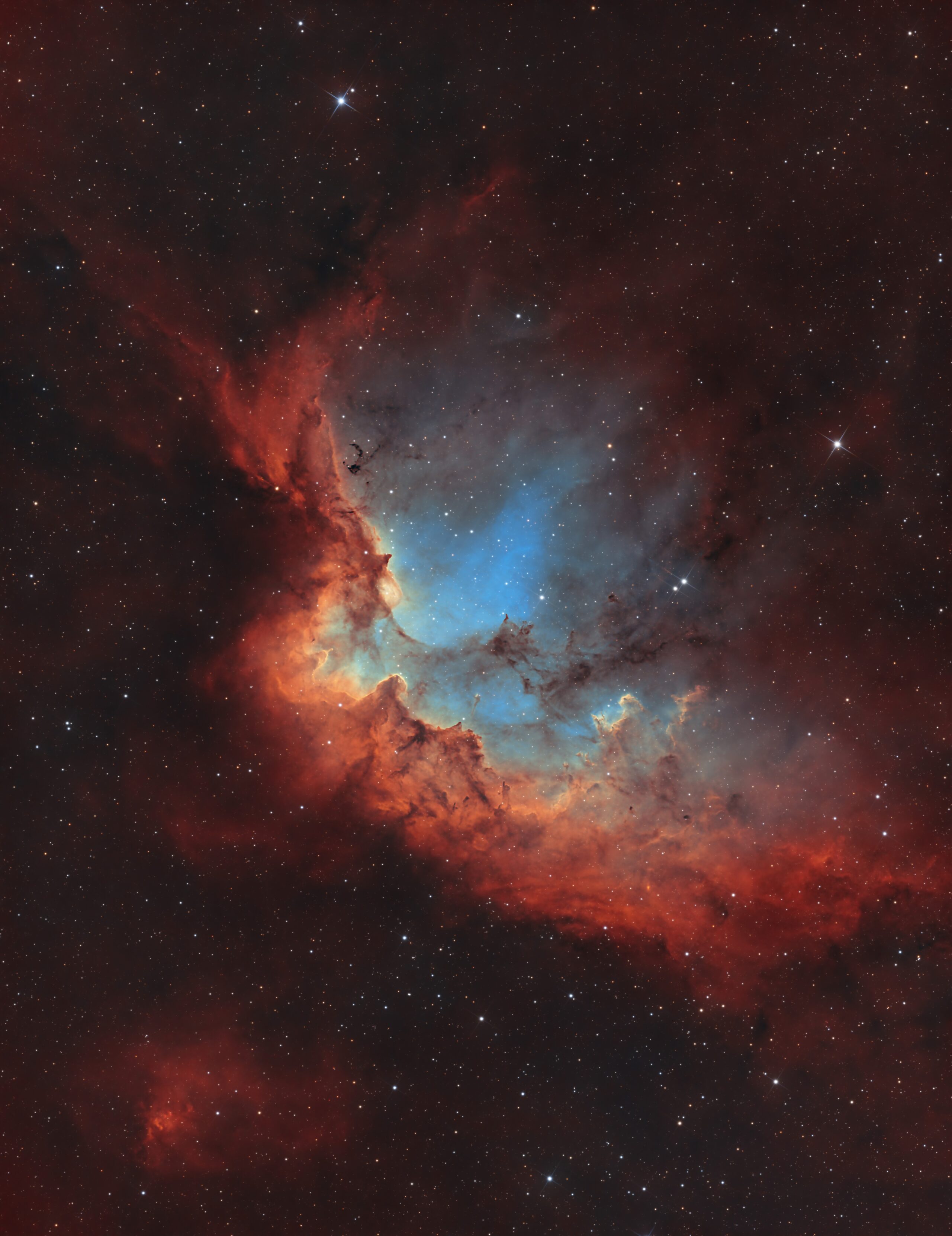
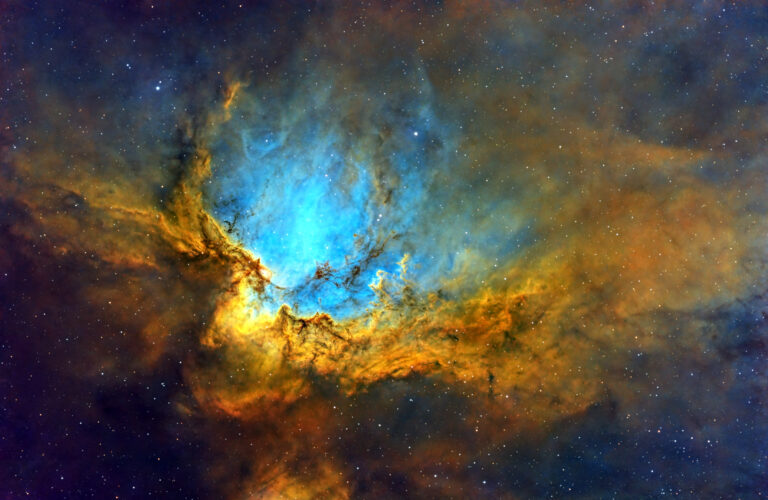
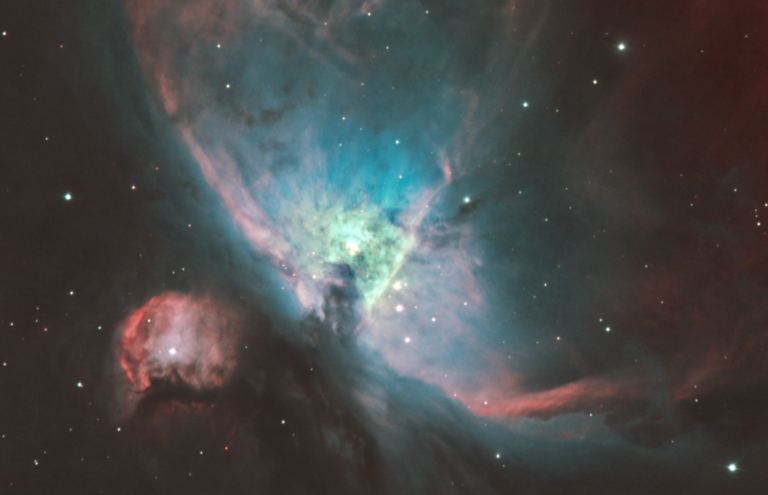
From his garden in the Var region of France, Emmanuel Joly accumulated nearly 34 hours of exposure time to create this image of the Wizard Nebula (NGC 7380). The image relies heavily on narrowband data — 31.6 hours captured using Hydrogen-alpha, Sulfur-II, and Oxygen-III filters — to define the nebula’s structure, while shorter RGB exposures were added to preserve the natural colors of the star field.
(Equipment: Sky-Watcher Black Diamond 200/1000, ZWO ASI1600MM, Sky-Watcher EQ6-R Pro mount; Exposure: Ha/SII/OIII/RGB composite with approx. 34 hours total integration)
Our star in Hα
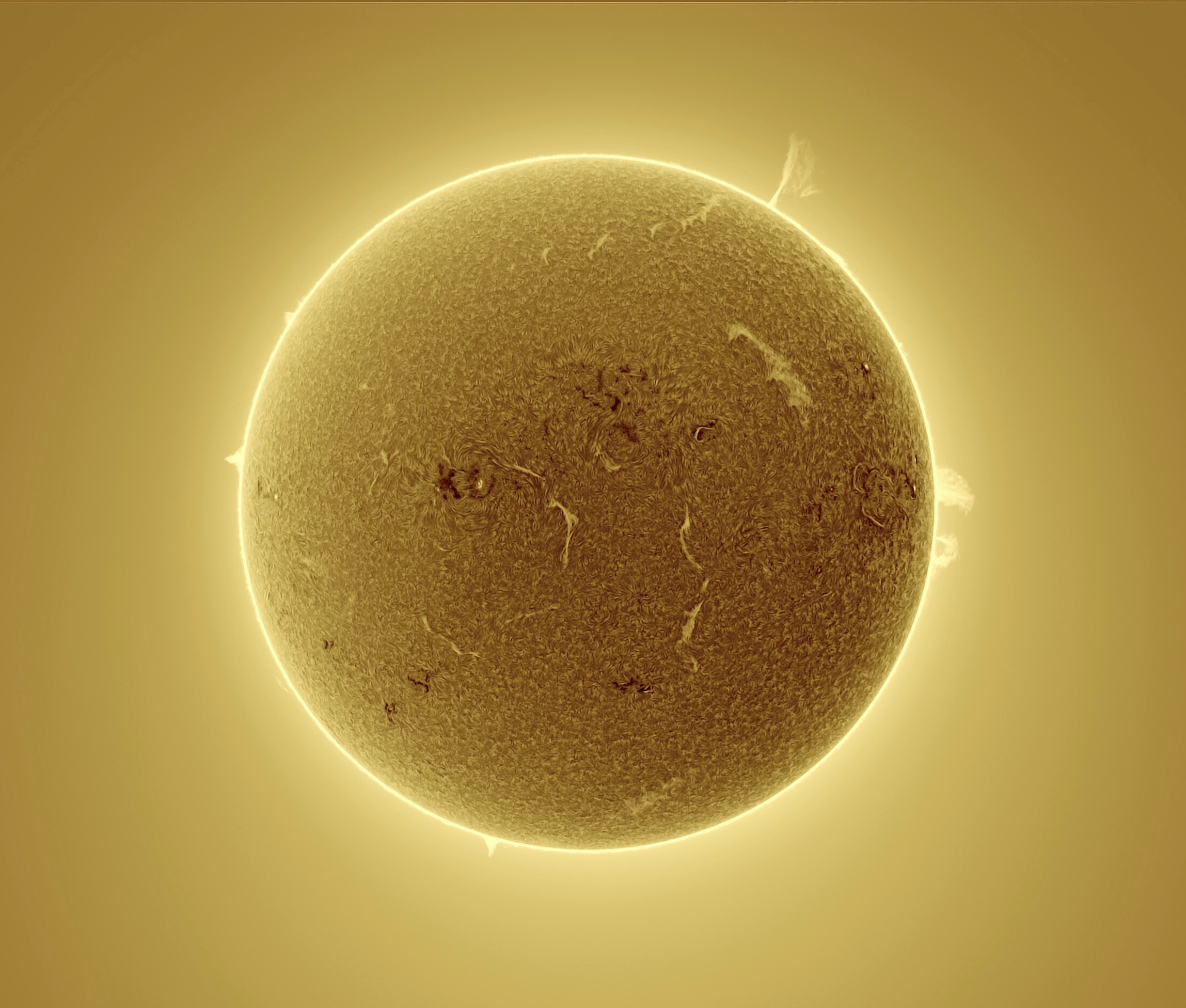
This hydrogen-alpha portrait reveals the turbulent nature of our nearest star. Captured from Alaska in late June, the image filters out the overwhelming brilliance of the photosphere to expose the swirling, textured chromosphere. Several prominences can be seen looping off the surface — including a massive feature in the top right estimated to be 93,200 miles (150,000 km) high.
(Equipment: Lunt 50mm solar telescope, ZWO ASI178MM, Sky-Watcher Solar Quest mount; Date: June 28, 2025)
Blood at the Colosseum
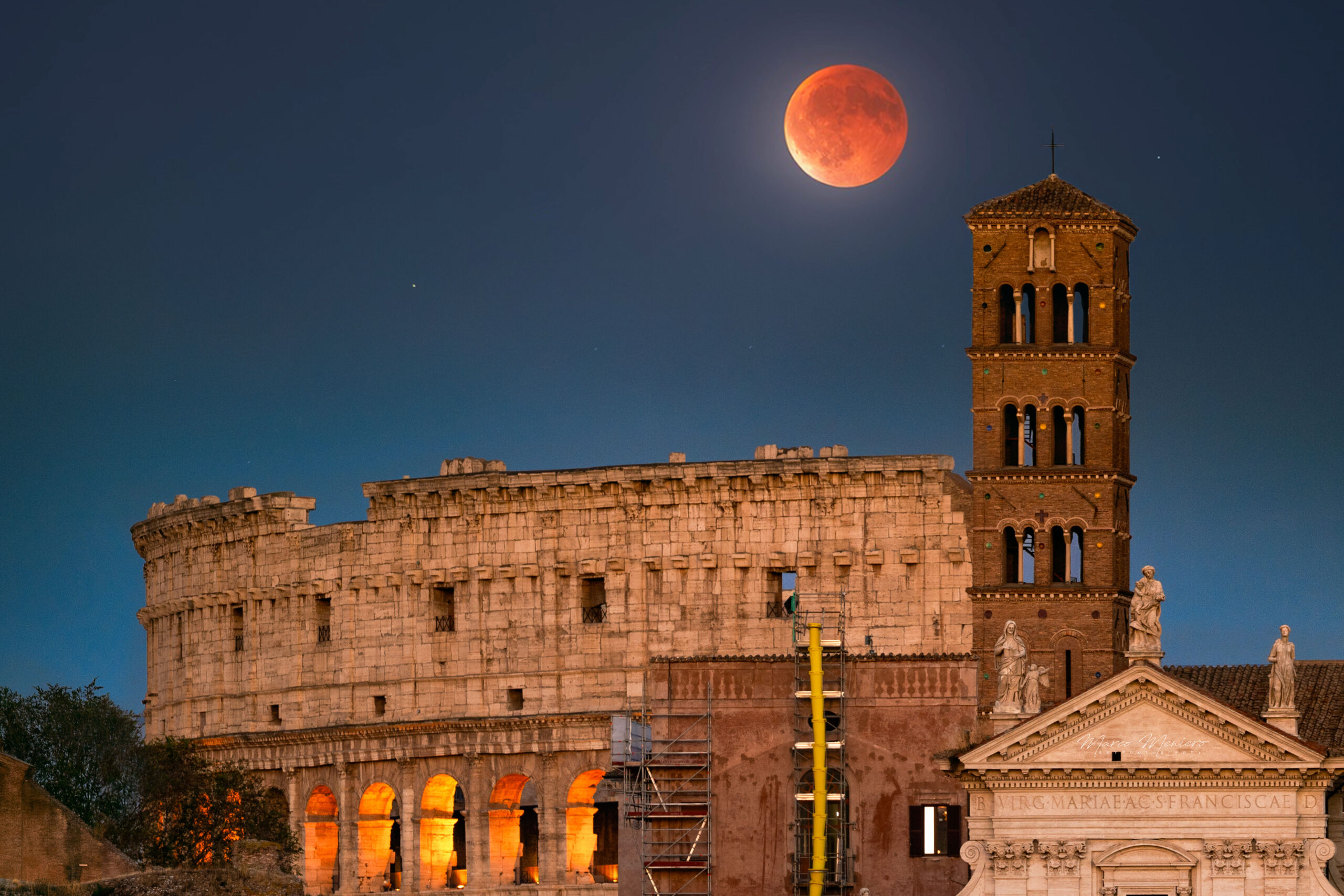
This unique composition pairs ancient history with the “Blood Moon” of September 7, a total lunar eclipse visible to most of the world outside the Americas. Marco Meniero created this digital double exposure by capturing the illuminated Colosseum from a nearby vantage point, then compositing it with an image of the reddened Moon taken later in the night. Look closely to the left of the eclipse to spot the bright pinpoint of Saturn joining the scene.
(Equipment: Nikon Z9, Nikon Z 70-200mm f/2.8 lens; Exposure: Composite of 0.4-second exposure for foreground and 0.8-second exposure for sky)