Although we may be loath to admit it, there sometimes appears to be a little magic in science.
By magic, I refer to an overwhelming sense of wonder that accompanies surprising outcomes. Events over time — perhaps billions of years — can be folded together to produce a fascinating story.
This is one of those stories. It begins in the early solar system, when violent impacts shaped a small world — and ends with those same forces leaving their mark on Earth, in ways that would astonish both modern-day scientists and the Indigenous peoples who witnessed stones falling from the sky.
The planetary protagonist
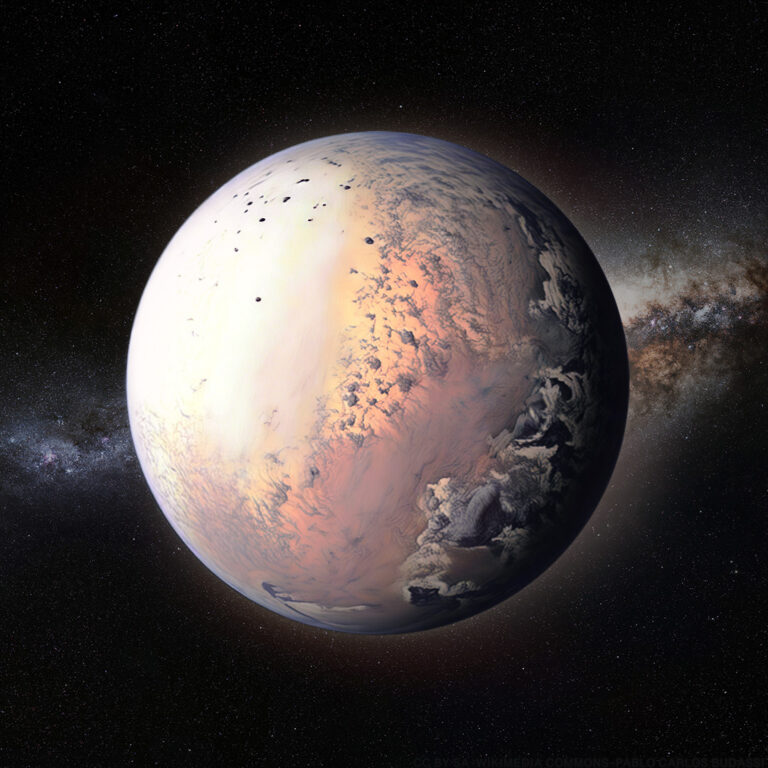
The story starts nearly 4.6 billion years ago in a molecular cloud, when a cold, dense core collapsed into a spinning disk. As hydrogen and helium were captured by a protostar, soon to be our Sun, the disk’s dust coagulated into protoplanetary nuggets, the first geologic products of our solar system. Swirling about the Sun, they quickly grew into small planets.
Among them was a planetesimal with a diameter of about 300 miles (500 kilometers), nearly the size of the state of Arizona. This planetesimal was a mixture of rock and iron-rich metal and sulfide — the same materials found in the most primitive meteorites that fall to Earth today, in proportions that generally match those found in the Sun.
But this young world was still malleable. Radioactive elements left over from exploding stars heated the planetesimal from within, making it easier to melt during violent collisions — some of which hit with such devastating force that rock, metal, and sulfide were spewed into space, never to return.
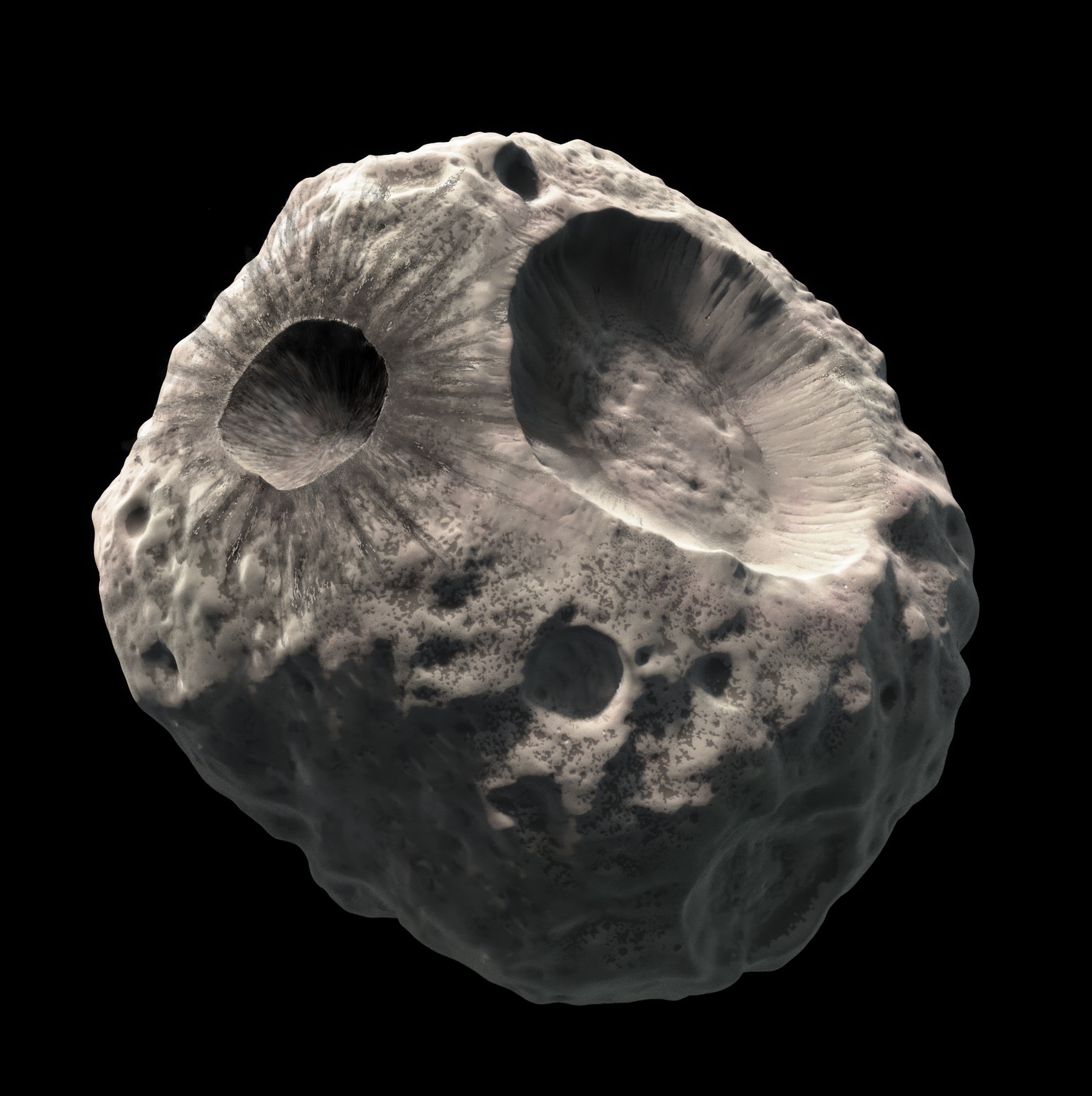
The consequences of those collisions were imprinted on our protagonist. Its surface was pock-marked with impact craters and repeatedly fractured, producing overlapping debris fields of planetary rubble and deeper subterranean volumes of fragmented rock. Meteoritic relics of that rock have fallen to Earth and, when measured with radiometric dating, indicate two particularly large impacts occurred 3.5 million and 5 million years after the solar system formed. The earlier impact event was so powerful that it excavated a crater spanning one-third to one-half of the planetesimal’s diameter.
The energy of that collision generated immense pressures that metamorphosed and melted large swaths of the planetesimal, generating a pool of molten rock and metal tens of miles in diameter. That crater lake was blanketed by a layer of rock, some of which broke away from crater walls, and some of which fell back to the asteroid from the cloud of ejected debris. This silicate-rich rock layer insulated the heated material and allowed the molten lake to cool slowly.
As it did, metal and sulfide, being denser than the bulk magma, began to sink. A molten metal mass accumulated on the floor of the crater. That dense, off-centered slug of metal torqued the planetesimal’s spin, causing it to gyrate in space. It was also insulated by 20 to 40 miles (30 to 60 km) of overlying material, so the metal cooled only around 20 to 40 degrees Fahrenheit (10 to 20 degrees Celsius) per million years, taking 50 million to 100 million years to fully crystallize.
At those slow cooling rates, the metallic crystals had time to grow large, up to 20 inches (50 centimeters) initially, and, upon further cooling, to millimeter to centimeter dimensions visible to the naked eye. This process produced the famous Widmanstätten texture now seen in some coarse-grained iron meteorites — geological specimens that are far older than any rock generated on Earth. They are ancient messengers of the earliest geologic processes that shaped our solar system.
A meteoric origin story
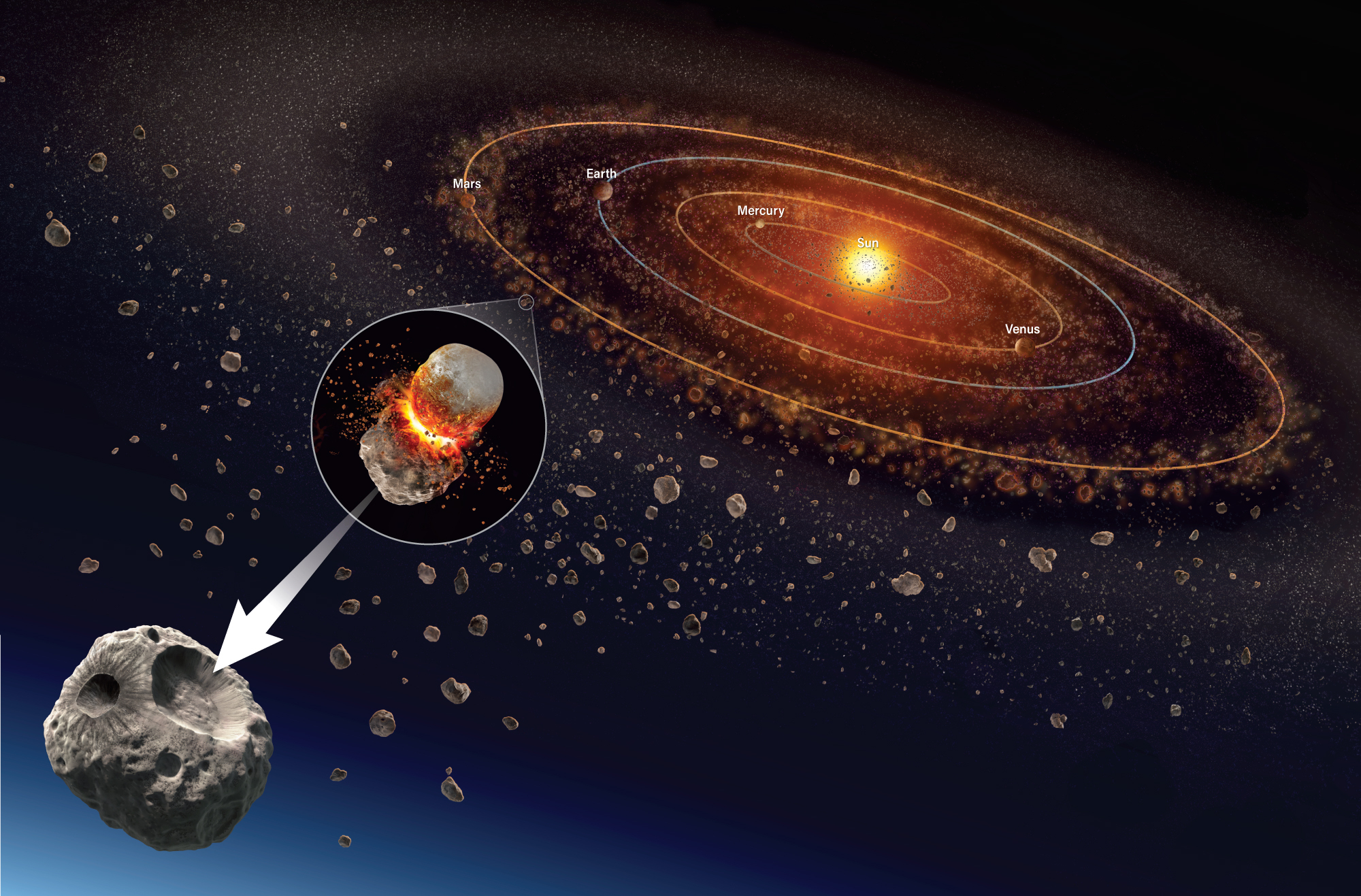
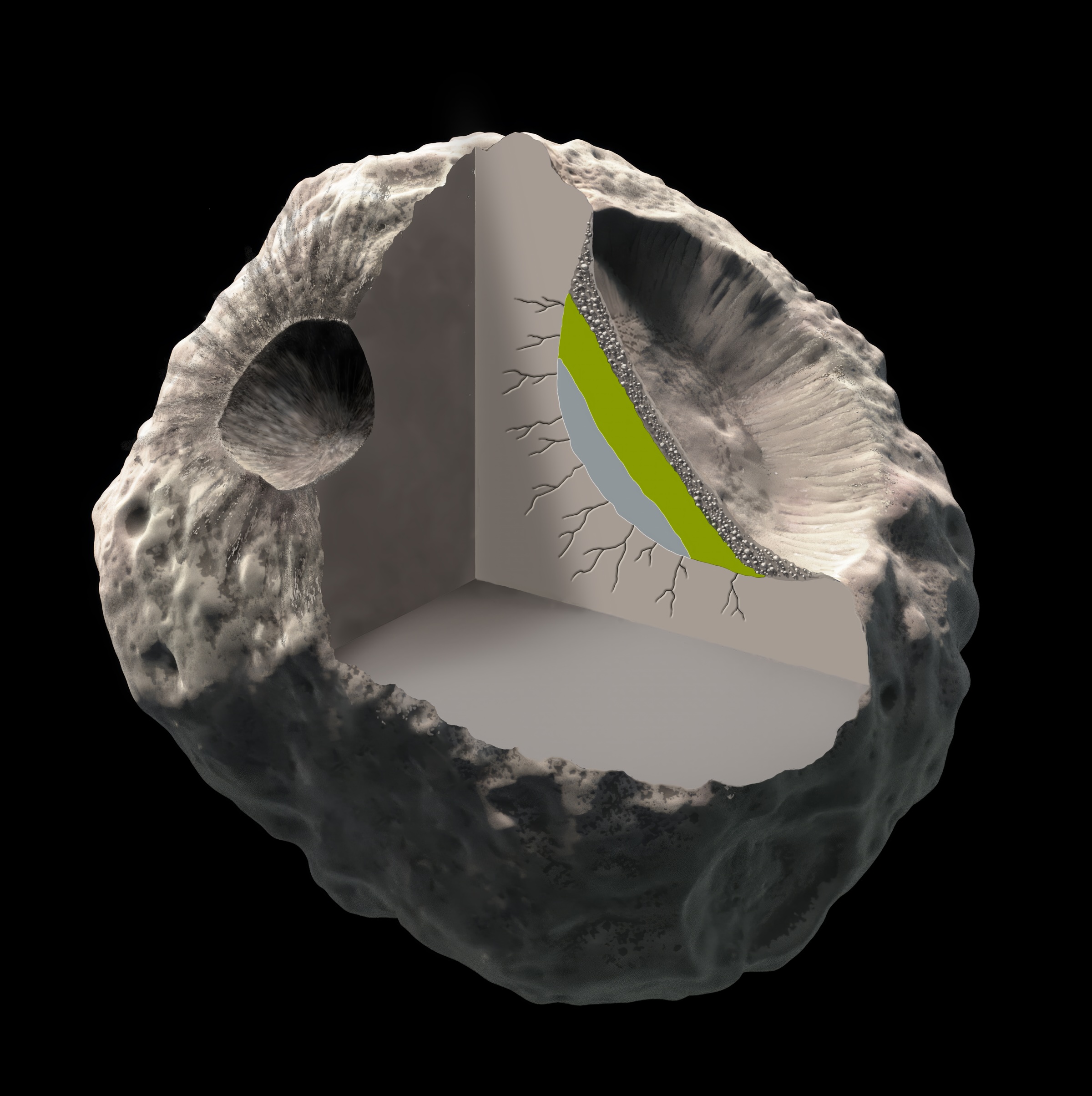
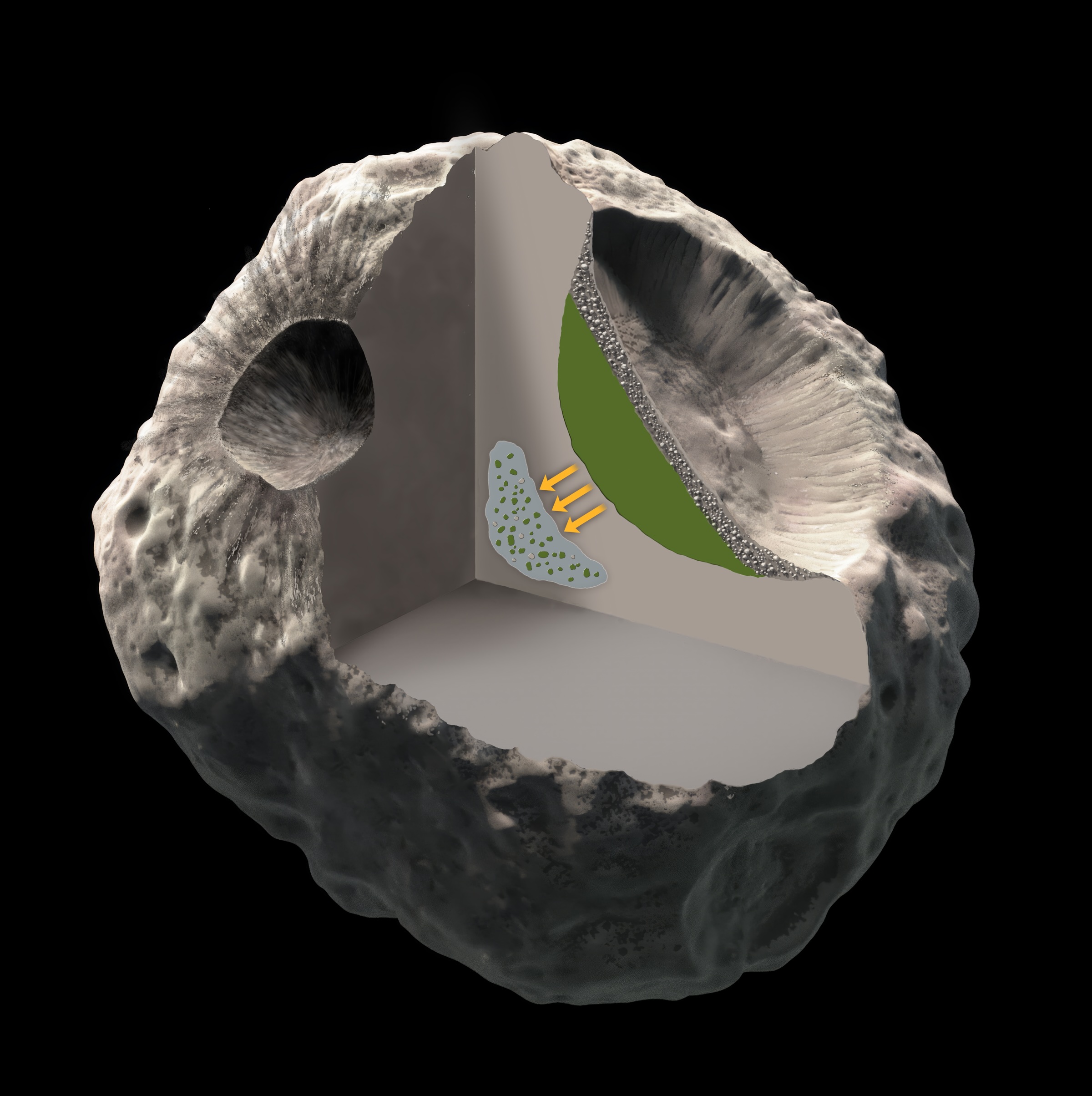
Inner solar system 4.6 billion years ago
Scientists have been able to trace the history of the planetesimal that birthed both the Canyon Diablo meteorite and the Winona meteorite.
In the first few million years after the solar system formed, the planetesimal suffered numerous collisions, becoming heavily cratered.
These impacts reshaped the planetesimal — at times, melting and metamorphosing the rock, which pooled in different layers. Scientists can now study these different rocks recovered in meteorites.
This crater cross-section depicts metal and sulfide as blue, pyroxene and olivine as green, and a gray blanketing layer of breccia rocks fallen back to the asteroid post-impact and from collapsed crater walls.
It’s possible that the metal and sulfide sank even deeper into the planetesimal, as depicted here.
A divided world
While the floor of the crater produced spectacular silver-colored specimens of metal, the overlying silicate-rich portion of the molten lake, far larger in volume, solidified separately. As it crystallized, the most abundant minerals to precipitate were pyroxene and olivine. Intermingled with the pyroxene and olivine were plagioclase feldspar crystals, remnant metal and sulfide that did not fully separate, and a suite of other minor minerals. It is a colorful mixture. When viewed through a petrographic microscope — a type of microscope that uses polarized light — the rock generates a stained-glass view of that 4.5-billion-year-old world. Such meteorites, now referred to as winonaites, are among the oldest planetary samples known.
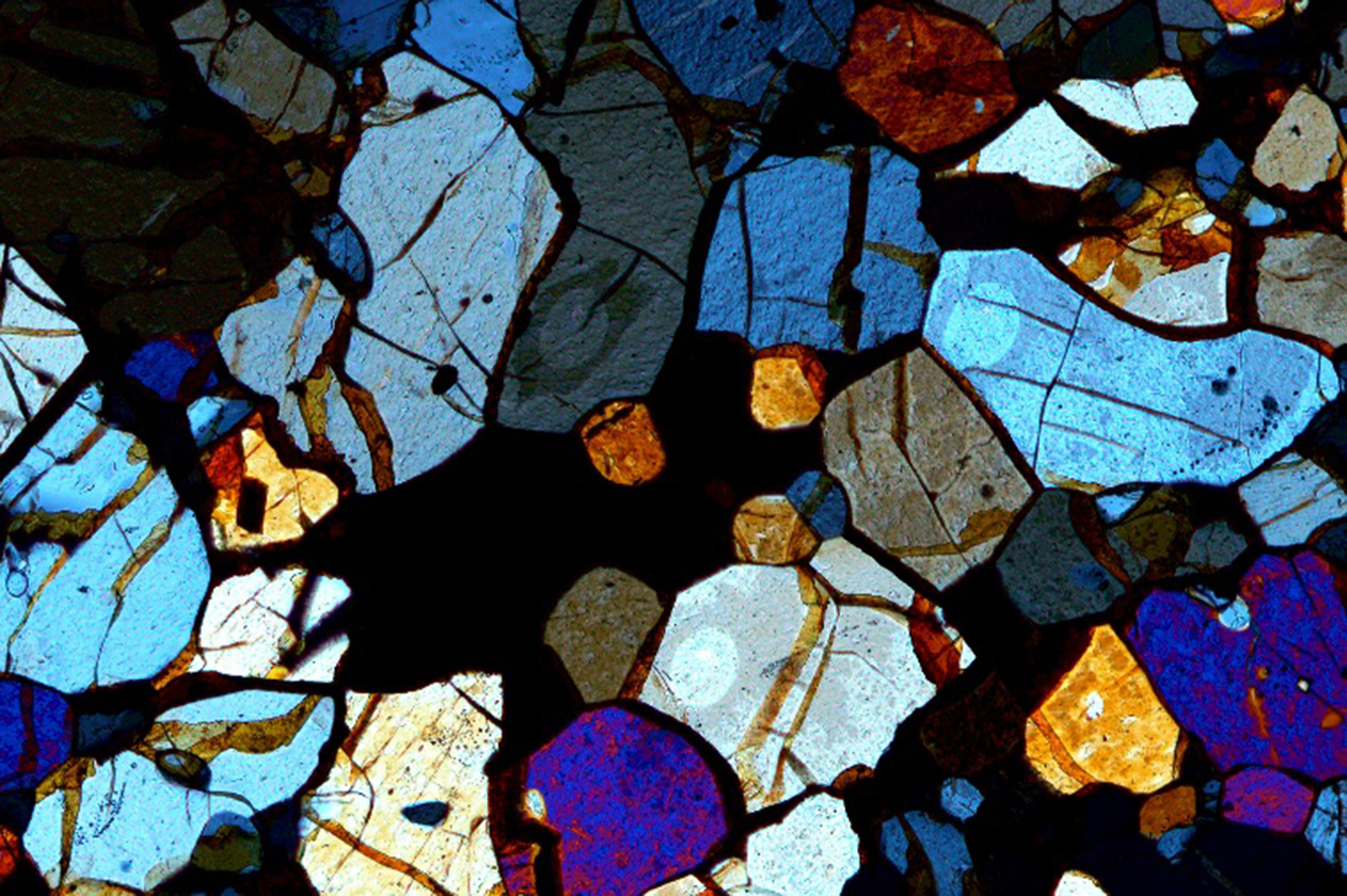
Thus, the collision that reshaped the planetesimal produced two distinct layers: a beautiful, crystalline layer of rock overlying a denser layer of metal alloy. As the metal sank to the crater floor, it captured some of the rock material, producing jewel-like inclusions. These embedded rocks, which resemble winonaites, can still be found in some iron meteorites that are now classified as IAB meteorites based on their chemical composition. The inclusions are physical evidence of the common origin of these two types of meteorites.
The planetesimal was pummeled repeatedly over the next 200 million years, fracturing the crust further, mixing it with other rock, and recrystallizing portions of it, producing an increasingly complex set of textures found in some meteorites. The planetesimal may have been disrupted and reassembled during this interval of time. But that would have been only a precursor to an event that occurred approximately 4 billion years later.
Studies of winonaites, IAB iron meteorites, and many other types of meteorites suggest collisions became far less frequent after the first billion years of solar system history, so it is not surprising that the solidified metal-rich material in the planetesimal lay buried kilometers beneath the surface for nearly 4 billion years. A collision with another planetesimal, however, finally jettisoned debris, including the slug of metal, exposing it to cosmic radiation roughly 500 million years ago. The liberating collision was incredibly violent — and potentially disrupted a large, roughly 200-mile-wide (300 km) body about 470 million years ago, producing meteorites belonging to a common class that scientists now call L-chondrites. That disruption event is so consequential in solar system history that most shock-metamorphosed and partially-melted L-chondritic meteorites were produced at that time.
When the two planetesimals collided, shock waves rippled through both bodies. Rock was crushed and compressed, with molten material shooting through fractures before both worlds were shattered. Fragments of all sizes flowed away from the collision, cartwheeling silently into space and littering the ecliptic plane with flotsam of rock and metal.
Two stars fall in canyon country
Some of that debris began to orbit the Sun on trajectories that crossed paths with Earth quickly, depositing L-chondritic meteorites and a winonaite that were later found in ocean sediments. More importantly, the Earth was showered with asteroids, producing prodigious amounts of impact craters. Although it is often difficult to link a crater to a specific type of asteroid, two craters from this period contain a weak chemical signature of L-chondrites and another crater contains the signature of an iron asteroid. Those and other asteroids collided with a prehistoric, Ordovician world flourishing with life, slamming onto land covered with moss and liverworts and splashing down in seas flourishing with animals: filter-feeding graptolites and brachiopods, scavenging and predatory animals called trilobites, and early vertebrates called conodonts.
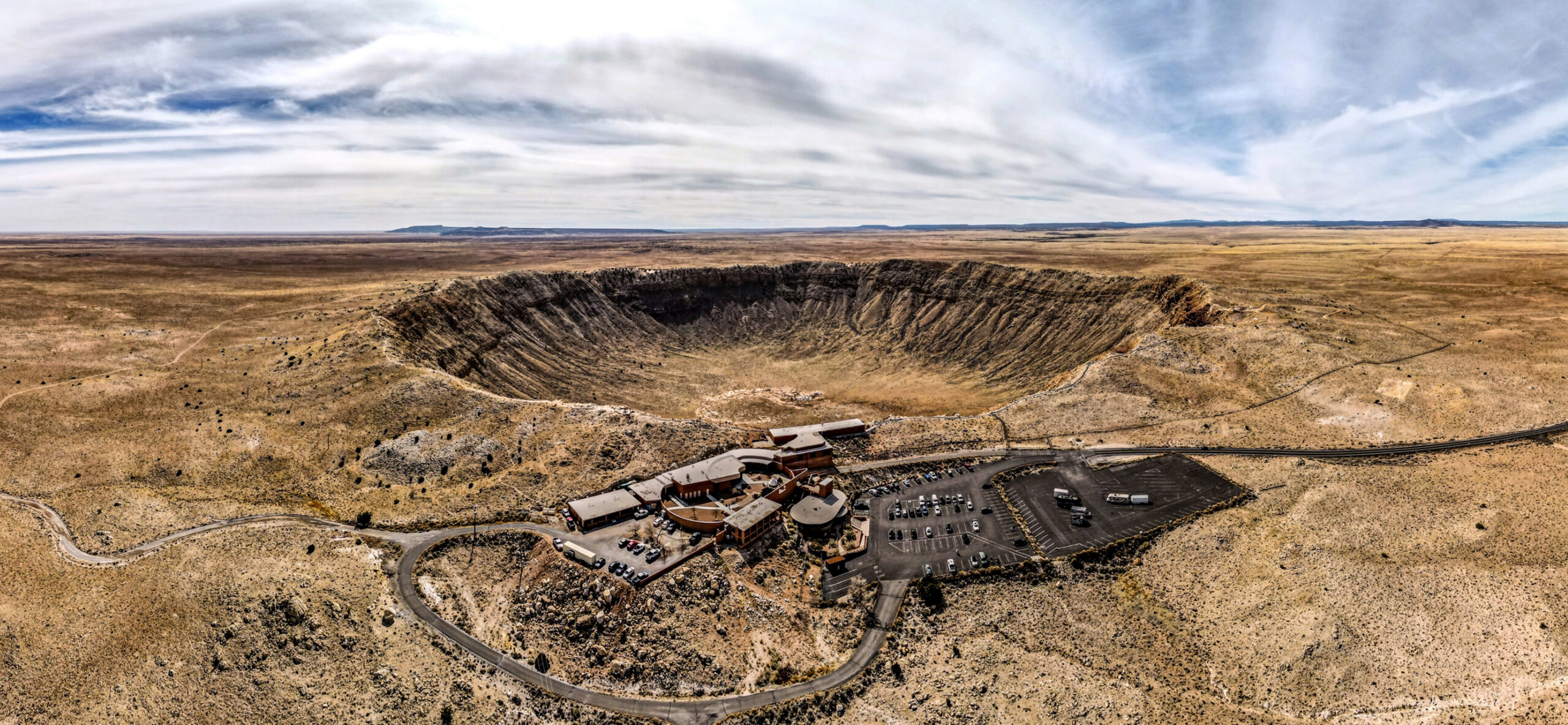
But our block of metal took a longer route to Earth, remaining firmly ensconced within the asteroid belt for a half-billion years before it crashed to the surface 50,000 to 60,000 years ago. The region where it fell was not inhabited by humans at that time, but Ice Age mammals, like mammoths and mastodons, may have seen the asteroid streaking over the Grand Canyon. Imagine a scene at dawn, when a sun-bright bolide with a trailing plume of smoke made a blistering dive for the surface of northern Arizona. The iron mass hit with a multimegaton blast that reshaped the ecosystem for miles in all directions. A shock wave raced over a sage and woodland steppe, followed by a supersonic air blast, while the impact explosion excavated 175 million metric tons of rock, carving Meteor Crater from the Colorado Plateau.
The first of this story’s two stars had struck. Iron-rich material, produced by an impact cratering event more than 4.5 billion years ago, had found its way to Earth and, in a cosmic recycling process, produced another impact crater.
Other debris from the collisional evolution of the planetesimal still lurked in space. In particular, one fragment of the silicate-rich material that pooled and crystallized above the metal continued to zip around the Sun. That fragment eventually collided with another asteroid about 50 million years ago, exposing once-buried material to cosmic radiation.
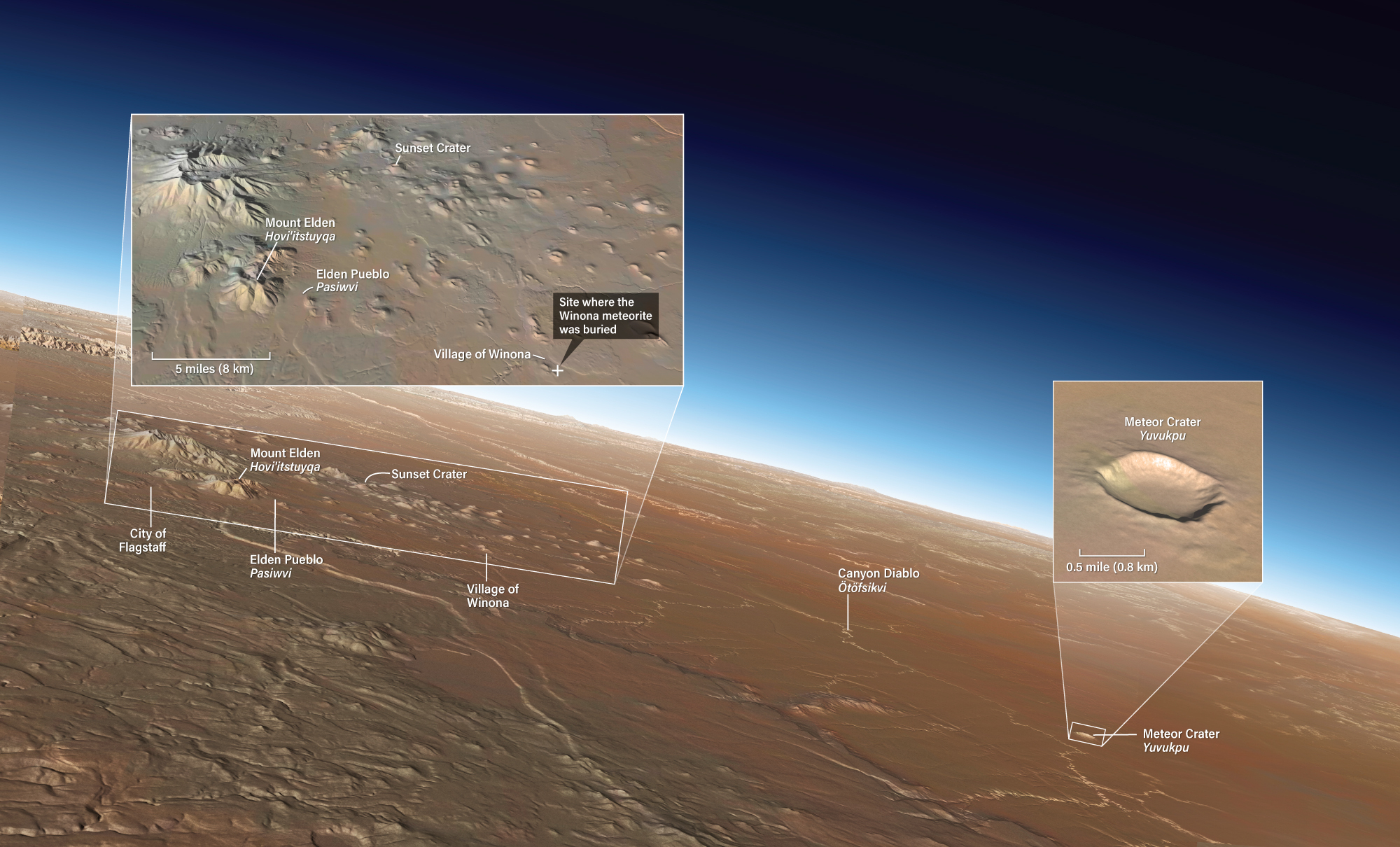
The exposed material continued to orbit the Sun until it collided with the Earth about 900 years ago near what is now Winona, Arizona — producing the Winona meteorite, only 25 miles (40 km) from Meteor Crater. Improbable as it would seem, two fragments of an impact crater on a nearly 4.6-billion-year-old planetesimal, liberated from that planetesimal by one or more other impact events, orbited the Sun a billion times before colliding with our planet and landing within sight of each other.
A second star had struck. And this falling star was observed by ancestors of the modern-day Hopi people.
Ancient stargazers
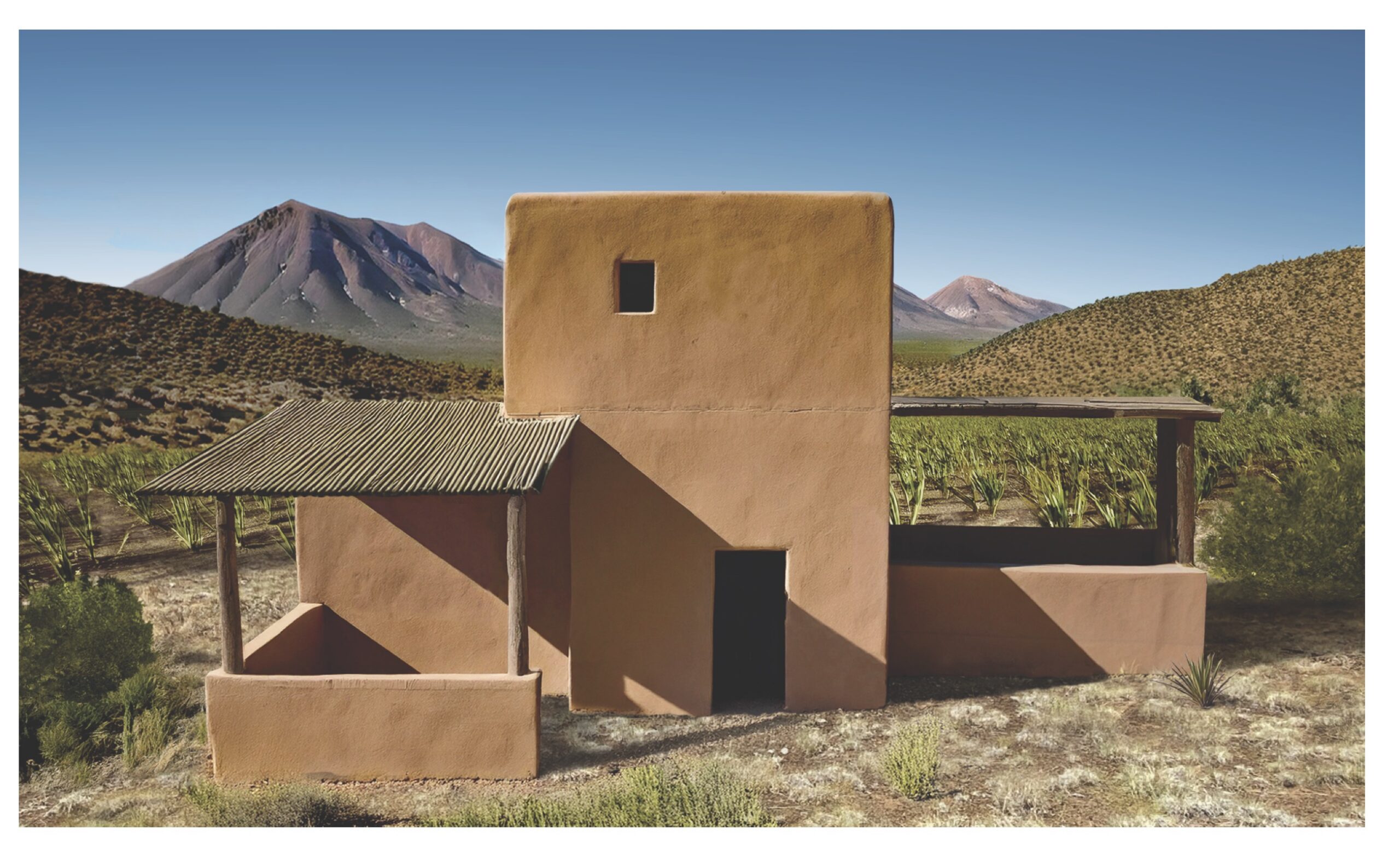
The Hopi today occupy three mesas east of where the Winona meteorite was found and northeast of Meteor Crater. Hopi ancestors left footprints throughout the region in the form of archaeological materials, including petroglyphs, pit houses, pueblos, ceramics, and tools. Among those materials is the Winona meteorite, which was buried in a basaltic stone cist — a stone-lined enclosure — near a vacated pueblo.
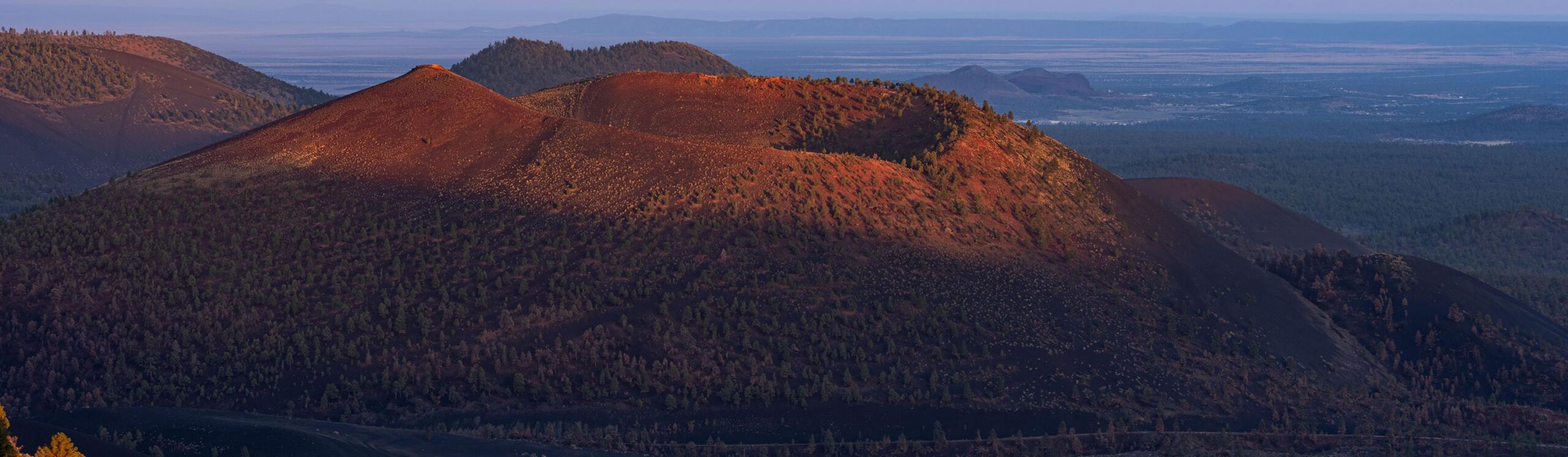
The site sits among volcanic cinder cones several hundred feet tall and is surrounded with ash-rich soils. At nearly the same time as the Winona meteorite fell, the Sunset volcanic crater erupted around 10 miles (16 km) away, forcing migrations to places like Winona where the land was suitable for growing corn, squash, and beans.
Pueblo ancestors were stargazers, building the results of their observations into their architecture and recording features in petroglyphs. The Milky Way, which the Hopi call Soongwupa, is particularly prominent. Hopi artist Gerald Dawavendewa wrote in his 2021 book Codex Taawa: Exploring the Cosmos of the Hopi that Soongwupa “holds prayer feathers, promises of life with blessings.”
We do not know if the Winona meteorite fell during daylight or at night. But we can infer that Hopi ancestors observed the fall, because they collected and preserved the meteorite.
What might have been the circumstances of that fall? Perhaps two youths tending a cornfield, guarding against threatening pests or repairing windbreaks, were startled by a series of detonations like thunder and confused because the sky was cloudless. As they scanned the sky for an explanation, perhaps they spotted a swirling trail of gray “smoke” before a whistling rock passed by their heads, crashing into their cornfield.
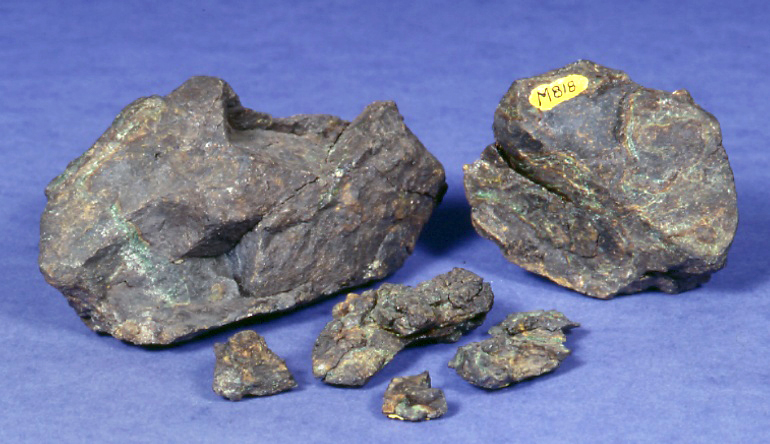
Or maybe a family, sitting outside their pueblo soon after dusk, was startled to see a particularly bright meteor in the sky and heard thunderous noises before the light blinked out. The next morning, on their way to a nearby streambed, they connected those events to the large stone with a glistening black surface lying in their path.
Regardless of the circumstances, the ancestral Hopi collected the specimen and took actions to preserve the sample, burying it in a cist, where it lay preserved for the next 900 years. We do not know — and cannot presume — their reasons.
But we do know that ancestral Hopi also visited the site where the first star fell in this story — Meteor Crater, or Yuvukpu. As Dawavendewa wrote, “even Hoopoq’yaqam [ancient people] did not know how it came to be,” because the formation of Meteor Crater occurred before their arrival. Many years later, however, they built structures on the rim of the crater and surrounding plain.
When the asteroid smashed into the ground, most of it was obliterated upon impact. But spalled-off fragments of unshocked material were strewn about the surrounding plain, and shock-metamorphosed fragments of the asteroid, including some with diamond, were distributed along the crater rim.
Hopi ancestors treated these fragments similarly to the Winona meteorite. “They found parts of the star, which were different from all other stones,” wrote Dawavendewa. “The sacred stars were taken to a rock-lined cist and placed into the Earth wrapped in a turkey-feather blanket.”
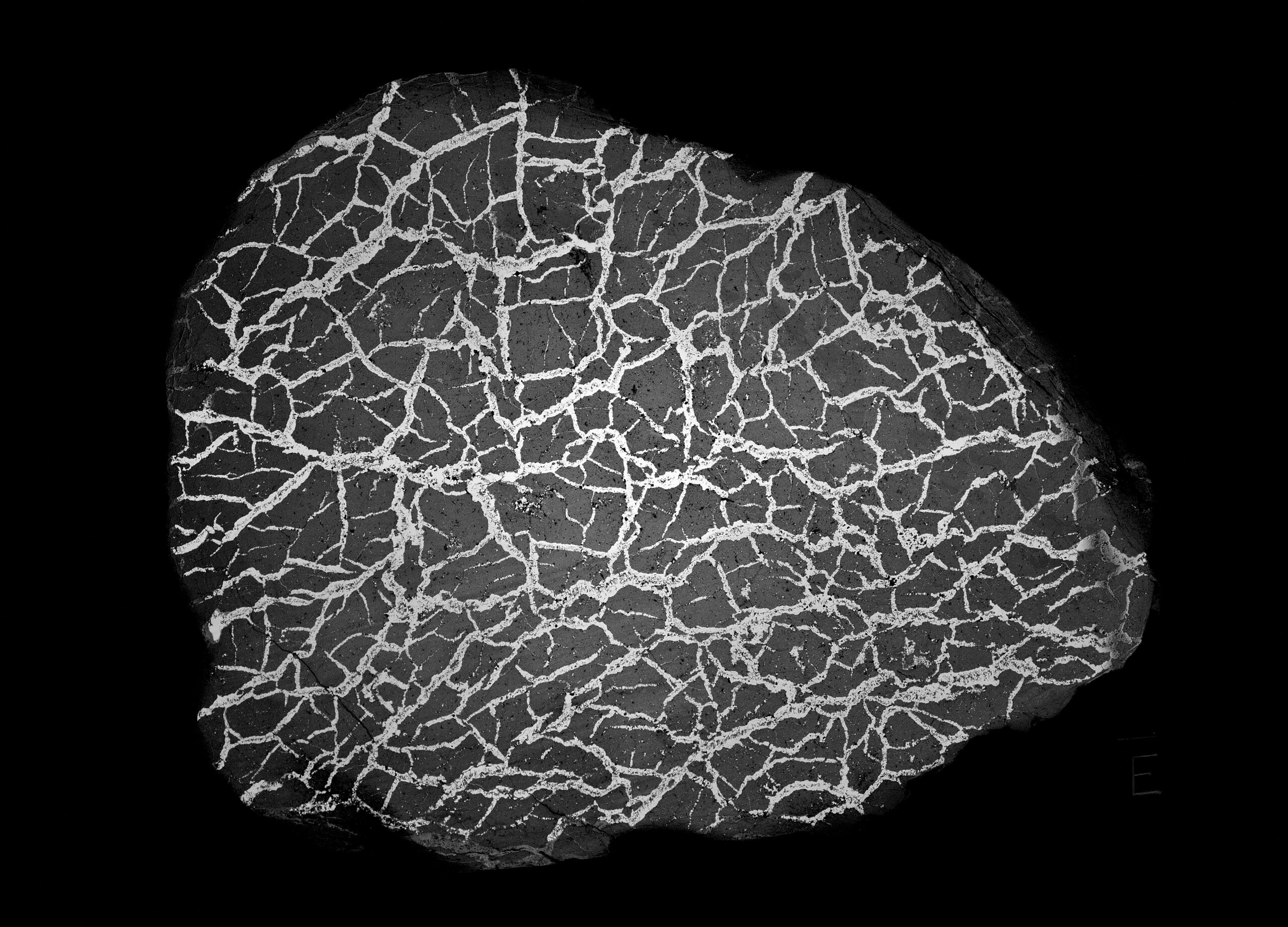
One Meteor Crater meteorite was found in a vacated pueblo a few miles from northern Arizona’s Camp Verde. Ancestral Hopi also collected a piece of graphite from Meteor Crater that was shot through with spectacular veins of silver-colored metal, like lightning in a night sky. That specimen was buried in Elden Pueblo (Pasiwvi) at the base of the San Francisco Peaks (Nuvatukya’ovi), where Flagstaff is located today.
The story of two stars
That is how material from a primordial planetesimal, melted and segregated in an impact crater within a few million years of solar system formation, separated further in collisions that shaped the asteroid belt, and, lost from each other for perhaps a half-billion years, crossed paths with Earth — one of them 50,000 to 60,000 years ago, and the other within the past millennium. The two stars together, having fallen in nearly the same place, provided an opportunity to reassemble the original planetesimal. That is a magical sequence of events.
Importantly, that magic was brought to light by those who respected and cared for material that fell from space. Whether it was 900 years ago or during the last century, meteoritic samples were curated by ancestors so that oral, illustrated, and written stories of bygone ages could be told, enriching our understanding of the cosmos. If we were to make a wish on those two falling stars, it would be that this type of magic happens more often.
David A. Kring studies meteorites and impact cratering processes. He is perhaps best known for his role in the discovery of the dinosaur-killing Chicxulub impact crater and his planetary training programs at Meteor Crater.