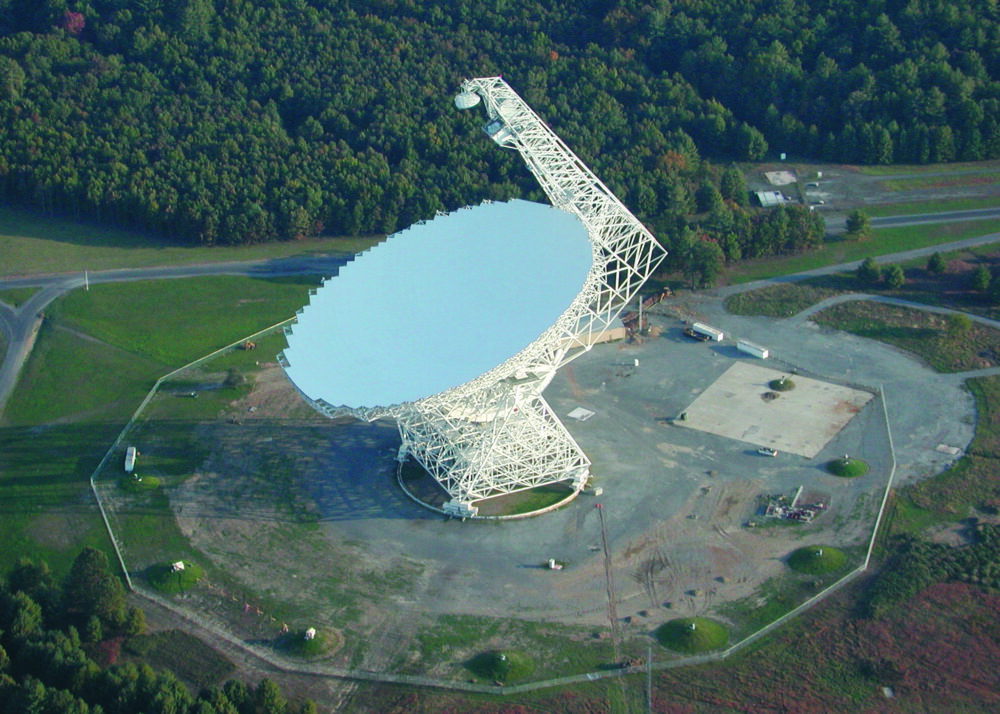
On Sept. 19, 1959, the paper “Searching for Interstellar Communications” was published. Printed in the respected scientific journal Nature and written by Cornell University physicists Giuseppe Cocconi and Philip Morrison, the work established a scientific framework and legitimacy for a field that previously lacked credibility. Cocconi and Morrison examined methodologies for humans’ search for extraterrestrial intelligence (SETI) – among other ideas, using radio waves for communication, positing the frequency at which aliens might transmit messages, and discussing the patterns that would be used to mark a signal from another civilization. Many of these concepts would become standards of the SETI field. The publication prompted Frank Drake – famous for Drake’s Equation, estimating the mathematical likelihood of intelligent life existing in the galaxy – to organize the first SETI conference in Green Bank in 1961. Cocconi and Morrison’s paper famously concluded of seeking out alien life: “The probability of success is difficult to estimate; but if we never search, the chance of success is zero.”