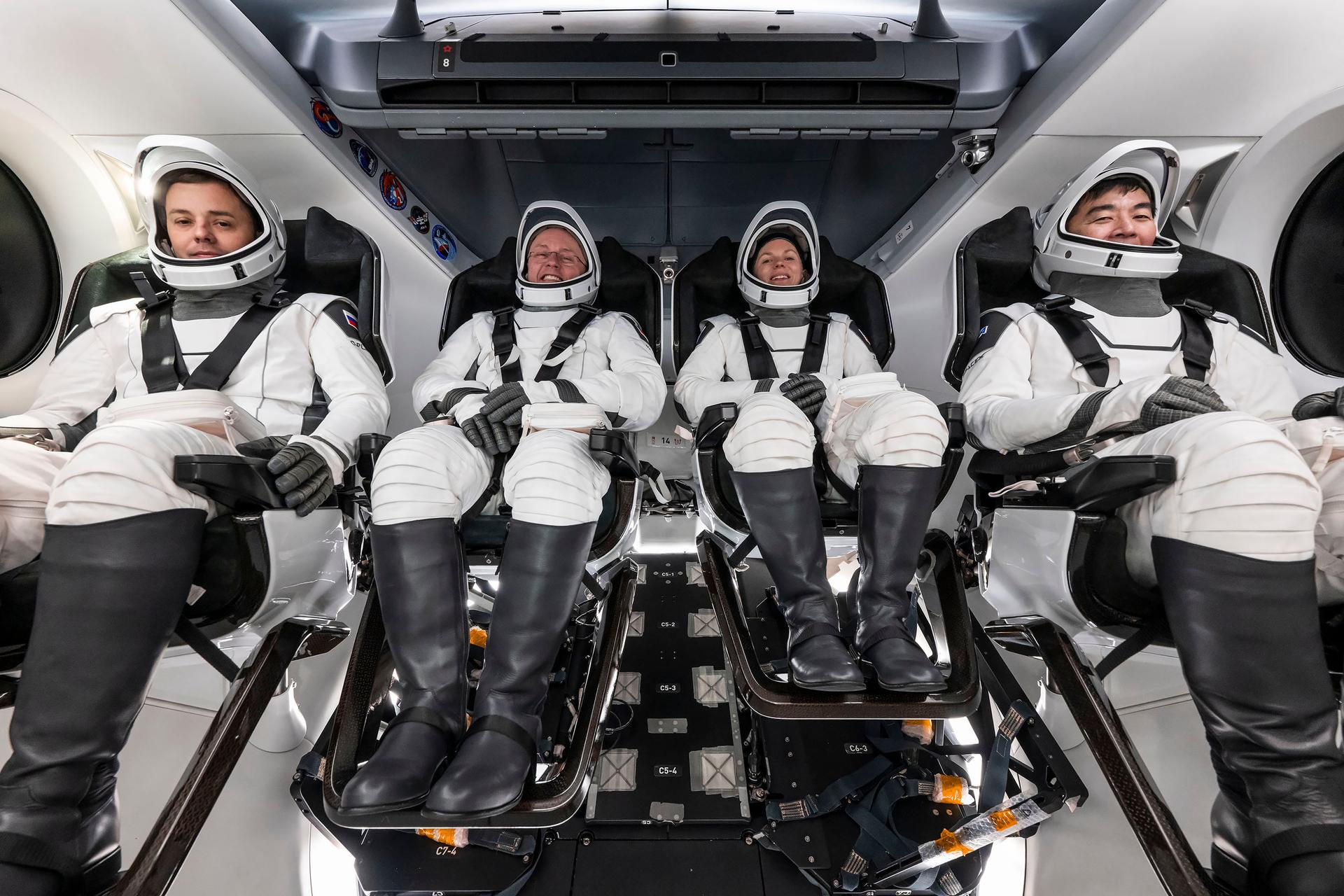
On Thursday, Jan. 8, NASA held a press conference to announce the early return of Crew-11 from the International Space Station (ISS) due to a medical issue with an astronaut onboard. This marks the first time a crew will return early for a medical extraction in the 25-year history of the ISS.
Following that announcement, NASA and SpaceX have now set a potential return date. The agency is targeting no earlier than 5 p.m. EST, Wednesday, Jan. 14, for the undocking of the SpaceX Dragon Endeavour from the orbital laboratory.
The decision came following a medical situation on Jan. 7 involving a single crew member. “The health and the well-being of our astronauts is always and will be our highest priority,” NASA Administrator Jared Isaacman told reporters. He confirmed that while the individual is currently stable, the agency decided it was in the “best interest of our astronauts to return Crew-11 ahead of their planned departure.” Isaacman added that international partners JAXA and Roscosmos were consulted and remain in “lockstep” with the decision.
Crew-11 was scheduled to return to Earth in only a couple of weeks, and according to Isaacman, the crew has already completed the majority of their mission objectives and “contributed to the ongoing operations of the space station” over the last five months.
Chief Health and Medical Officer J.D. Polk stated during the press conference that the astronaut was in stable condition, stressing that the medical issue was not related to the operational environment of the ISS or preparation for a spacewalk. To protect the individual’s privacy, the details and identity of the astronaut were not disclosed, with Polk noting, “As a physician, I’m not going to speak about any particular astronaut or any particular specific diagnosis.”
Polk noted that NASA has dealt with a variety of health issues from diagnosis to treatment on orbit for decades. However, the specific nature of this incident required terrestrial diagnostic tools. Polk explained that the decision to return was driven by the need for a comprehensive medical “workup” that the station isn’t equipped to provide. “We have a very robust suite of medical hardware on board the International Space Station, but we don’t have the complete amount of hardware that I would have in the emergency department, for example, to complete a workup of a patient,” Polk said. He noted that this specific incident was “sufficient enough” that the agency preferred to complete the workup on the ground, where a more comprehensive medical equipment is available.
The crew — consisting of Zena Cardman, Mike Fincke, Kimiya Yui of JAXA, and Oleg Platonov of Roscosmos — is expected to splash down off the coast of California at approximately 3:40 a.m. EST on Thursday, Jan. 15. The tentative return sequence begins Wednesday afternoon with hatch closure at 3:30 p.m., followed by undocking at 5 p.m. On Thursday morning, the Dragon spacecraft will execute a critical deorbit burn at 2:50 a.m. before its final descent to splashdown. Mission managers and NASA officials emphasize that these times remain subject to change, noting that unfavorable conditions in the recovery zone could trigger a delay to a subsequent backup opportunity.
The return creates a temporary operational shift. NASA astronaut Chris Williams, who launched on Nov. 27 alongside cosmonauts Sergey Kud-Sverchkov and Sergey Mikayev as part of the Soyuz MS-28 mission, will remain as the sole American on board until the arrival of the next rotation. Associate Administrator Amit Kshatriya noted that while NASA will temporarily suspend U.S. extravehicular activities until a full crew is restored, Williams is “trained to do every task” required to maintain the station.
According to Isaacman, the agency is evaluating “earlier launch opportunities” for Crew-12, which is currently slated for mid-February. When asked if the shift would delay the Artemis II mission planned for February, Isaacman emphasized that the two are “totally separate campaigns” and that there is no reason to believe the schedules will conflict.