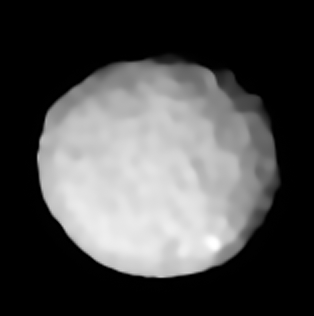
When Heinrich Olbers spotted asteroid Pallas on March 28, 1802, it called into question the recent discovery of Ceres as the “missing” planet between Mars and Jupiter. The Titius-Bode law, a mathematical formula that predicted the expected distances of planets from the Sun and had accurately posited the location of Uranus, suggested there should be a planet between Mars and Jupiter. Giuseppe Piazzi’s discovery of Ceres seemed to solve the mystery, but when Olbers discovered Pallas, he realized both objects were too small to be the missing planet.
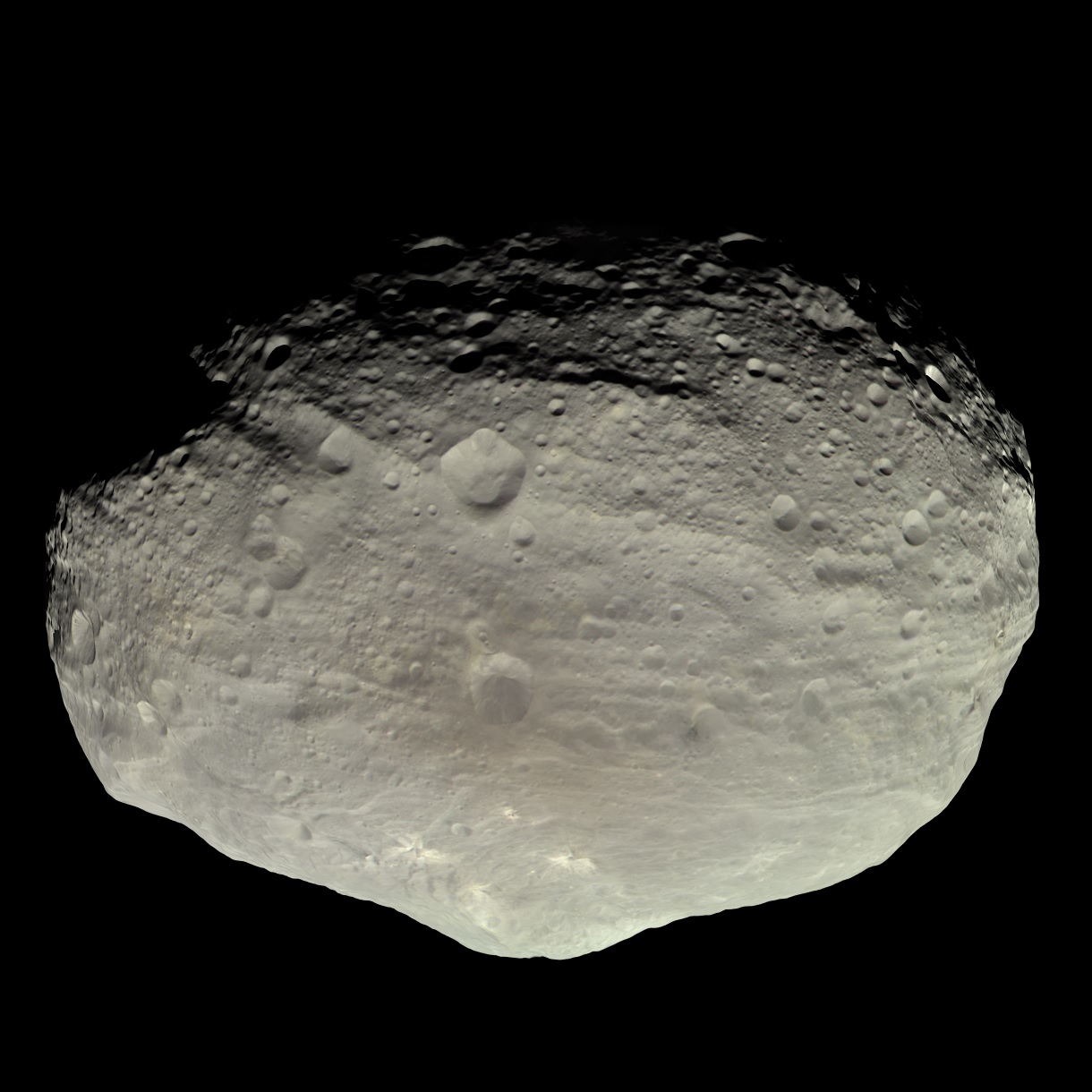
Olbers theorized that the existence of multiple large – but not large enough to be planets – objects in the region where a planet was expected meant that a planet had existed there at one point, but it had been destroyed, perhaps by a comet. Ceres and Pallas were, Olbers proposed, fragments of that destroyed planet. When Karl Harding (like Olbers, a member of the “Celestial Police” searching for the proposed planet between Mars and Jupiter) discovered asteroid Juno in 1804, it seemed to perfectly fit into Olbers’ destroyed-planet framework. He continued searching the region for other pieces, discovering asteroid Vesta on March 29, 1807. Vesta was the third asteroid discovered (following Pallas and Juno), and is the most massive. (Ceres was discovered first and is more massive, but is now considered a dwarf planet.)
By the mid-20th century, astronomers had come to understand that rather than being the remains of a planet that was destroyed, the members of the asteroid belt come from many different sources and could have eventually coalesced into a planet – but were prevented from doing so by disruptions from Jupiter’s gravitational pull.