On March 25, 1655, Dutch astronomer Christiaan Huygens pointed his 50-power refracting telescope toward Saturn. He and his brother had been perfecting telescope-building techniques, including making improvements to reduce chromatic aberration through lens grinding, and experimenting with optical stops to improve clarity. Huygens hoped his self-designed scope would help him study Saturn’s rings; instead, he spotted a large moon in the gas giant’s orbit.
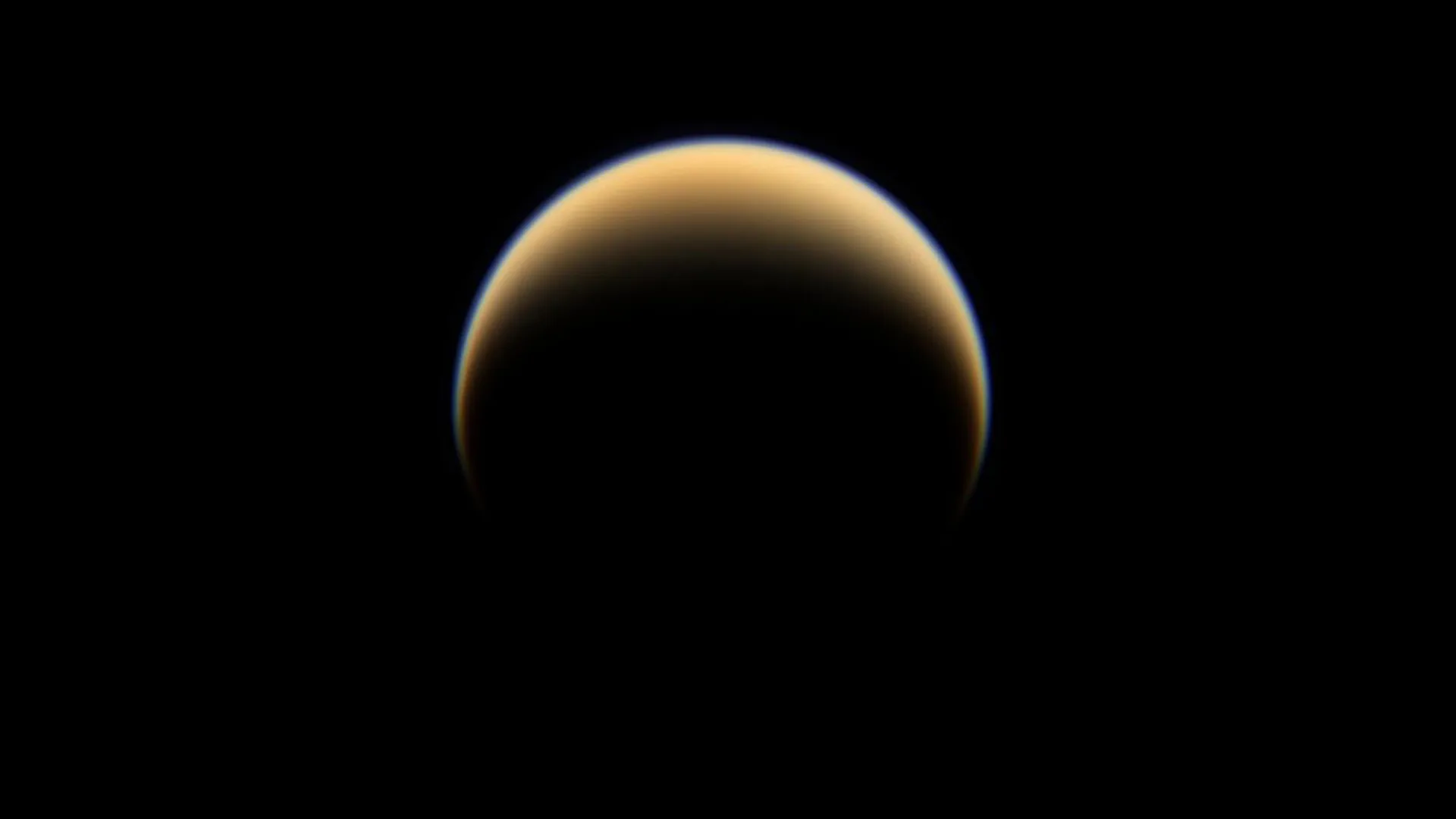
Titan – named by John Herschel in 1847 – is huge, the second largest moon in the solar system (behind only Ganymede) and larger than Mercury. The massive object has an atmosphere, and scientists have observed weather on the cold world.
Titan was the first moon discovered at Saturn and only the sixth discovered in our solar system overall (behind Galileo’s discovery of Io, Europa, Ganymede, and Callisto, and, of course, Earth’s own Moon). Today we know that Saturn has the most moons of any planet in our solar system, with a total of 485 as of March 2026.