Beginning at the dawn of the Space Age in the late 1950s, the Soviets worked to design and construct a series of Venus probes. And for almost 30 years, they built and flew the interplanetary spacecraft as part of the Venera program — carrying out rather impressive feats, even by today’s standards.
Venera 1, the first in the series, weighed in at an impressive 1,400 pounds (635 kilograms) and was packed with instruments, including a magnetometer, Geiger counters, and micrometeorite detectors. However, the first Venera 1 probe never made it out of Earth orbit. And the second attempt, launched Feb. 12, 1961, failed en route to Venus, though it did pass within about 62,000 miles (100,000 kilometers) of the planet. Venera 2, which greatly resembled Venera 1, was built to fly past Venus, during which it would record information and transmit it back to Earth. The probe did complete its flyby on Feb. 27, 1966, coming within about 15,000 miles (24,000 km), but it also overheated and was never heard from again.
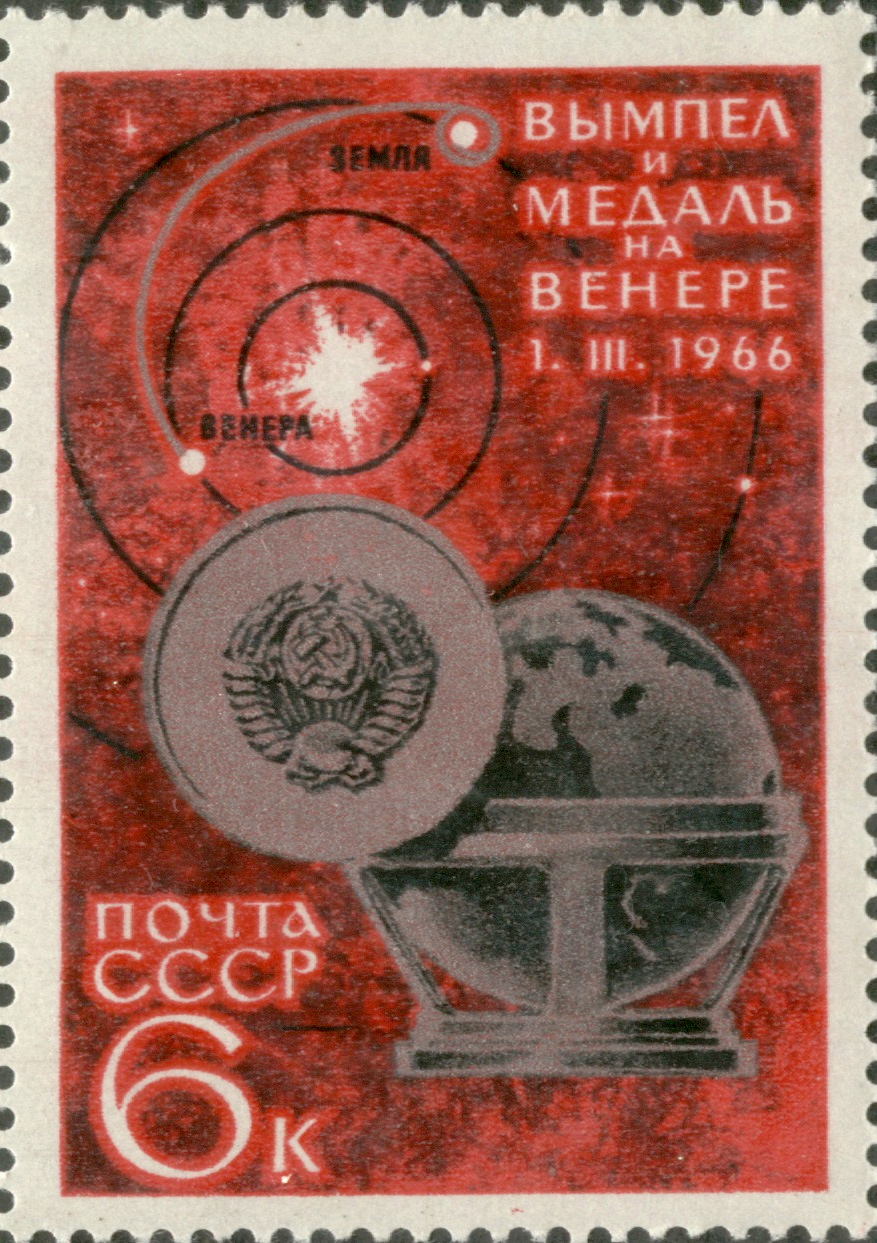
The Soviets designed the next four probes, Venera 3 through 6, to more closely study the atmosphere of our hellish neighbor. Generally weighing about 2,000 pounds (900 kg) each, these probes contained a suite of instruments and a detachable pod (known as a descent module) equipped with a second collection of devices that included a barometer, a radar altimeter, gas analyzers, and thermometers. Venera 3 was planned to land on the venusian surface, but it instead slammed into it on March 1, 1966 — officially making it the first spacecraft to crash into another planet. Venera 4, 5, 6, and other Soviet missions would go on to more success.