Born March 16, 1750, in Hanover, Germany, Caroline Herschel was frequently ill as a child, and seemed destined for a life of domestic service – though her father sometimes included her in her brothers’ lessons. At the age of 22, she moved in with her older brother William in Bath, England, where she acted as his housekeeper, but also received vocal training from him and began a career as a professional singer.
William’s interest in astronomy was growing, and he began tutoring Caroline in mathematics as well. Her role evolved into that of an assistant, as she ground and polished his telescope mirrors, assisted in calculations, and kept records of his observations. On March 13, 1781, the siblings discovered Uranus, and William was appointed King George III’s private astronomer the following year. In 1787, the king granted Caroline her own salary for her work as William’s assistant, making her history’s first paid female astronomer.
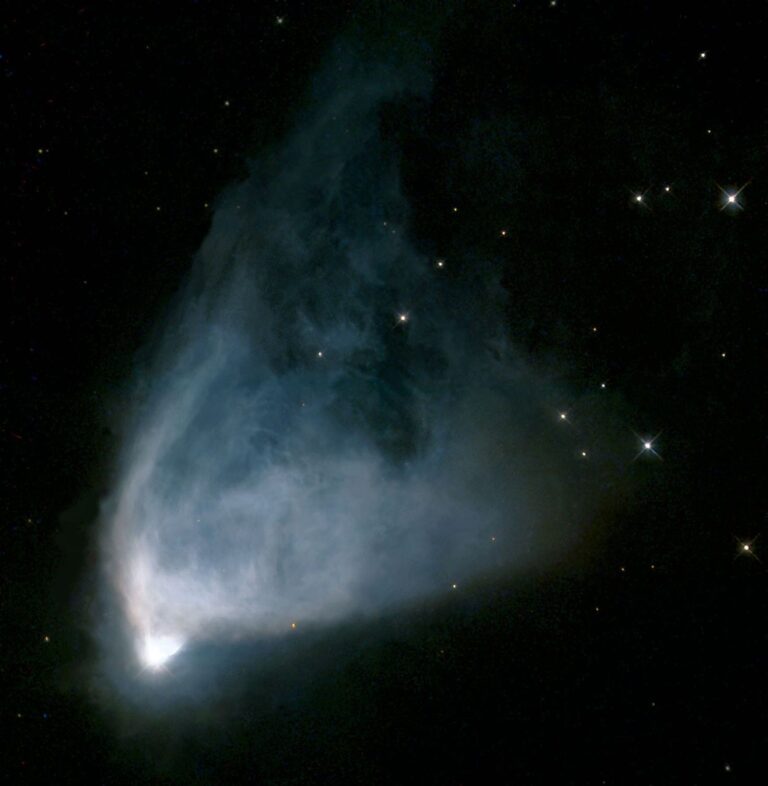
Caroline conducted her own sky surveys, and the volume of objects she discovered is monumental – including, in 1786, becoming the first woman to discover a comet. Together with William, Caroline found thousands of nebulae and star clusters; independently, she was responsible for eight comets, 14 nebulae, and an open star cluster. Caroline also indexed John Flamsteed’s star catalog, adding over 500 new stars to the list along the way.
After William’s death in 1822, Caroline retired to Hanover to live with her younger brother, passing away on Jan. 9, 1848, at the age of 97. Before her death, she wrote her own epitaph: “The eyes of her who is glorified here below turned to the starry heavens.”