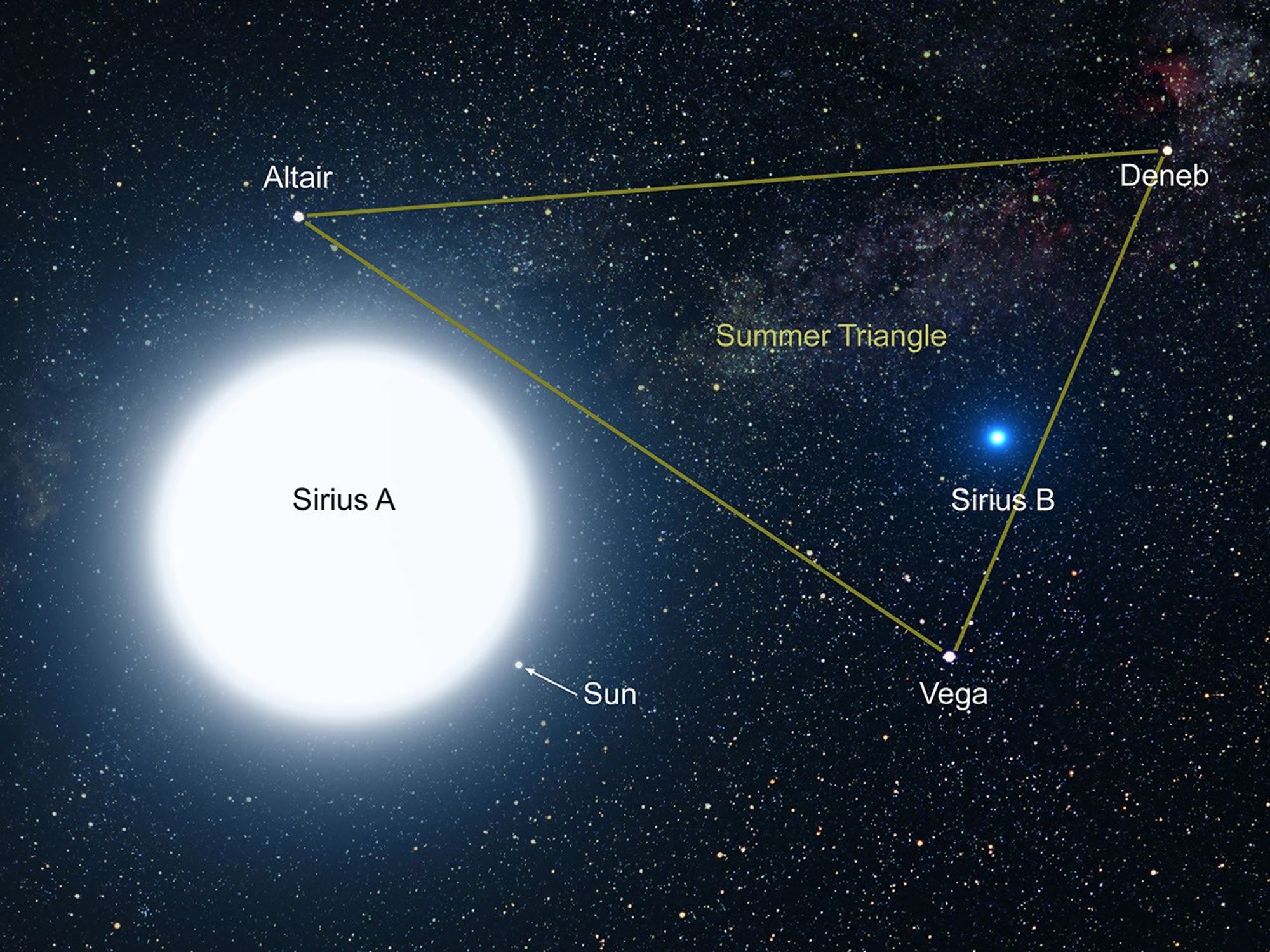
On Jan. 31, 1783, William Herschel was creating a catalog of double stars when he spotted 40 Eridani B. This dim white object was part of a triple-star system, and was the first white dwarf ever spotted. On Jan. 31, 1862, telescope-maker Alvan Graham Clark sighted the second: Sirius B. Its existence had been predicted in 1844 by Friedrich Bessel, who saw a wobble in the motion of Sirius. Eighteen years later, while testing a new 18.5-inch lens by peering at Sirius, Clark confirmed Bessel’s prediction.
White dwarfs are the collapsing cores of stars that have exhausted their fuel. Extremely dense, they pack the mass of the Sun into a space the size of the Earth. Though Herschel and Clark spotted the first- and second-discovered white dwarfs, their nature wasn’t understood until the early 1900s, following work by Henry Norris Russell, Edward Pickering, and Williamina Fleming. The term white dwarf was coined in 1922.