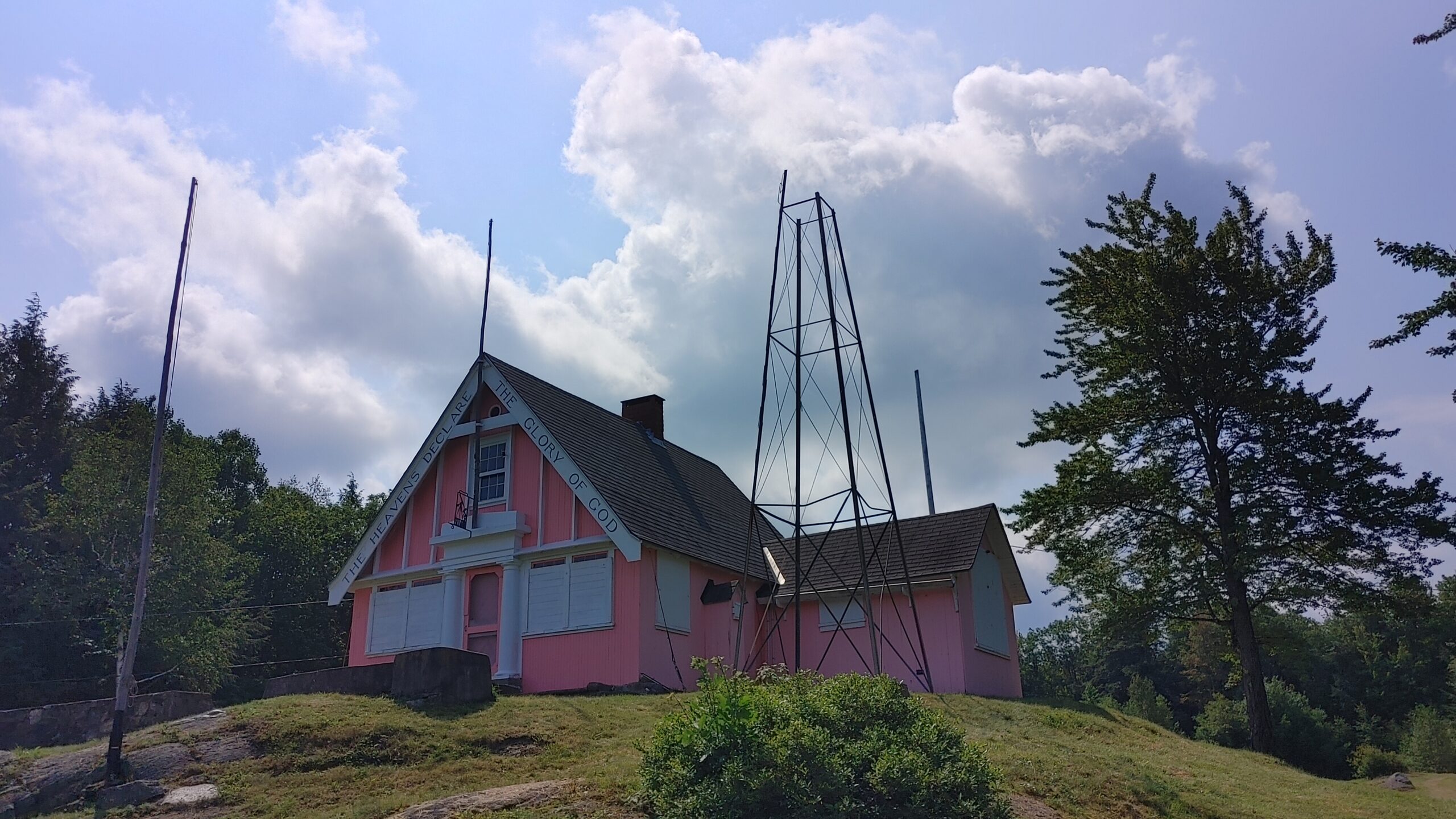
Russell W. Porter had a fascination with telescope-making that proved contagious: When he moved to Springfield, Vermont, in 1919, many townsfolk quickly became interested in his hobby, prompting Porter to start teaching classes. On Dec. 7, 1923, the Springfield Telescope Makers club was born, and members began constructing a clubhouse on land owned by Porter on a summit called Breezy Hill, just outside Springfield. The building consisted of a main meeting room and two upstairs bedrooms, and later a kitchen.
On Jan. 30, 1924, the club adopted Porter’s proposal that the site be christened Stellar Fane, Latin for “shrine to the stars.” Within months, the name was shortened to Stellafane.
Porter spread the word about Stellafane within the pages of Popular Astronomy. In 1925, after reading Porter’s articles in the magazine, Albert Ingalls met with him to learn about the telescope-making process and the Springfield club; Ingalls’ article about Porter’s club and their homemade telescopes made the cover story of the November 1925 issue of Scientific American. The response was almost immediate. Readers wanted to know how to build their own instruments.
The reaction also prompted the club to invite amateur telescope makers to Stellafane for a weekend gathering to exchange ideas and compare their creations. On July 3, 1926, between 20 and 30 people ventured up the dirt roads to the summit of Breezy Hill to attend the first Stellafane convention. The conventions have continued nearly every year since (excepting the years of World War II and the COVID-19 pandemic), drawing crowds of about 1,000.