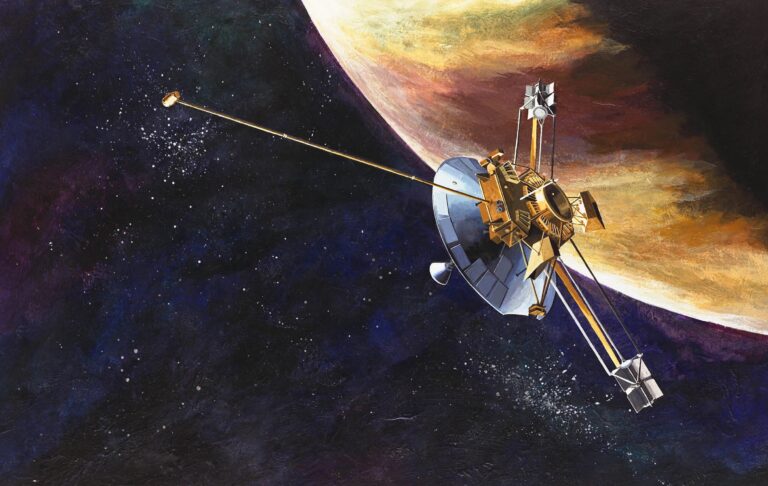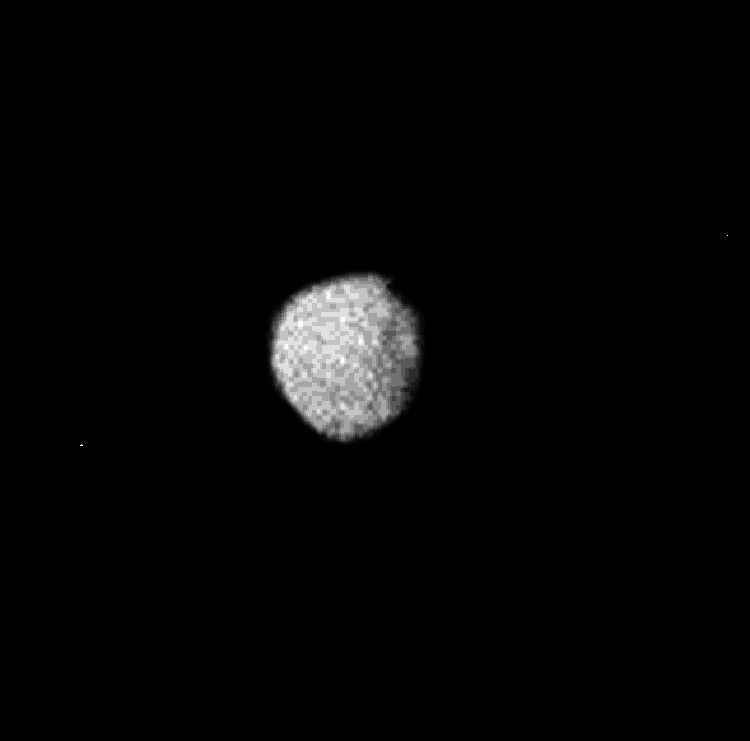
Over eight years after its launch, Voyager 2 made its closest approach to Uranus on Jan. 24, 1986. The encounter and data-gathering was complicated by Uranus’ 98-degree axial tilt and the low light levels, but the spacecraft was able to pass by at about 50,600 miles (over 81,400 kilometers) above the cloud tops. Many unique discoveries were made: Voyager detected an unusual magnetic field that was tilted around 55 degrees from the planet’s axis and offset from the planet’s center by one-third its radius. The probe also discovered 10 new moons (with an 11th found later in its data), added to the five moons of Uranus already known, and two new rings, added to the nine rings already known. Today, Voyager 2 remains the only spacecraft to have explored Uranus.